

You grab a cold bottle at the gas station, hand over two bucks, and feel pretty good about it. Crisp, clean, way better than whatever comes out of the sink at home, right? Here is the part they do not print in big letters on the label: a huge share of the bottled water sold in this country started out in the exact same pipes that feed your kitchen faucet. One estimate says nearly 64 percent of bottled water in America is repackaged tap water. Companies buy it cheap from the city, run it through filters, slap a photo of a mountain on the bottle, and charge you hundreds of times more. Let me rank the biggest offenders, from the ones that waste the most of your money to the ones that at least make a little sense.
Nestle Pure Life
This one takes the bottom spot, and taste testers agree. When one outlet ranked 28 brands from worst to best, Pure Life landed dead last. The frustrating part is you have no idea what you are drinking. Nestle pulls water from wells or municipal supplies depending on which plant filled the bottle, and there is no way for you to know which one ended up in your hand. Pure Life is bottled at dozens of plants scattered across California, Texas, Florida, Michigan, Pennsylvania, and more. If you live near one of those plants, there is a real chance you are buying your own city water back at a markup. It is glorified tap water with a flashy label, and even the flavor gets marked down.
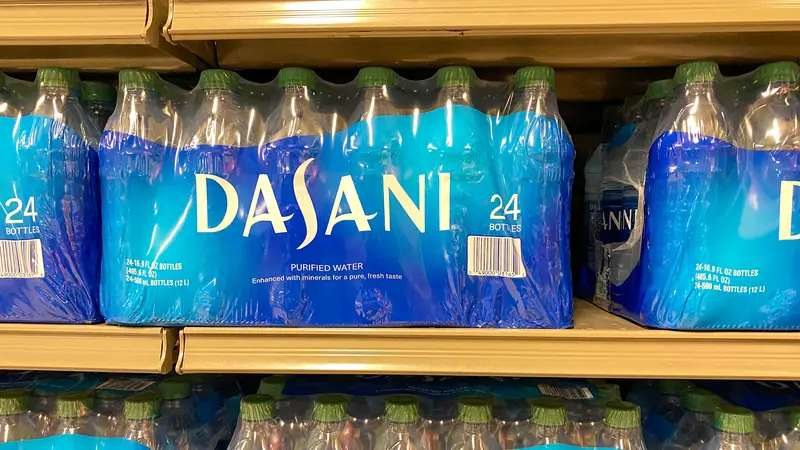
Dasani
Coca-Cola’s water brand is one of the most famous names in the cooler, and it is straight-up tap water. Dasani starts with the local municipal supply, runs it through reverse osmosis, then adds a mineral blend for taste. The company makes Dasani at plants pulling from city systems in California, Minnesota, Arizona, Colorado, and Michigan. And the markup is brutal. A Consumer Reports look at the Detroit plant found the company buys municipal water for next to nothing and sells it at a markup that can hit roughly 133 times the cost. At a drugstore, a single 20-ounce bottle runs about $1.88, which works out to around $12 a gallon. Drink Dasani all year and you could burn through more than $2,100 per person on water you could get from your tap.
Aquafina
Pepsi’s answer to Dasani, and it plays the exact same game. Aquafina pulls from public water supplies, then runs it through a purification process the company calls Hydro-7. The two brands are basically a corporate slap fight between Coke and Pepsi, both selling filtered city water and arguing over whose purification sounds fancier. What makes Aquafina interesting is that Pepsi actually admitted it. Back in 2007, after consumer groups pushed hard, the company agreed to add a line to the label saying the water comes from a public source. Fact-checkers confirmed it: the water is the same stuff from your faucet, just filtered and bottled. At about $1.82 for a 20-ounce bottle, you are paying roughly $11.65 a gallon for water that used to be free.
Smartwater
The name alone tells you the whole marketing plan. Smartwater leans into a premium image, comes in that tall clear bottle, and gets name-dropped by celebrities. Underneath the branding? It still starts as municipal tap water before the company vapor-distills it and adds electrolytes for taste. And you pay dearly for the vibe. A 23.7-ounce bottle goes for around $2.02, which pencils out to nearly $10.88 a gallon and close to $1,985 a year if it is your daily habit. You are not buying spring water from some hidden glacier. You are buying tap water with a good stylist. The taste might be smooth, sure, but so is filtered water from a pitcher that costs pennies.
LIFEWTR
Another Pepsi product, and another one built on tap water. LIFEWTR pulls from municipal reservoirs, cleans it up with reverse osmosis, then dumps in electrolytes like magnesium sulfate and potassium bicarbonate to sweeten the taste. The art on the rotating bottle labels is genuinely cool, and that is kind of the whole pitch. You are paying for a design collab and a premium shelf spot. The water itself follows the same playbook as every other purified brand in the aisle. If you like the way the added minerals taste, fine, but understand you are paying gallery prices for filtered faucet water.
Propel
Propel is Gatorade’s take on water, and it wears its enhancement on its sleeve, which I actually respect a little more. It starts with tap water, gets purified through reverse osmosis, then loads up on electrolytes like sodium bicarbonate, magnesium sulfate, and potassium bicarbonate. It comes in flavors like watermelon, lemon, and grape, plus an unflavored option. Nobody is confusing this with a mountain stream. The whole point is the added stuff. Just know the base is the same municipal water everyone else uses, and the flavor packet is doing the heavy lifting. If you like the taste, cool. Just do not mistake it for something that came out of the ground somewhere pristine.
Essentia
Here is where the prices go completely sideways. Essentia sells itself as premium alkaline water, and premium alkaline is the most expensive category on the shelf. Where does this special water come from? Garden Grove, California tap water, filtered, purified, and then re-mineralized at the bottling plant with magnesium, potassium, calcium, and other additions. That is it. City water, dressed up. And the sticker shock is real. A single bottle averages out to around $24.90 a gallon, which is more than 3,000 times the roughly three-quarters of a cent per gallon that municipal water actually costs. Buy it by the case and it drops to about $6.24 a gallon, but that is still a wild price for filtered tap water with minerals stirred back in.
Core Water
Core at least does more work for the money. It runs its water through seven stages, including reverse osmosis, micron and carbon filtration, ozonation, and ultraviolet exposure. The company says 99.9 percent of contaminants get stripped out, and the finished water does not contain fluoride. But peel back the process and the starting point is the same as all the others: tap water. Seven stages of purification is impressive on paper, yet a decent home filter also removes plenty for a tiny fraction of the price. You are paying for extra steps performed on water you could treat yourself at home.
Kirkland (Costco)
If you are going to buy bottled water anyway, Kirkland is the least painful spot on this list, purely on price. Costco sells it in giant flats for a small fraction of what a single Dasani costs at the register. The catch is the mystery. Kirkland water actually comes from another company, Niagara Bottling, which pulls from a mix of springs, wells, and municipal supplies. There is no way to know which source ended up in any given bottle. So you might be getting spring water, or you might be getting purified tap water, and the label will not settle the argument. At least you are not paying two bucks a bottle to find out.
The Thing That Actually Wins
Want to know what beats every brand on this list? Your own faucet with a cheap filter on it. Filtered tap water costs somewhere around 10 to 30 cents a gallon all in, while bottled water runs a dollar to ten-plus per gallon. One person who ditches bottles for filtered water saves around $354 a year, and a family of four can save well over $1,400. A couple of Brita filters can replace up to 1,800 single-use bottles. Labels like “purified,” “drinking,” and “filtered” almost always mean city water anyway, so you are not giving up some magic ingredient. The next time a bottle promises you a pristine spring, remember most of them start at the same tap you already pay for. Fill a pitcher, stick it in the fridge, and keep your money.

