

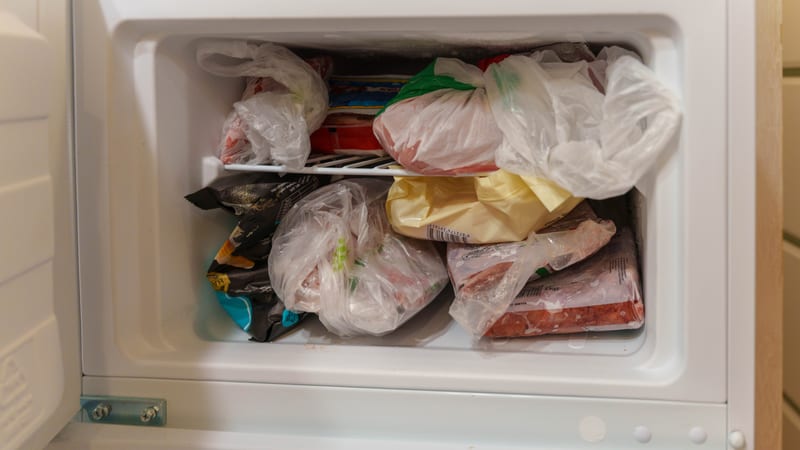
A full freezer feels like insurance. Half a tub of sour cream, a bag of romaine going limp, the lemons nobody used, last night’s fried chicken. Into the cold it all goes, and the guilt about wasting groceries goes with it.
The freezer does not work that way on everything. A short list of foods comes back out broken, watery, grainy or rubbery, and no amount of whisking or reheating fixes them. One of them, eggs still in the shell, is the rare case where the government says flat out not to do it.
Eggs In The Shell Are The One Real Rule
The USDA Food Safety and Inspection Service says shell eggs should not be frozen. The liquid inside expands and pushes on the shell until it cracks. If an egg freezes by accident and the shell is cracked, throw it out. Any that stayed intact should be kept frozen until you need them, then thawed in the refrigerator, where they can be hard-cooked but will not do much else.
Even an unbroken frozen egg changes inside. The yolk turns thick and syrupy, so it will not flow or blend with the white or with anything else in the bowl. Fresh eggs keep 3 to 5 weeks in the refrigerator past the pack date, and they should not sit at room temperature for more than 2 hours.
Eggs do freeze fine once they are out of the shell. Crack them, beat them lightly, and seal them in an airtight container. A pinch of salt or sugar stirred into yolks before freezing keeps them from going gummy, and the thawed eggs work for scrambles and baking. Liquid egg substitutes are a different story: unopened cartons last a week in the fridge and opened ones 3 days, and neither should go in the freezer.
Mayonnaise Breaks And Never Comes Back
Mayonnaise is oil suspended in water, held together by lecithin from egg yolk. Freezing drives ice crystals through the water phase, the oil droplets merge into pools, and what thaws out is curdled and greasy with puddles of liquid. Stirring harder does nothing. The USDA names mayonnaise as a food that does not freeze well, alongside cream sauce and lettuce.
Commercial jars hold up marginally better than homemade because starch, xanthan gum or guar gum thickens the water phase, but even factory mayo splits. Opened commercial mayonnaise keeps 2 months in the refrigerator, which is longer than most households need. Mayo-based salads are worse: egg, chicken, ham, tuna and macaroni salads are listed as poor freezer candidates and get 3 to 4 days in the fridge instead.
Lettuce And Salad Greens Collapse Into A Puddle
Romaine, iceberg, butter lettuce and spring mix are mostly water with almost nothing dissolved in them, so they freeze close to 32 degrees Fahrenheit and form big ice crystals fast. Those crystals shred the cell walls. The thawed leaves are translucent, wet and done as salad.
Cooking greens are the exception, and only if you blanch them first. Boil spinach, kale or chard briefly, shock them in ice water, then freeze. Blanching shuts down the enzymes that wreck quality in storage and softens the structure before the ice gets to it, so the thawed greens land where you want them for a cooked dish. Salad greens that are about to turn are better off wilted in a skillet with garlic and lemon, blended into pesto, or dropped into soup this week.
Cucumbers, Celery And Radishes Lose The Crunch For Good
Cucumbers are roughly 95 percent water by weight, and that water sits inside rigid cell walls that create the snap. Freeze one and every cell ruptures. Thaw it and the water runs out, leaving a limp, pale, waterlogged thing that is useless on a sandwich. Celery comes back hollow and floppy. Radishes come back spongy.
Cucumbers actually prefer about 50 to 55 degrees Fahrenheit, a little warmer than most refrigerators run. Wrapped loosely in the crisper drawer they hold for 1 to 2 weeks. When you have too many, the move is quick pickling with vinegar, sugar, salt and dill, which keeps the snap instead of destroying it. Limp celery still earns its keep in a simmering soup pot.
Raw Potatoes Go Dark, Sweet And Gritty
Potatoes feel sturdy enough to survive anything, which is why so many people throw a bag in the freezer and regret it. Freezing alters the starches, and raw potatoes turn black or dark brown, pick up an odd sweetness, and come out gritty. They also cook unevenly after that, going mushy in some spots and staying firm in others.
Cook them first and the freezer stops being the enemy. Mashed potatoes freeze well. So do potato pancakes and fully baked cubes you plan to fry later. Blanching works too if you want them closer to raw. What does not work is skipping that step and hoping.
Sour Cream, Yogurt And Cream Cheese Turn Grainy
Cultured dairy separates. Sour cream splits into fat and watery whey and thaws with a cottage cheese texture nobody wants on a baked potato. Yogurt goes grainy and weeps liquid. Cream cheese crumbles into dry, chalky pieces instead of spreading across a bagel.
There is a narrow escape hatch. All three can still go into cooked or baked dishes after thawing, where the texture change disappears under heat and other ingredients. Sour cream works in a casserole or a cake. Yogurt disappears into a smoothie. Cream cheese melts into a hot dip or a cheesecake batter. Eating any of them straight from the tub after a freeze is off the table.
Soft cheeses follow the same pattern. Brie, mozzarella, camembert, ricotta and cottage cheese all carry enough water to ice up, and they lose the creaminess that was the whole point.
Cream Sauces And Custard Pies Split
Cream sauce sits on the USDA’s short list of foods that do not freeze well, right next to mayonnaise. Alfredo, vodka sauce, anything finished with heavy cream or thickened with egg: it all looks broken and oily when it thaws, with the fat pooled on top.
Pies built on the same chemistry are listed the same way. Custard and chiffon pies get 3 to 4 days in the refrigerator after baking and should not be frozen at all. Gelatin desserts are the strangest case on the whole list: ice crystals wreck the protein network that makes the gel set, and once that network is gone, the dessert stays liquid permanently. It will not re-set no matter how long you leave it in the fridge.
Fried Chicken And Fries Never Crisp Back Up
Crust is the only thing fried food has that other food does not, and the freezer takes it. Ice softens the coating, then steam finishes the job during reheating. Fried chicken comes back with dry meat under a damp, chewy shell. Fries, tempura and onion rings go leathery or soggy.
Leftover fried food belongs in a hot oven or an air fryer the same day or the next. If there is too much to eat, pull it apart and use the pieces in sandwiches, salads, rice bowls or a breakfast hash, where crispness was never the point.
Plain Cooked Pasta Turns To Mush
Starch keeps breaking down in the freezer. Noodles frozen on their own soak up moisture, lose their shape and reheat gummy, then fall apart the second they meet sauce. Cooked macaroni is one of the standard examples of a food that goes soft and shapeless after a freeze.
Freeze the sauce and boil the pasta fresh. A pot of water takes ten minutes, which is less time than thawing would take anyway. Cooked rice has the same problem for the same reason.
Watermelon, Oranges, Lemons And Basil
High-water fruit is mostly a delivery system for crisp juice, and freezing dismantles it. Watermelon thaws gritty and mushy and leaks everywhere. The delicate membranes inside citrus cannot handle ice crystals either, so oranges, grapefruit, lemons and limes lose firmness and flavor. Thawed chunks are blender material and nothing else.
Fresh basil is the fastest failure in the kitchen. The cold tears through those thin leaves, and they turn black and slimy as soon as they hit room temperature, with the aroma gone. Blend the leaves with olive oil into a paste and freeze that instead.
Cans, Hard-Boiled Eggs And Live Shellfish
Canned food should never be frozen while it is still in the can. Canned ham labeled “Keep Refrigerated” is also a do-not-freeze item, and unopened it holds 6 to 9 months in the refrigerator. Carbonated drinks burst their containers when the liquid expands, and a bottle that survives still comes out flat.
Hard-cooked eggs get a week in the fridge and should not be frozen, because the white turns rubbery and tough and squeezes out water when you bite it. Homemade eggnog lasts 2 to 4 days refrigerated and does not belong in the freezer. Live crab and lobster keep one day, live clams, mussels, oysters and scallops keep 5 to 10 days, and freezing is not recommended for any of them.
What The Freezer Is Actually Good For
Almost everything on this list is a quality problem, not a safety one. Food held constantly at 0 degrees Fahrenheit stays safe indefinitely, because the cold slows molecules down and pushes microbes into dormancy. Shell eggs are the exception that matters, since a cracked shell opens the door to contamination.
Grocery store freezer aisles do better than your kitchen for a mechanical reason. Commercial flash freezing drops the temperature almost instantly and creates tiny crystals; a home freezer works slowly and grows big jagged ones that puncture cell walls on the way in and dissolve emulsions on the way out. That gap is why store-bought frozen berries hold their shape and your bag of homemade ones does not.
The better question before you open the freezer door is not whether the food will fit, it is whether you will still want to eat it in March. If the appeal is crunch, a glossy sauce or a smooth spread, the answer is no. Freeze the things where softness is fine and plan to eat the rest this week.

