
The complaint that set this off was about as unglamorous as food safety gets. On October 1, a retail customer told Kayem Foods that product had arrived warm at the point of delivery. The company went looking, and the trail led back to a warehouse cooler that had not been holding its temperature. On Saturday, October 17, the USDA’s Food Safety and Inspection Service announced what that cooler cost: Kayem is recalling 1,584,361 pounds of ready-to-eat meat and poultry, including hot dogs, bacon, sausage, turkey breasts and hams.
That is more than 1.5 million pounds of food that never needed to be cooked before eating, spread across more than 100 separate products and several different brand names, shipped to stores and kitchens across the country and to Hong Kong.
What Is Actually Being Pulled Off The Shelves
The recall covers ready-to-eat meat and poultry made at the Chelsea, Massachusetts company between approximately March 31, 2026 and October 7, 2026. That is a production window of more than six months, not a single bad day on the line.
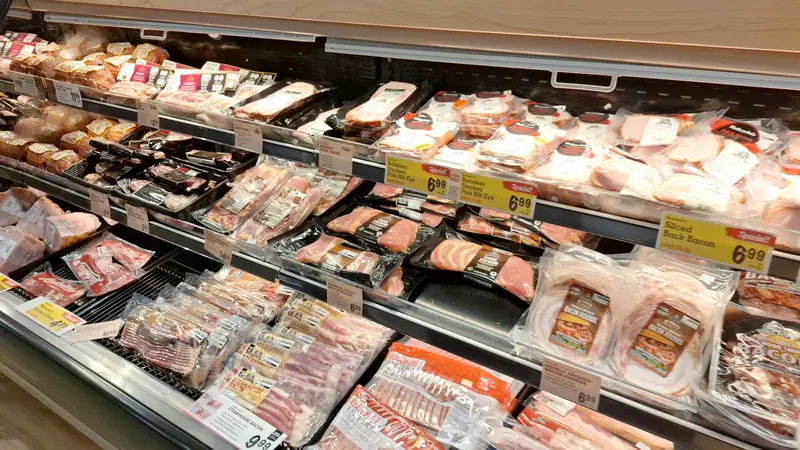
Hot dogs, bacon, sausage, turkey breasts and ham are all on the list, along with dozens of other items in various weights. That is what makes this one stick around: some of these products have a long shelf life, so something bought in the spring could still be in a refrigerator or a freezer in mid-October.
The agency filed it as recall number 026-2026 and classified it Class I, its high-risk tier.
The Package In Your Fridge Probably Does Not Say Kayem
This is where a lot of people are going to glance at the headline, check their fridge, see a brand they recognize, and assume they are fine. Kayem does business under ten brand names, and most shoppers would not connect any of them to a company in Chelsea.
The brand names Kayem operates under are Al Fresco, DeCosta, Essem, Genoa, Jordan’s, Kirschner, McKenzie Natural Artisan Deli, Meisterchef, Schonland’s Foods and Triple M. If one of those labels is in your meat drawer, keep reading before you fire up the grill pan.
Check The Stamp, Not The Logo
Brand alone will not tell you whether a package is included. The reliable marker is the establishment number printed inside the USDA mark of inspection, that little oval shield on the packaging most people have never once read.
Three numbers are in play: “EST. M/P 7839,” “EST. P 20935A” and “EST. M 9520.” FSIS has posted the full product list with UPC codes along with label images so shoppers can match what they bought item by item. Match the UPC. Guessing from the product type is how a recalled pack of franks ends up at a birthday party.
Where This Meat Ended Up
The products went to retail stores, wholesale club locations and foodservice operations across the United States, plus shipments to Hong Kong. Foodservice is the part people forget about: restaurants, cafeterias and institutional kitchens buy in bulk, and they need to check their walk-ins the same way a household checks a fridge shelf.
FSIS said it will run recall effectiveness checks to confirm the company notified its customers and that the affected product is actually coming off shelves, and the agency posts retail distribution lists when they become available.
One Phone Call Unwound Six Months Of Production
The October 1 complaint was specific and simple: product was warm when it was delivered. Kayem investigated and determined that various ready-to-eat meat and poultry products had been stored in a warehouse cooler “that experienced temperature deviations,” according to the federal recall notice.
What the notice does not say is how warm that cooler got, or how long it stayed that way. There is no temperature reading in the public record of this recall, and no breakdown of which specific products sat in the cooler on which dates. That absence is part of why the recall is so wide. When you cannot narrow the window, you take back everything in it.
What Temperature Abuse Means Here
Nothing was found in this meat. No pathogen was named, no lab result triggered it, no outbreak investigation pointed back to a plant. The stated basis is possible temperature abuse during storage, which is industry shorthand for perishable food spending too long outside the refrigeration it was built around.
Ready-to-eat meat is the category where that matters most, because the whole promise of a hot dog, a package of deli turkey or a pack of bacon ends is that the cold chain held from the plant to your kitchen. Here a failed cooler was enough on its own to pull the product back, with nothing detected in the finished meat.
No Confirmed Illnesses
As of the October 17 announcement, FSIS reported no confirmed reports of illness tied to consumption of these products. The agency’s guidance to anyone with a concern is to contact a health care provider.
A recall with zero illnesses and no named bug is the easiest one in the world to shrug off, which is precisely the problem. FSIS said plainly that its concern is product still sitting in consumers’ refrigerators, months after some of it was produced.
Do Not Eat It, And Here Is Who To Call
FSIS is telling consumers who bought these products not to consume them. The options are throwing them away or returning them to the place of purchase. The instruction does not change based on how the package looks, how it smells or how long it has been frozen.
Kayem Foods customer service is reachable at 800-426-6100, Monday through Friday from 7:30 a.m. to 4 p.m. Eastern time, or by email at info@kayem.com. The USDA Meat and Poultry Hotline is 888-674-6854, and the email address is MPHotline@usda.gov. Anyone who needs to report a problem with a meat, poultry or egg product can use the USDA’s Electronic Consumer Complaint Monitoring System, which is open 24 hours a day.
If you are returning rather than tossing, bring the packaging. The establishment number and UPC are what a store needs to see, and they live on the label you were about to throw in the trash.
Kayem Is A Much Bigger Deal Than Most People Realize
Outside New England, the name barely registers. Inside it, Kayem is everywhere. The company traces back to 1909, when Kazimierz Monkiewicz started making crafted meats out of a small butcher shop in Chelsea. Five generations later it is still family owned and operated, and it calls itself the largest prepared meat company in New England.
Kayem makes over 200 products across ten brands, supplying homes, cookouts, ballparks, stadiums and restaurants around the country. It still runs out of Chelsea, where it says it provides over 200 jobs for residents of the city and nearby towns. That scale is the reason a single warehouse cooler problem turns into a seven-figure poundage number and a product list that runs past 100 items.
The Five Minutes This Is Worth
Most recall coverage asks you to remember a brand name. This one does not work that way, and that is the single most useful thing to take away from it. The brand on the front of the package is close to useless for identification here, because ten different labels come out of the same company, and because the recall list crosses product categories that have nothing to do with each other. Hot dogs and turkey breast do not look like the same problem until you know they shared a cooler.
Open the fridge. Open the freezer, too, since some of this was made back in March and freezer drawers are where packages go to be forgotten. Flip the package over, find the USDA inspection mark, and read the establishment number. If it says EST. M/P 7839, EST. P 20935A or EST. M 9520, check it against the official recall list and act accordingly.
Nobody has gotten sick that federal officials know about, and the trigger was a storage failure rather than anything found in the food. Those two facts make it tempting to do nothing. But 1,584,361 pounds is an enormous amount of meat to pull back over a cooler that drifted, and companies do not write off that much inventory casually. The product list and label images are public, the phone lines are open, and the check takes less time than defrosting a pack of franks.

