

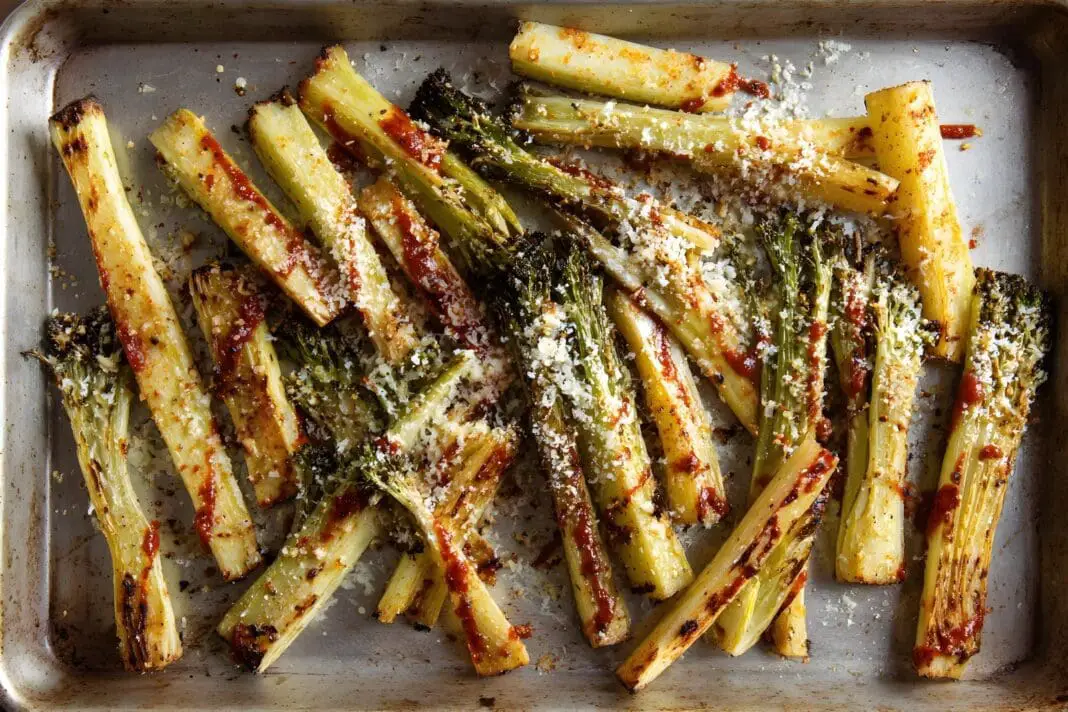
The florets go in the pot. The stalk, thick and pale and a little woody at the bottom, gets one look and then goes in the trash. The USDA puts food waste at 30% to 40% of the US food supply, and plenty of that is not spoiled food at all, just parts we decided were scraps. Broccoli stems are the clearest case. Peel one, cut it into matchsticks, toss it with olive oil and smoked paprika, roast it hot, and hit it with Parmesan at the end. You get fries. Crisp brown edges, a sweet tender middle, and they disappear off the sheet pan before dinner hits the table.
The Skin Is The Problem, Not The Stem
Anybody who has bitten into an unpeeled chunk of raw stalk and found it stringy has met the actual culprit. The outer skin does not look much different from the inside, but it is far tougher and more fibrous, and that mouthfeel is a big reason the stems get thrown out in the first place. Peeling it off fixes the whole thing.
Use a sharp vegetable peeler or a paring knife and take off the tough greenish-brown layer. What is left is a pale green core that is sweet and mild, closer to a water chestnut or a crisp apple than to the broccoli you think you know. Slice off the very bottom of the stalk too, since that end dries out and goes woody sitting in the store display.
The peel comes away easier than it looks. Start at the cut bottom edge, get the blade under the skin, and it strips up the stalk in long pieces. Two minutes of work on four or five stems.
Cut Them Like Steak Fries, Not Shoestrings
Broccoli stems are already about the right dimensions for a fry, which is half the appeal. Cut the peeled core into thick matchsticks, roughly steak-fry size. Thin shoestrings turn to leather in a hot oven, and fat wedges stay squeaky in the middle. Thick matchsticks give you browned edges and a tender center at the same moment.
Keep them close to the same thickness. A pan with chunky pieces and skinny ones mixed together gives you burnt bits next to raw ones, and then people decide they do not like broccoli stems when what they did not like was the knife work.
425 Degrees, Then Cheese At The End
Heat the oven to 425°F and line a sheet pan with parchment. Toss four or five stems’ worth of matchsticks with 2 tablespoons olive oil, 1 teaspoon garlic powder, 1 teaspoon smoked paprika, salt and pepper. Spread them in a single layer and roast 15 minutes.
Flip them, scatter 1/2 cup grated Parmesan over the top, and give them another 5 to 10 minutes until golden and crisp. The cheese goes on late for a reason. A full 25 minutes at that temperature and the Parmesan is bitter and black instead of a lacy brown crust.
High heat is doing real work here. The core of the stem is watery and mildly sweet, and a hot oven drives the water off and caramelizes what is left. Drop the temperature and you get a softer, steamier result, which is fine in a casserole and useless when you want fries. Roasting concentrates the flavor, which is why professional kitchens keep putting stems in gratins and slaws instead of the compost bucket.
Four Mistakes That Make Them Soggy
Crowding the pan is the big one. Piled-up fries steam each other. If the stems from one head of broccoli do not fit in a single layer with space between them, use a second sheet or cook in two rounds.
Wet stems are the second. Wash and peel, then pat them dry with a towel before the oil goes on. Water on the surface has to boil off before any browning starts, and by then the inside has gone soft.
Skipping the flip costs you the second crisp side. And going heavy on oil does not make them crispier, it makes them greasy. Two tablespoons coats a whole sheet pan if you toss them in a bowl first instead of pouring oil over the pan.
If You Want Actual Crunch, Batter Them
Roasted broccoli stems will never snap like a frozen french fry. Vegetables with that much water in them do not. For a genuine crunch you need a coating, and chickpea flour is the one worth buying. Mix it with water, a little oil and your spices into a thin batter, coat the matchsticks, and cook them hot. It fries up into a pakora-style shell with real crackle to it.
The flour, egg and seasoned panko route works too, baked on a wire rack set over a sheet pan so the air gets underneath. An air fryer does the job faster than the oven, though you should check it early the first time, because the basket runs hotter than a half-full oven. A deep fryer, if you own one, turns these into something you will stop calling a vegetable.
The Dip Matters More Than You Think
Plain ketchup works and kids will reach for it first. For adults, an aioli or anything Dijon-based is the better match, because the mustard cuts the richness of the Parmesan. Mayonnaise whisked with mustard, a splash of pickle juice and chopped fresh dill is a five-minute dipping sauce that makes the whole plate taste deliberate. Plain yogurt with a spoonful of Dijon and a squeeze of lemon does the same job lighter.
Save Stems Until You Have Enough
One head of broccoli does not make a batch of fries, and that is the practical reason most people never try this. Peeled stems keep in the refrigerator in an airtight container or a perforated bag for a few days, up to a week, so two or three trips through broccoli night gets you there. They also freeze peeled and chopped in a zip-top bag if you blanch them first for 3 minutes, though frozen stems go into soups and stir-fries rather than fries, since freezing softens them.
One shopping note that costs you nothing: buy whole heads instead of the bagged crowns. Crowns are cut back to a short stub of stalk at the store, and you are paying for broccoli that already had most of its best part removed.
What To Do With The Overflow
Fries are the gateway, but once the peeling becomes a habit you will have stems to spare. Grated on a box grater with a carrot, mayonnaise, apple cider vinegar and a teaspoon of honey, they make a slaw in about ten minutes. Sliced into thin coins on the diagonal, they cook in a few minutes in a hot skillet with garlic, ginger and soy sauce. Run a straight stem through a spiralizer and it becomes noodles, the florets will not spiralize but the stalks do, and a carrot peeler shaves them into ribbons if you do not own the gadget.
My verdict after years of doing this: the stem is the better half of the broccoli for roasting. Floret tips burn to ash while the thick parts are still underdone, and anyone who has pulled a tray of blackened broccoli out of a 425-degree oven knows it. The stem browns evenly because it is solid all the way through. Throwing it out is the habit to break, not a judgment about taste, because almost nobody who eats these fries goes back to tossing the stalk.
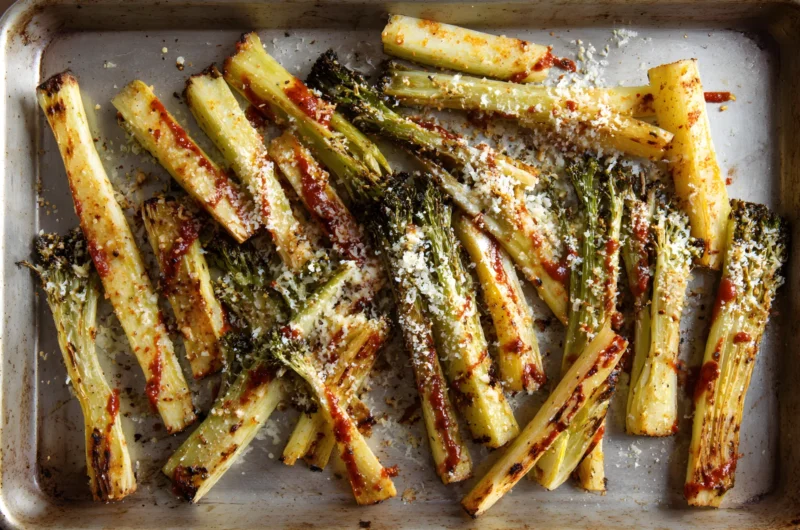
Parmesan Roasted Broccoli Stem Fries
Course: Side DishCuisine: American4
servings15
minutes25
minutes150
kcalThe part of the broccoli everyone throws away, roasted into crispy, cheesy fries.
Ingredients
4 to 5 broccoli stems, peeled and cut into thick matchsticks
2 tablespoons olive oil
1 teaspoon garlic powder
1 teaspoon smoked paprika
1/2 cup grated Parmesan cheese
Salt, to taste
Black pepper, to taste
Ketchup, for serving (optional)
1/2 cup plain yogurt whisked with 1 teaspoon Dijon mustard, for dipping (optional)
Directions
- Heat the oven to 425°F (220°C) and line a baking sheet with parchment paper. Let the oven come fully up to temperature before the pan goes in, since a cool oven steams the stems instead of browning them.
- Wash the stems and slice off the dried, woody bottom end of each one. That end goes tough in the store display and never softens in the oven.
- Peel off the tough greenish-brown outer skin with a sharp vegetable peeler or a paring knife, working from the cut end up the stalk. Keep going until you reach the pale green core underneath, which is the sweet, tender part you want.
- Cut the peeled cores into thick matchsticks about the size of steak fries. Try to keep them close to the same thickness so they finish at the same time.
- Pat the cut stems dry with a kitchen towel, then toss them in a bowl with the olive oil, garlic powder, smoked paprika, salt and pepper. Tossing in a bowl coats every piece with far less oil than pouring it over the pan.
- Spread the fries over the parchment in a single layer with space between them. If they are piled up, use a second sheet pan or roast in two batches.
- Roast for 15 minutes, then pull the pan out and flip the fries with tongs or a spatula. You are looking for browned, slightly shrunken edges on the side that was facing down.
- Scatter the Parmesan over the top and return the pan to the oven for another 5 to 10 minutes, until the cheese is golden and the fries are crisp at the edges. Serve hot with ketchup or the yogurt and Dijon dip, because they soften as they sit.
Notes
- For a coating with real crunch, dip the matchsticks in a thin batter of chickpea flour, water, oil and spices before roasting or air frying.
- Peeled, chopped stems freeze in a zip-top bag after a 3-minute blanch, though frozen ones are better in soups and stir-fries than in fries.
- Collect stems over a few meals and keep them peeled in an airtight container in the refrigerator for up to a week until you have enough for a full sheet pan.
Frequently Asked Questions
Q: Do I really have to peel the stems?
A: Yes, for this recipe. The outer skin is much tougher and more fibrous than the core, and that stringy texture is the main reason people decide they dislike broccoli stems. Peeling takes about two minutes for a batch and leaves you with a pale, sweet center that roasts beautifully.
Q: Can I make these in an air fryer instead of the oven?
A: You can, and plenty of cooks prefer it. The basket circulates hotter air than a half-empty oven, so check them several minutes before you would in the oven and add the Parmesan near the end so it browns instead of burning.
Q: Why are mine soft instead of crisp?
A: Usually crowding or moisture. Fries touching each other steam rather than roast, and wet stems have to dry out before any browning begins. Dry them with a towel and give each piece space on the pan.
Q: Can I prep the stems ahead of time?
A: Peel and cut them whenever you have the knife out, then keep them in an airtight container in the refrigerator for up to a week. That is how you collect enough stems from a few grocery runs to fill a sheet pan.

