

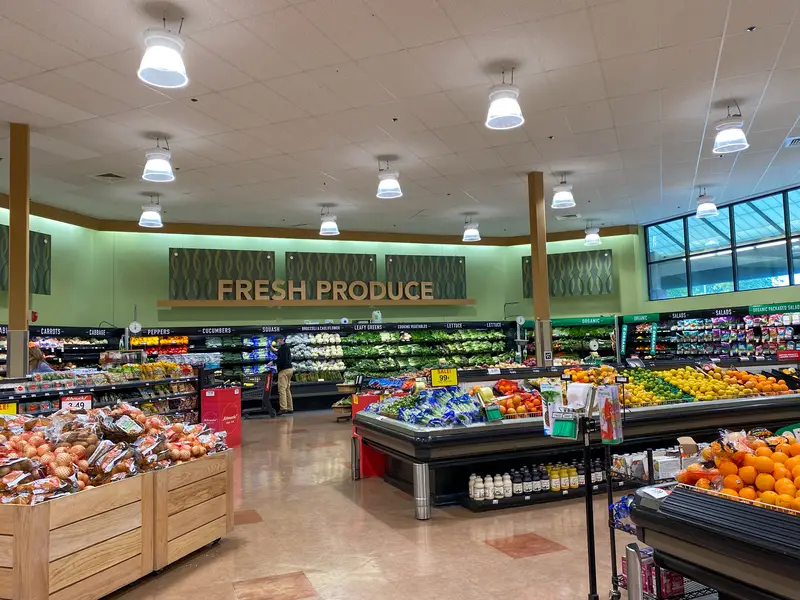
Your cart of fruits and vegetables is quietly eating a bigger share of the grocery bill than it did a year ago. Fresh fruits and vegetables rose 3.1 percent between August 2025 and August 2026 before seasonal adjustments, according to the U.S. Bureau of Labor Statistics, outpacing the 2.2 percent inflation rate for all non-restaurant food at home. Fresh apples climbed 5.4 percent. Fresh tomatoes went up nearly 6 percent. The UN’s Food and Agriculture Organization put its world food price index up 5.8 percent on the year in September 2026. So the difference between a good melon and a mealy one is no longer just annoying. It is money. And the produce section gives away far more than most shoppers notice.
The Stuff In Front Is The Oldest Stuff
Grocery stores run on FIFO: first in, first out. Older product gets rotated forward while the fresher delivery goes behind it. The shopper digging into the back of the bagged spinach is not being difficult, they are being correct.
For produce stacked at room temperature, the bottom of the pile is a different story. Plants give off a gas called ethylene that drives ripening, and ripening fruit makes more of it as it goes, according to the University of Maryland Extension. That means the apples and pears buried at the bottom are usually further along than the ones on top. Want them ripe tonight, dig low. Want them to last the week, take from the top and from the back.
The Misters Are Charging You For Water
That theatrical spray over the greens is mostly stagecraft. Wet produce reads as fresh produce, and it also weighs more at the register. A test commissioned by Miatech, which sells produce-misting systems, found unmisted broccoli lost nearly 4 percent of its weight in 16 hours, while misted broccoli gained almost 5 percent. On anything priced by the pound, you are paying for the shower.
Herbs are the giveaway. Beaded-up, soggy parsley and cilantro are not fresher, they are on the way out. Same with mushrooms: visible moisture on the caps means that package has been sitting. Dry and firm beats glistening every time.
Read The Watermelon’s Belly, Not Its Stripes
Flip the melon over and find the discolored patch where it sat on the ground. A creamy yellow or slightly golden field spot means it stayed on the vine long enough to sweeten up. A pale white spot means it was picked too early, and nothing you do at home fixes that.
Isaac Bernal Carbajo, executive chef of the Embassy of Spain to the United Nations, told Consumer Reports he learned the method from his grandmother. He looks for that large creamy yellow spot, handles several melons to find one that feels heavy for its size, and taps near the stem. “Depending on the vibration, my grandmother actually could tell if it had more water and was ready,” he says. Cantaloupe is simpler. “If you bring a cantaloupe close to your nose and it smells sweet and floral, normally you’re in good shape,” Bernal says.
Strawberries Never Get Sweeter After You Buy Them
Strawberries are one of the few fruits that stop ripening the moment they are picked. They will soften on your counter. They will not sweeten. That makes color the whole ballgame.
The tell is white shoulders, those pale patches up near the stem. They mean the berry came off the plant before it finished, and what you taste at home is exactly what you bought. Hold out for berries that run red from tip to stem. Then turn the clamshell upside down before it goes in the cart. The bottom layer is where you find moisture, crushed fruit and white fuzz, and the container is always stacked so you cannot see it.
Judge A Pineapple By Its Crown And Its Skin
Skip the old trick of tugging a leaf from the crown. Pineapples do not ripen after they are picked, so a leaf that pulls free tells you very little.
The crown still tells you something. Green, lively foliage is a good sign; dry, brittle, heavily browned leaves mean the pineapple is past it. Produce staff also look for a subtle shift from green to gold across the little fruitlets on the skin, and for a body that feels firm but not rock hard.
Shiny Citrus Has More Juice Than Bumpy Citrus
Oranges, lemons, limes and grapefruit all follow the same rule. Smooth, bright, slightly glossy skin usually means a fruit still holding its moisture. Rough, heavily textured, bumpy peel often means a thick rind, which means more of what you are paying for by the pound is peel instead of juice.
Color is the least useful signal here, since citrus shades vary with growing conditions. Texture tells you more. Skip anything wrinkled, shriveled, spongy or soft in spots. And apply the weight rule: between two lemons the same size, the heavier one wins.
Pop The Avocado Cap, Squeeze The Mango
The little stem cap on an avocado is a window. Flick it off and look: green underneath means you have time, dark brown points to oxidation inside. “If it has very soft sunken areas or liquid around the stem, it’s usually past its best point,” Bernal says. A good avocado gives slightly under moderate pressure, with the cap still attached and no sunken divots.
Mangoes fool people because color lies. “Some varieties of mango stay green even when they’re perfect,” Bernal says. “The best thing is to press gently; if it gives slightly, it’s usually ready. Small dark spots on the skin often mean absolutely nothing.” Tomatoes follow the same logic: flesh that gives a little, no blemishes, and a stem end that smells earthy and sweet when you put your nose to it.
Pre-Cut Is The Worst Money In The Aisle
Cubed butternut squash, sliced pineapple, chopped onions, fruit cups. Convenience formats often cost a third more than the whole version of the same thing, and sometimes several times as much. Thirty minutes with a knife on Sunday erases that markup for the entire week.
Packaging costs you a second way: you lose the right to choose. Cooks who shop for a living overwhelmingly buy loose over wrapped, because a clamshell or a shrink-wrapped tray hands you whatever is inside, bad pieces included. When something only comes by the package and is priced by the package rather than by weight, pick up a few and take the heaviest one. Same price, more food.
Out-Of-Season Fruit Is A Bad Bet Twice Over
In-season fruit is usually cheaper, and it actually tastes like something, because out-of-season produce is typically picked underripe and shipped a long way to reach you.
Pineapples peak in spring and summer. Watermelon and corn belong to summer. January strawberries and November watermelon will be bland, dry or sour no matter how good they look under the lights, because they never finished ripening on the plant. Buying by the calendar is the cheapest upgrade available to a shopper in any month.
The Store You Pick Matters More Than The Day You Go
Produce sections are not interchangeable. High-turnover stores are the real prize, since fast-moving product has not been sitting around in a back cooler.
Chains with farm partnerships are worth knowing. Sprouts Farmers Market, which operates in 25 states, lists 11 local farms on its Colorado Grown page supplying apples, beets, corn, herbs, leafy greens, mushrooms and onions. Wegmans works with a network of 400 family farms and suppliers. On price, a Consumer Reports comparison across six large metro areas put BJ’s Wholesale Club, Costco Wholesale and Lidl on top. Co-ops can undercut the supermarket outright: in early June 2026, River Valley Coop in Northampton, Mass., sold organic red and green seedless grapes for $4.99 per pound against Stop & Shop’s $7.99.
Farmers markets have a closing-time discount most people are too polite to ask for. “Many vendors would rather sell than pack everything back up and take it home,” Bernal notes.
Spend The Organic Money Where It Counts
Buying everything organic is an expensive way to shop. The Environmental Working Group’s 2026 lists, published in late March 2026 and built on 54,344 samples of 47 fruits and vegetables, tell you where the premium is actually buying you something. Spinach holds the top spot again, followed by kale, collard and mustard greens, then strawberries, grapes, nectarines, peaches, cherries, apples, blackberries, pears, potatoes and blueberries, the last of the 2026 dozen.
The 2026 Clean Fifteen is led by pineapple, sweet corn and avocados. Buy those conventional and keep the difference. One correction while you are at it: organic does not mean pesticide-free, it means only pesticides approved for organic farming were used, which is a common mix-up that costs shoppers real money.
Buy For Five Days, Not Five Weeks
Overbuying is the single most common produce mistake, and it is the one that turns savings into garbage. Shop for three to five days and go back midweek if you need to. Walking in without a list invites spending on things you never planned to buy, so write it out by section before you leave.
At home, separate the ethylene producers (apples, bananas, avocados) from berries, greens and citrus, which ripen fast in their company. Leave the dirt on potatoes and carrots until you cook them; washed produce goes soft sooner. And treat date stamps on produce as a suggestion. Carrots, apples and winter squash routinely outlive theirs by weeks.
If you only change two habits, make them these: stop buying anything pre-cut, and stop buying fruit that is out of season. Those two alone claw back more than every ripeness trick combined. Everything else, the field spot, the pineapple crown, the avocado cap, is how you make sure the money you do spend lands on something worth eating.

