

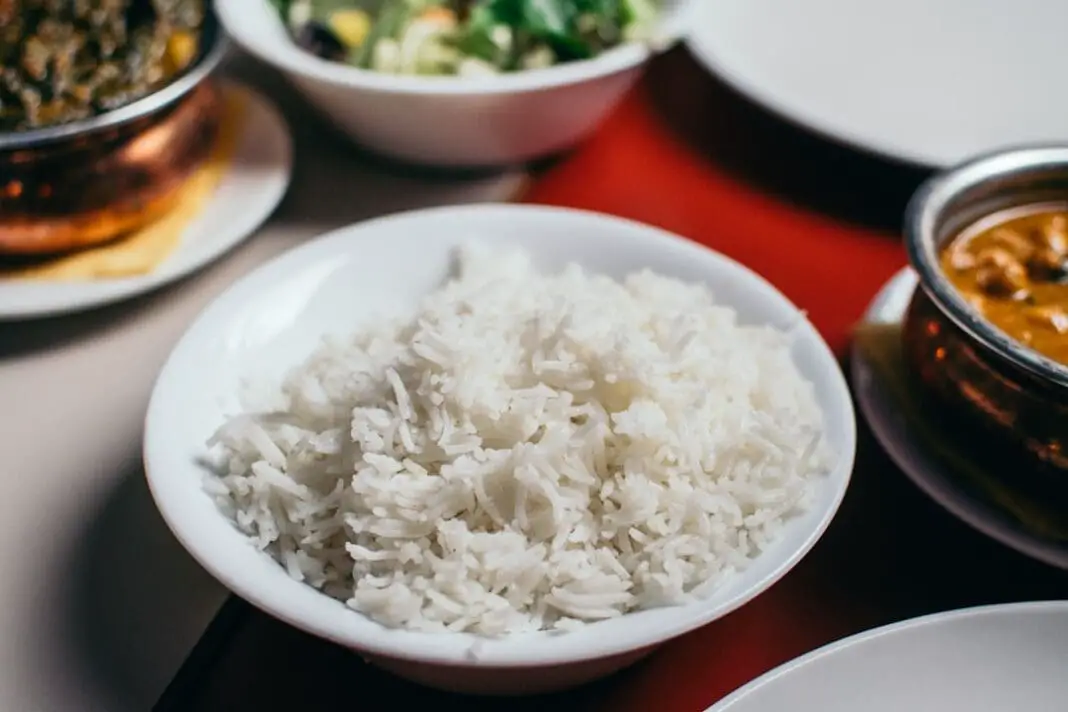
The reason your white rice keeps turning out gummy, sticky, and soft has almost nothing to do with your pot or your stove. It’s the water. Most people pour in too much, and once that water hits the rice, there is no saving the batch.
The number you see on the back of a lot of bags is a 2:1 ratio, meaning 2 cups of water for every 1 cup of rice. That is what USA Rice and most of the millers print, and it assumes a fair amount of steam escaping from your pot. America’s Test Kitchen argues the extra half cup is really an evaporation allowance, and that with a lid that seals it leaves you with mush. Dial the water back and the whole thing turns fluffy and separate.
The Water Ratio That Actually Works
For standard long-grain white rice, use 1.5 cups of water for every 1 cup of rice. Some cooks stretch it to 1 and three-quarter cups and get away with it, but 1.5 is the sweet spot for tender grains that don’t clump. Short-grain rice goes the other way and wants less water, not more, which is why the same rule doesn’t work for every bag in the pantry.
Age changes the math too. Fresh rice under three months old holds more moisture and needs a little less water. Rice that has been sitting in a dry cabinet for months can need a splash more water to soften all the way through. Bulk-bin rice from a co-op or an Asian grocery is usually older than a sealed supermarket bag, so keep an extra couple tablespoons of water handy for that.
Precision matters more than it sounds, so measure with real cups and skip the guesswork. Eyeballing it over the faucet is how you end up with a soggy pot.
Why Too Much Water Wrecks Your Rice
Two things are happening in the pot, and people mix them up constantly. Water sets the texture. Time and heat finish the cooking. When rice comes out crunchy the answer is a splash more water and a few more minutes on low, not a big pour, because a big pour turns the outside to mush before it ever reaches the hard center.
The starch behind it comes in two types. Basmati is high in amylose, which keeps grains separate. Jasmine is long-grain too but low in amylose, which is why it cooks softer and clings. Short-grain sushi rice and medium-grain risotto rice run high in amylopectin, which makes them stick. When there is too much water, the grains swell, burst open, and dump their starch into the pot, and that loose starch is what glues everything into a paste. Once the structure collapses, you cannot uncook it.
If a crunchy batch is your problem instead, USA Rice says add more liquid, not less. Two to four tablespoons, cover it, drop the burner low, and give it five to ten more minutes.
To Rinse Or Not To Rinse
Rinsing is the second thing that trips people up, and it works hand in hand with the water ratio. White rice carries a coat of loose surface starch left over from milling. Rinse it off and the cooked grains come out fluffier and more separate, which is what the rice scientist America’s Test Kitchen put the question to says. USA Rice takes the other side and asks you not to rinse enriched US rice, because the enrichment washes off with the starch. Leave it on and that powder dissolves into the water and adds to the sticky problem.
The bowl method is the easiest way to do it. Put the rice in a large bowl, add water about an inch above the grains, swish it around with your hand, then pour off the cloudy water. Repeat until the water runs mostly clear, which rarely takes more than a few rounds. A fine-mesh strainer under the tap works too.
Rinsing has a catch that ties right back to the main mistake. Rinsed grains hold onto extra moisture, so you have to cut the water down by about 2 tablespoons per cup of rice, a tip that comes from RecipeTin Eats or you end up soggy again. And you don’t always want to rinse hard. If you’re making sushi rice, a gentler wash keeps some of that sticky starch so the rice can hold together. For everyday fluffy rice, rinse away.
The Other Slip-Ups That Turn Rice Gummy
Plenty of packets tell you to stir the rice into already-boiling water, and it does work. Starting the rice and the water together and bringing them up as one is easier to control, though, because nothing gets a head start on the outside of the grain while the middle is still hard. It is what USA Rice, Riceland and most extension services do.
Once the lid is on, leave it alone. Every time you stir or lift the lid to peek, you release more starch and let the steam out, which is the same sticky mess you’re trying to avoid. Give it one quick stir when it hits a boil, cover it, and walk away.
Salt gets skipped far too often. Use about 1 teaspoon of salt for every cup of dry rice, stirred in with the water so it seasons the grains from the inside. Plain rice tastes flat, and no amount of sauce on top fully fixes it.
Resting matters just as much as cooking. When the water looks absorbed, the grains on top are still firmer than the ones on the bottom. Pull the pot off the heat, keep the lid on, and let it sit for 5 to 10 minutes so the steam evens everything out. Then fluff with a fork, which lifts and separates the grains instead of mashing them back together.
How To Make Perfect Fluffy White Rice
Put all of it together and you get rice that stands up in separate grains instead of collapsing into a lump. The core moves are simple: measure carefully, use 1.5 cups of water per cup of rice, rinse if you want it extra fluffy, cook it low and covered, and rest it before you fluff.
There is one optional trick worth trying if you want plain rice to taste like more. Toast the dry grains in a little butter or oil first, stirring until they smell faintly like popcorn, then add your water. It builds a nutty flavor into basic white rice without buying anything special. One cup of uncooked rice cooks up to about three cups, enough for three to four people as a side.
Frequently Asked Questions
Q: What is the best water to rice ratio for white rice?
A: For long-grain white rice, use 1.5 cups of water per 1 cup of rice on the stovetop. Short-grain rice needs a bit more, closer to 2 cups, and older rice can take an extra couple tablespoons.
Q: Do I really need to rinse white rice?
A: Rinsing washes off loose surface starch and gives you fluffier, more separate grains, so it helps for everyday rice. Just cut the water by about 2 tablespoons per cup afterward, and go easy on the rinse if you want sticky sushi rice.
Q: How do I fix rice that already turned mushy?
A: You cannot uncook collapsed grains, but you can repurpose them. Cook it down into congee with more water, use it to thicken a soup, or dry it out for fried rice. Dry it uncovered in the fridge, though, never on the counter, and only from rice that went into the fridge promptly in the first place.
Q: Can I make white rice ahead of time?
A: Yes, but cool it fast. Spread it in a shallow container and get it in the fridge within an hour rather than leaving it on the counter, because cooked rice is where Bacillus cereus does its damage. It keeps 3 to 4 days, or freezes well spread thin. Reheat once only, with a splash of water, until it is steaming hot right through.
Perfect Fluffy White Rice
Course: Side DishCuisine: American4
servings5
minutes18
minutes210
kcalThe foolproof method for tender, separate grains that never turn gummy.
Ingredients
1 cup long-grain white rice (jasmine works great)
1.5 cups water
1 teaspoon kosher salt
1 tablespoon unsalted butter
1 tablespoon olive oil (optional, for toasting)
1 clove garlic, smashed (optional)
1 bay leaf (optional)
Squeeze of fresh lemon (optional)
2 tablespoons chopped fresh parsley (optional)
Directions
- Measure the rice with a real measuring cup instead of eyeballing it. If you want extra fluffy grains, put the rice in a large bowl, cover with an inch of water, swish with your hand, and pour off the cloudy water. Repeat until the water runs mostly clear.
- If you rinsed the rice, reduce your water by 2 tablespoons per cup so the grains do not turn soggy. For a nuttier flavor, melt the butter and olive oil in the saucepan over medium heat, add the drained rice, and stir until it smells faintly like popcorn, about 2 to 3 minutes.
- Pour in the water and add the salt. Toss in the smashed garlic and bay leaf now if you are using them. Stir once so the salt dissolves evenly through the pot.
- Bring the pot up to a boil over medium-high heat with the rice already in the water, not added after it boils. Give it one quick stir the moment it reaches a rolling boil, then stop stirring.
- Reduce the heat to low and cover with a tight-fitting lid. Let it simmer undisturbed for 13 to 18 minutes until the water is fully absorbed. Do not lift the lid to peek, since that lets steam escape and breaks up the grains.
- Take the pot off the heat but keep the lid on. Let the rice rest for 5 to 10 minutes so the steam finishes cooking and the moisture spreads evenly from top to bottom. Skipping this step leaves the top grains firmer than the rest.
- Remove the garlic and bay leaf. Fluff the rice gently with a fork, lifting and separating the grains rather than mashing them with a spoon. A fork keeps the grains light and distinct.
- Finish with a small squeeze of fresh lemon and the chopped parsley if you like a brighter side. Serve right away while it is hot and fluffy. Leftovers keep well in the fridge for up to 4 days.
Notes
- If your rice has been in the cabinet for six months or more, add an extra 2 tablespoons of water per cup, since older rice absorbs more liquid.
- To rescue rice that came out too wet, spread it on a baking sheet and dry it in a 200F oven for 10 to 15 minutes, or simmer it uncovered on low for a few minutes.
- For rice destined for fried rice, use a slightly drier ratio of about 1.4 cups water per cup of rice so the leftovers fry up loose and separate.

