

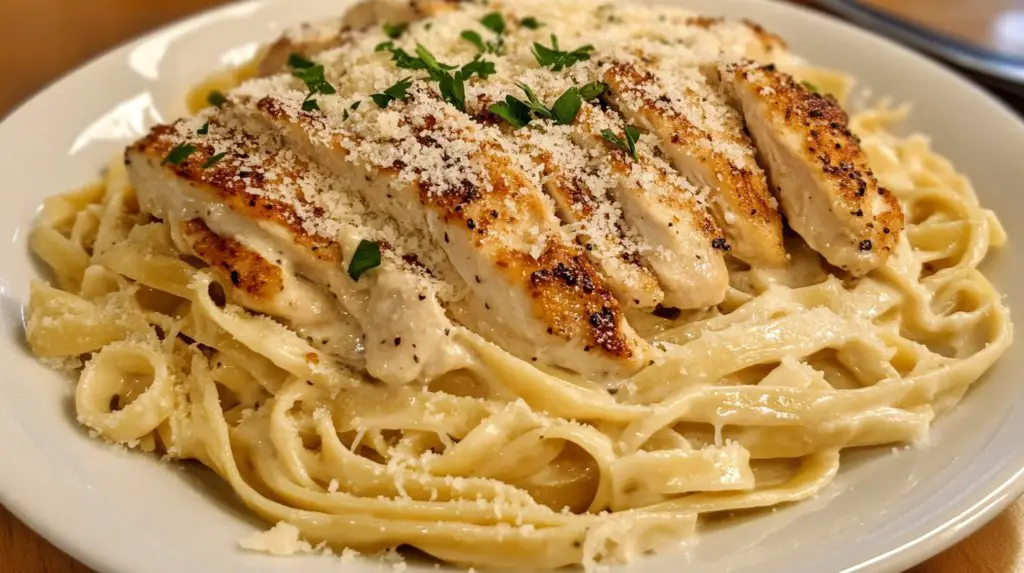
The sauce is the entire reason anybody orders this dish. You can simmer cream and cheese together on any Tuesday night, and most of us have, and it still comes out tasting like cream and cheese instead of like the bowl that shows up next to the breadstick basket. The gap is not knife skills or a restaurant stove. It is two things missing from almost every version floating around online: a second cheese, and milk standing right alongside the heavy cream instead of hiding behind it.
Olive Garden’s Alfredo, as the widely shared copycat formula has it, uses 1/2 cup Parmesan and 1/2 cup Romano, with 1 1/2 cups each of heavy cream and milk. Butter comes in at 3 ounces, which is 6 tablespoons, not a whole stick. Two tablespoons of flour thicken it, 1 tablespoon of minced garlic gives it the savory edge, and a little pepper finishes it. That is the formula. Everything else is execution.
Romano Is The Ingredient Everyone Skips
Parmesan alone tastes nutty and polite. Romano is sharper and saltier, and when the two go in together at a one-to-one ratio, the sauce picks up the tang that makes people say it tastes like the restaurant. Copycat versions that run Parmesan only are the ones that come out flat no matter how much cheese you dump in.
One cook who made the two-cheese version found three flavors come through right away: the nutty Parmesan, the garlic and the butter. Lose one and the whole thing goes soft. Buy a wedge of each at the deli counter if your store carries it. Domestic Romano and imported Pecorino Romano both work.
Six Tablespoons Of Butter, And Flour To Back It Up
Plenty of home recipes call for a stick of butter in the sauce, or more. This one stops at 6 tablespoons, and the flour does the work the butter would otherwise have to fake. That is why this sauce clings to fettuccine the way it does instead of pooling at the bottom of the bowl.
Cook the flour in the butter and garlic for one full minute, whisking the whole time, then pull the pan off the burner before the dairy goes in. Toasting the flour coats it in fat and cooks out the raw, pasty flavor that ruins an otherwise good sauce. Taking the pan off the heat stops the roux from browning and gives you a smooth white base. Whisk the cream and milk in slowly off the heat, then return the skillet to low.
Breaded Chicken Beats The Grilled Kind
Olive Garden’s own menu tops its Chicken Alfredo with sliced grilled chicken. At home, Italian-breaded chicken breast is the upgrade: seasoned, lightly breaded, pan-fried until the outside is golden and the inside is still juicy. Grilled gets you the menu. Breaded gets you the bowl people ask for again.
Build the breading from 1 cup Italian-style breadcrumbs, 1/4 cup grated Parmesan, 1/4 cup flour, 1 teaspoon garlic powder, 1/2 teaspoon smoked paprika if you want color, plus salt and pepper. Whisk 2 eggs with 2 tablespoons of water in a second bowl. The coating that actually holds up comes from a double dredge: breadcrumbs first, then egg, then back into the breadcrumbs for a thick second layer. Fry in 2 tablespoons of butter with 1 teaspoon of olive oil over medium heat, 4 to 5 minutes a side, until the center hits 165°F.
Let it sit for 7 to 10 minutes before you slice it. Cut too soon and the juice runs out onto the board, leaving you with dry, rubbery strips sitting on top of a beautiful sauce. If you want the chicken itself to taste more like the chain’s, marinate the raw breasts in 2 to 3 tablespoons of zesty Italian dressing for 15 to 30 minutes first. The acid, herbs and garlic in a bottle of dressing get it close to the restaurant’s seasoning.
Why Homemade Alfredo Turns Grainy
Heat is the usual culprit. Once the cheese goes in, the sauce stays on low and nothing more. Crank it and the fat separates, the cheese seizes, and you get that sandy texture no amount of whisking fixes. A gentle simmer is the whole game.
The cheese itself is the other half of the problem. Pre-shredded bags are coated in anti-caking starch so the strands do not clump in the package, and that same coating keeps them from melting cleanly into dairy. Grate it yourself off a block with a fine grater, or look for refrigerated tubs where cheese is the only thing on the ingredient list. Cellulose on the label is your signal to put it back.
Skim milk is the third mistake. The formula splits cream and milk evenly for a reason, and whole milk brings the fat that keeps everything emulsified. Go to skim and the sauce turns thin and chalky. Add the Parmesan and Romano a handful at a time, whisking between each addition, and stop when it coats the back of a spoon.
One more small thing that saves a dish: reserve a cup of pasta water before you drain. The sauce tightens fast as it sits, and a splash of starchy water loosens it back up without watering down the flavor.
Fettuccine Is Not An Accident
Wide flat noodles carry a thick cream sauce better than anything else in the pasta aisle. There is real surface area for the sauce to grab, and the ribbons hold the sliced chicken on top instead of letting it slide into a pile. Penne and ziti work in a pinch and nobody will throw you out of the kitchen, but the dish loses something.
Salt the water heavily and pull the pasta one minute short of the package time. It finishes in the sauce, which is where it should be picking up flavor anyway. Pasta cooked all the way through before it meets the skillet soaks up too much sauce and goes limp.
Changes Worth Making
Shrimp swaps straight in for the chicken with no other changes. Steamed broccoli tossed in at the end is the most popular variation of this dish going, and sliced mushrooms cooked in the chicken pan before you build the sauce add a savory layer the original does not have.
If you would rather not stand over a skillet of frying chicken, the air fryer handles marinated breasts at 360 degrees for about 12 minutes, until they reach 165°F, though you give up the crunch of the breading. Leftover portions also turn into a solid baked casserole: toss pasta, chicken and sauce in a dish, scatter extra Parmesan and some mozzarella over the top, and bake at 350°F for 15 to 20 minutes until it bubbles.
Two tablespoons of cream cheese melted in with the butter and cream is a shortcut some cooks swear by for extra body. It is not in the copycat formula. It does make a thicker, richer sauce, so it comes down to whether you want an accurate copy or your own version. A pinch of nutmeg is the other common addition, and it does give the sauce a warmth that most online Alfredo recipes are missing.
Leftovers And Reheating
Store it in an airtight container in the fridge for 3 to 4 days. The pasta keeps drinking the sauce while it sits, so expect it to look dry by morning. Reheat it in a skillet over low heat with a splash of milk or cream, stirring constantly for about 5 minutes until it comes back together.
Skip the microwave if you can. Alfredo separates in it, and you end up with oily pasta and a puddle. Skip the freezer too: cooked pasta is finicky frozen and never quite the same after thawing, and the sauce takes under 10 minutes to make fresh anyway.
Make the whole thing once with the Romano in it and the ratios as written, and you will stop ordering it out. The sauce holds, the chicken crunches, and a batch feeds four for a fraction of what the table costs.
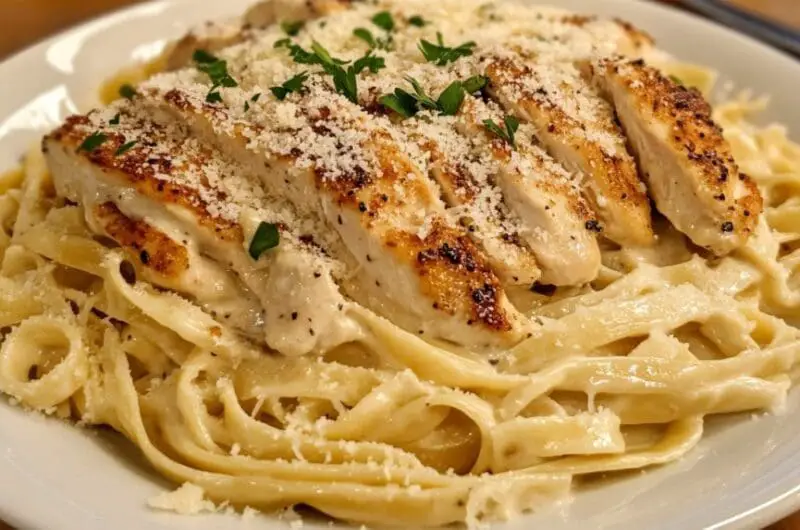
Copycat Olive Garden Chicken Alfredo
Course: DinnerCuisine: Italian-American4
servings25
minutes30
minutes1250
kcalThe two-cheese sauce and breaded chicken that finally taste like the restaurant bowl.
Ingredients
12 oz fettuccine
2 boneless, skinless chicken breasts, halved lengthwise into 4 cutlets
1 cup Italian-style breadcrumbs
1/4 cup grated Parmesan cheese, for the breading
1/4 cup all-purpose flour, for the breading
1 tsp garlic powder
1/2 tsp smoked paprika (optional)
2 large eggs, whisked with 2 tbsp water
Salt and black pepper, to taste
2 tbsp butter plus 1 tsp olive oil, for frying the chicken
6 tbsp unsalted butter, for the sauce
1 tbsp minced garlic
2 tbsp all-purpose flour
1 1/2 cups heavy cream
1 1/2 cups whole milk
1/2 cup freshly grated Parmesan cheese
1/2 cup freshly grated Romano cheese
1/8 tsp white pepper
2 tbsp chopped fresh parsley
Directions
- Bring a large pot of heavily salted water to a boil and cook the fettuccine one minute short of the package time. Scoop out 1 cup of the pasta water before draining. Set the drained pasta aside; it will finish cooking in the sauce.
- Pat the chicken cutlets completely dry with paper towels and season both sides with salt and pepper. A dry surface browns; a wet one steams. If any piece is thicker than about 3/4 inch, pound it down so it cooks evenly.
- Stir the breadcrumbs, 1/4 cup Parmesan, 1/4 cup flour, garlic powder, smoked paprika, salt and pepper together in a shallow bowl. Whisk the eggs with 2 tablespoons of water in a second bowl. Toss each cutlet in the crumb mix, dip it in the egg, then press it back into the crumbs a second time for a thick coating.
- Melt 2 tablespoons of butter with 1 teaspoon of olive oil in a large skillet over medium heat. Cook the chicken 4 to 5 minutes per side, until the crust is deep golden and the center reads 165°F on a thermometer. Move it to a cutting board and let it rest 7 to 10 minutes before slicing.
- In a clean high-sided skillet, melt the 6 tablespoons of unsalted butter over medium-low heat. Add the minced garlic and cook about 1 minute, just until it smells good. Do not let the garlic color.
- Sprinkle the 2 tablespoons of flour over the butter and garlic and whisk constantly for 1 minute to cook out the raw flour taste. Pull the pan off the burner, then slowly whisk in the heavy cream and milk until completely smooth. Adding the dairy off the heat is what keeps lumps from forming.
- Return the skillet to low heat and add the Parmesan and Romano a handful at a time, whisking between additions. Stir in the white pepper and simmer gently until the cheese melts and the sauce coats the back of a spoon. Keep the heat low the whole time or the sauce will break.
- Add the drained fettuccine to the sauce and toss until every strand is coated, loosening with reserved pasta water a splash at a time if it tightens up. Slice the rested chicken and lay it over the pasta. Finish with chopped parsley and extra grated cheese at the table.
Notes
- Grate the Parmesan and Romano yourself off a block. Pre-shredded bags are coated in anti-caking starch that keeps the cheese from melting smoothly and makes the sauce grainy.
- For chicken that tastes closer to the restaurant, marinate the raw breasts in 2 to 3 tablespoons of zesty Italian dressing for 15 to 30 minutes before breading.
- Leftovers keep 3 to 4 days in an airtight container. Reheat in a skillet over low heat with a splash of milk, stirring constantly for about 5 minutes. Freezing is not recommended.
Frequently Asked Questions
Q: What is Olive Garden’s Alfredo sauce actually made of?
A: Butter, milk, heavy cream, Parmesan, Romano and garlic, thickened with flour and finished with a little pepper. The widely shared copycat amounts are 6 tablespoons butter, 2 tablespoons flour, 1 tablespoon minced garlic, 1 1/2 cups each of cream and milk, and 1/2 cup each of the two cheeses.
Q: Can I use grilled chicken instead of breaded?
A: Yes, and that is how Olive Garden’s menu serves it. Season with salt, pepper and Italian seasoning, then grill or pan-sear to an internal temperature of 165°F and slice it thin over the pasta.
Q: Can I make the sauce with just milk?
A: Whole or 2% milk makes a lighter sauce that still works, but skim turns it thin and chalky. The even split of cream and milk is what gives the restaurant version its texture.
Q: Can I freeze chicken Alfredo?
A: It is not worth it. Cooked pasta does not hold up well in the freezer and the sauce is never quite the same after thawing. The sauce takes under 10 minutes to make fresh.

