

Chicken has been the one thing fast food could not get wrong. Over the past decade the number of chicken chain locations in the United States jumped 46%, a net gain of nearly 6,200 restaurants, and the category still grew 5.3% in 2025. Buckets, tenders, sandwiches, wings, Americans keep buying all of it. Diners have been quietly pulling back from chains they used to trust, though, and the reasons repeat: smaller portions, higher prices, food that does not match the version people remember. One chain wore that harder than anyone. Between July 15, 2025 and July 6, 2026, KFC permanently closed at least 312 American restaurants while its competitors were opening. The food explains more of that than the real estate does. The chicken chains, worst to best.
7. KFC
The closure count is the number that matters. KFC shut at least 312 US restaurants in the twelve months ending July 6, 2026, a 7.64% cut to its American store count, according to tracking by search visibility platform Local Falcon, which compared the chain’s own store locator at the start and end of the period and checked each removed listing against Google Maps. California absorbed the most, losing 44 locations. Texas lost 34 and Ohio 18. Among states with at least 20 locations, Kansas took the worst percentage hit, dropping from 38 restaurants to 30.
Sales were sliding well before the lights went off. KFC’s US sales fell 5.2% in 2024 and another 4.6% in 2025, by Technomic’s estimates, two straight years of contraction inside a category that kept expanding. In its 2025 rankings the American Customer Satisfaction Index knocked KFC down 5% to 77.
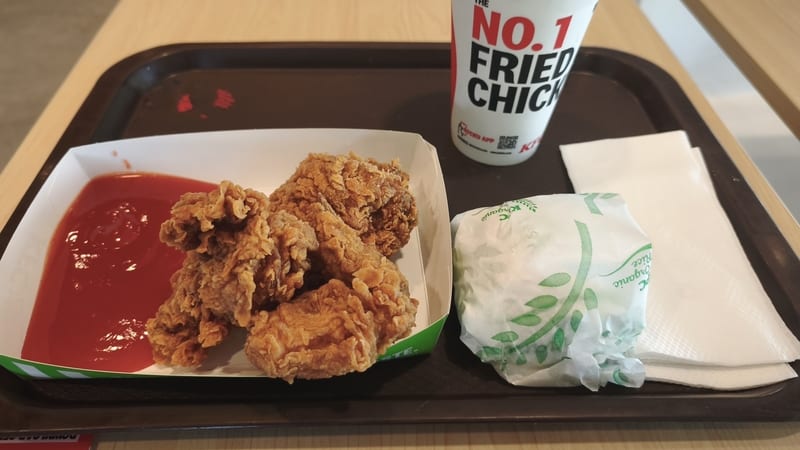
What is actually in the box explains the rest. The tenders take the heaviest fire: customers in 2026 reported them arriving nugget-sized and dried out, with one app screenshot showing a 16-piece tender order priced at $47. Bone-in pieces get described as greasy and soggy inside thick batter, rubbery and dry on the inside, and small for the money. One regular described breading dry enough to chew like leather. KFC’s average Google rating across its US restaurants is 3.42 out of 5, per Local Falcon, below Chick-fil-A at 4.30 and Raising Cane’s at 4.29.
Dominick Miserandino, CEO of RTM Nexus, told TheStreet that the chain’s whole model aged out from under it. “KFC got squeezed into the background because they treated chicken like a Sunday family dinner while their competitors treated it like a fast, daily habit.”
Credit where it is owed. KFC said out loud that the brand had drifted, and the work since has produced back-to-back positive quarters at the end of 2025, with same-store sales up 2% and then 1%. Restaurant consultant Jeffrey Summers, writing on LinkedIn, catalogued the bill: “The turnaround required: a new president, a new CMO, a new chief growth officer, a national campaign admitting failure, the return of Potato Wedges, a viral social media moment, a tiered value architecture borrowed from Taco Bell, and two years of work.” ACSI’s 2026 study already has KFC back up to 80. A brand that size turns slowly, though, and until a tender box stops costing what it costs, this is the chicken chain to skip at all costs.
6. Church’s Texas Chicken
Consistency is the entire complaint at Church’s. The chain does not run the same playbook branch to branch, so the same order becomes two different meals depending on which parking lot you pull into. The gravy gets the worst of it, described as watery and bland. The mac and cheese comes back soupy and grainy. The spicy chicken sandwich is not meaningfully spicy.
Then there was the fry switch. Church’s moved from crinkle-cut to straight-cut fries abruptly at several locations, and longtime customers have not let it go, partly because the fries were one of the few things nobody argued about. Add portions that regulars say keep shrinking, and the value case collapses. Church’s only ever made sense as the cheaper alternative to a bigger rival. When the plate gets smaller and the sides get worse, there is nothing propping the decision up.
5. Popeyes
Popeyes spent a decade proving that high-flavor, premium-tier fried chicken could be delivered fast and at scale, and on a good day it still makes the best sandwich in this category. The trend lines have turned, though. US sales dipped 0.5% in 2025 after 3.9% growth the year before, and the American Customer Satisfaction Index put Popeyes at the bottom of the chicken chains it measured in 2026, scoring 73 against a quick-service average of 79.
The grievances are operational rather than culinary. Food arrives cold or oversalted. The wrong pieces end up in the box. Sides go missing. Items turn out to be unavailable after the order has been placed and paid for, which is the kind of failure that costs a customer for good.
Individual restaurants have had rougher stretches. Los Angeles County inspectors closed a Popeyes on Sepulveda Boulevard in Culver City on June 29, 2026 for vermin infestation, with no reopening date listed. In Augusta, Maine, state inspectors issued an imminent health hazard citation to a location that had only opened in May, citing insufficient cold-holding equipment and a lack of managerial control. That restaurant closed, agreed to a risk-control plan, reopened within 24 hours and was placed on an increased monitoring schedule.
4. Wingstop
Wingstop grew revenue in 2024 while KFC was shrinking, and the wings themselves are rarely what people complain about. The handoff is. Online orders run late, arrive incomplete, or come back under-sauced, which on a menu whose entire premise is flavor selection is the one mistake that cannot be shrugged off. Fries show up cold and soggy often enough that regulars stop ordering them, and the blue cheese is treated as a throwaway.
The scores track the experience. Wingstop entered ACSI’s rankings for the first time in 2026 at 77, under the 79 quick-service average. The chicken is good, the execution is a coin flip. Order inside and check the bag before you leave the counter.
3. Zaxby’s
Zaxby’s did not appear in ACSI’s 2026 chicken chain rankings at all, which leaves customer chatter as the only read available, and the 2026 chatter is lukewarm rather than hostile. The repeated notes: chicken that is smaller and drier than it used to be, an app that misbehaves, and promotions that do not apply the way the advertising promised.
Nothing there puts Zaxby’s near the bottom of this list. The sauces still carry the menu, the fried chicken is competent, and nobody is reporting the pricing shocks that have attached themselves to bigger names. This is a chain coasting a little, not one coming apart.
2. Raising Cane’s
A menu of chicken fingers, fries, slaw, toast and one sauce should be easy to pick apart. It mostly is not. Cane’s holds a 4.29 average Google rating, within a hair of the best in the category, and it has kept expanding aggressively on a stripped-down menu and a genuinely devoted customer base while rivals closed stores.
Price is the live argument. A Caniac Combo that cost $16.59 at a Phoenix location in 2023 had risen to $17.29 at the same restaurant by August 2026, and longtime customers say the portions have moved the other way. ACSI scored Cane’s at 79 in its first appearance in the 2026 rankings, exactly the quick-service average, which feels about right. Nobody leaves disappointed. Plenty of people are starting to do the math on seventeen dollars for fingers and toast.
1. Chick-fil-A
Chick-fil-A wins on the only measure that survives contact with a drive-thru line: doing the same thing correctly every single time. Its 4.30 average Google rating is the highest among the major chicken chains, and its ACSI score of 83 is the best of any chicken chain in the 2026 study.
The business follows the ratings. Chick-fil-A’s sales rose 5.2% year over year in 2025, barely off the 5.4% growth it posted the prior year, in the same twelve months that a competitor was closing 312 restaurants. Miserandino pointed to drive-thru speed, customer service and the classic chicken sandwich as the reason, and that is the honest explanation: Chick-fil-A did not outspend anyone into this position, it out-executed them in the same strip malls.
The sandwich is not the most exciting fried chicken in America, and anyone chasing heat should be at Popeyes on a day when that kitchen is running right. What Chick-fil-A sells is predictability. The order is correct, the line moves, and the sandwich in one state is the sandwich in another. In a category where almost every complaint is about inconsistency rather than recipes, that is the whole game. Spend your chicken money there. Do not spend $47 on tenders.

