

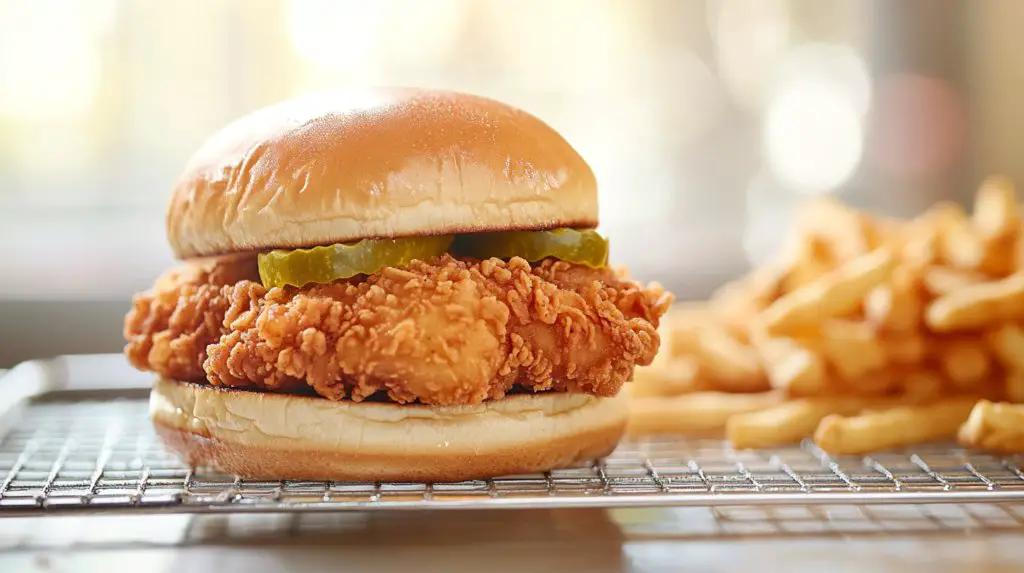
Birthdays were the problem. James Walker’s kids all want Chick-fil-A for their birthday meal, and sometimes the birthday lands on a Sunday, when the chain keeps its restaurants closed. Walker, a restaurant industry executive based in Connecticut and the CEO of Lunchbox, a platform that powers technology for major restaurant chains, started working out his own version after he moved away from Atlanta. He posted the method on X, then cooked it on camera for Fox News Digital: small chicken breast halves soaked in half pickle juice and half water, run twice through an egg wash and a sweetened flour, and pan fried until the crust turns gold.
Walker said on X that he “used to make this for my daughter when we moved away from Atlanta, and we didn’t have Chick-fil-As yet.” He told Fox News Digital the recipe “is something we’ve been making in the Walker household for a number of years.” The whole thing takes about 30 minutes of marinating and under 10 minutes of frying, which is roughly the time you’d spend in the drive-thru line anyway.
The Pickle Juice, And The Case Against It
Walker dilutes his marinade, 50/50 pickle juice and water, and gives the chicken 30 minutes in the fridge. That dilution matters more than people think. Straight dill pickle brine for an hour works too, and some home cooks go overnight, but the longer and stronger you soak, the more the chicken starts tasting like a pickle instead of like chicken with a tangy edge.
A popular middle path mixes the brine with dairy: a cup and a half of milk to half a cup of pickle juice, chicken in for 30 minutes to an hour. The milk mellows the salt and the acid, and the version that uses it still comes out with that faint sour note under the crust.
Worth knowing: the most obsessively tested copycat out there skips pickle juice completely. That cook made around 40 different versions over two months and settled on a 6.7% salt brine built with MSG, sugar, paprika, black pepper and mustard powder stirred into a liter of water, with the chicken sitting in it 6 to 8 hours. The logic is that salt and seasoning get all the way to the middle of the filet, where pickle juice mostly flavors the surface. Both make a very good sandwich. Pickle juice is the fast one, and it is the one that tastes the way your memory says Chick-fil-A tastes.
Sugar In The Flour Is Non-Negotiable
One tablespoon of powdered sugar goes into Walker’s cup of flour, along with paprika, black pepper, chili powder, salt and baking powder. It sounds wrong. It is the single thing that separates this sandwich from every other fried chicken sandwich, that whisper of sweetness that hits right as the crust shatters. Some recipes push it harder, with two tablespoons to the same cup of flour.
There’s a decent argument for using plain granulated sugar instead. Powdered sugar is almost always cut with cornstarch, and Chick-fil-A’s official ingredient list doesn’t name cornstarch anywhere, so the restaurant is probably using regular sugar. Swap in granulated at the same volume if you want to split that hair. Do not leave the sugar out. Without it the sandwich is just fried chicken.
What The Word Spices Actually Hides
Chick-fil-A’s label lists paprika and then just “spices,” and federal food labeling rules define that term in a way that excludes things treated as foods, including onion, garlic and celery. By that rule garlic powder would have to be named, which argues against the garlic powder in a lot of home versions. The reverse-engineered recipe that leaned on those rules reports that Chick-fil-A executives, asked directly by a writer who met with them, said their spices are black pepper, paprika and mustard.
Mustard powder is the one almost nobody uses. It goes in the brine and in the breading, and it does not read as mustard on the finished sandwich; it reads as that savory thing you can never quite name. MSG is the other one, and it isn’t a secret at all, since monosodium glutamate sits right on the restaurant’s ingredient list for the chicken. Look for it in the spice aisle sold as Accent.
Plenty of excellent copycats go the other way and lean on garlic powder and smoked paprika, two teaspoons of each per cup of flour. That sandwich is delicious. It also tastes like a great homemade chicken sandwich rather than the one in the red and white bag.
How To Get The Craggy Crust
Walker coats the chicken twice. Egg wash, flour, then back into the egg and back into the flour again. That double dip builds a thicker shell that holds up under the bun and the sauce.
The other trick is to wet the flour before the chicken ever touches it. Drizzle 2 to 3 tablespoons of your milk and egg mixture into the dry seasoned flour and rub it through with your fingertips until little beads and clumps form all through the bowl. Those beads fry into the knobby, craggy bits that make the crust crunch instead of crack. Cooks call it seeding, and it takes about 30 seconds.
Press hard when you bread. Chick-fil-A’s own training manual reportedly tells employees to press so firmly their heels come off the ground, flattening the filet out with the palm so it cooks evenly. Shake off the loose flour before the chicken goes in the oil, or it burns and floats.
Oil Temperature And Timing
Walker fries in hot canola oil in a saucepan, 3 to 4 minutes per side, until each side is golden brown and crisp. Other cooks pour oil an inch and a half deep in a Dutch oven and hold it at 350 degrees, with the filets taking 2.5 to 4 minutes total and coming out at 165 degrees inside. The low-and-slow approach runs the oil at 325 degrees and times each filet at about 4 minutes and 20 seconds, which gives the crust longer to crisp without scorching the sugar in the flour.
Chick-fil-A pressure cooks its chicken in refined peanut oil, and some home cooks insist you cannot get a true copycat without it. The cook who tested dozens of batches says refined peanut oil is close to flavorless, much like vegetable or canola, so the swap costs you less than people claim. Use peanut oil if it’s easy. Canola is not going to ruin your dinner.
Where the chicken lands after the fryer does matter. Paper towels catch grease but trap steam under the filet and soften the bottom crust. A wire rack set over a baking sheet lets air move underneath and keeps the crunch intact until the buns are ready.
The Bun, The Pickles, The Sauce
Butter both cut sides and toast them in a pan over medium heat, one to two minutes, while the oil comes up to temperature. Cold buns on hot chicken is the fastest way to make a homemade sandwich taste homemade in the bad sense. The cook who tested 40 versions found brioche hamburger buns the closest match to the restaurant bun, and a cheap standard bun works fine if that’s what’s in the house.
Two dill pickle slices, no more. Of every pickle brand tested at Walmart, Vlasic Ovals Hamburger Dill Chips came out closest in flavor, a little thicker than the restaurant cuts them. Chick-fil-A’s training manual has a rule for how they sit on the bun: the pickles should be dating, not mating. They never overlap.
Walker spreads sauce on the toasted buns and adds lettuce and pickles before the chicken goes on, then serves it with waffle fries. Chick-fil-A sauce and Polynesian sauce are both on grocery shelves now. Honey mustard, ranch or barbecue sauce all do the job if you’d rather not make a special trip.
Mistakes That Keep It From Tasting Right
Thickness is the big one. Chick-fil-A uses whole 4-ounce breasts that have never been split, according to that same tester, and you will not find those at a normal grocery store, where breasts run 12 to 16 ounces each. Trim the narrow end about halfway up, butterfly the thick half horizontally, and even out any lumps with a mallet. One big breast gives you roughly three sandwich filets and a tenderloin for strips. Aim for about half an inch thick, all the way across.
If you brine with salt instead of pickle juice, the brand of salt changes the math. A tablespoon of Morton’s kosher salt weighs 14.4 grams while a tablespoon of table salt weighs about 18 grams, roughly 25% more, so measuring by volume with the wrong salt either over-salts or under-salts the bird. Weigh 67 grams on a kitchen scale and the problem disappears.
Crowding the pan drops the oil temperature and gives you pale, greasy crust. Fry two filets at a time, let the oil recover, and dry the chicken thoroughly with paper towels after the marinade so the coating grips. If you want the grilled club instead of the fried classic, that version exists too, built on a pickle juice and milk marinade and finished with bacon and honey roasted barbecue sauce.
My verdict: make Walker’s version on a weeknight, because 30 minutes of diluted pickle brine and a double dip gets you 90% of the way there with pantry ingredients. Save the long salt brine with MSG and mustard powder for a Sunday, when you have the hours and the craving is specific.
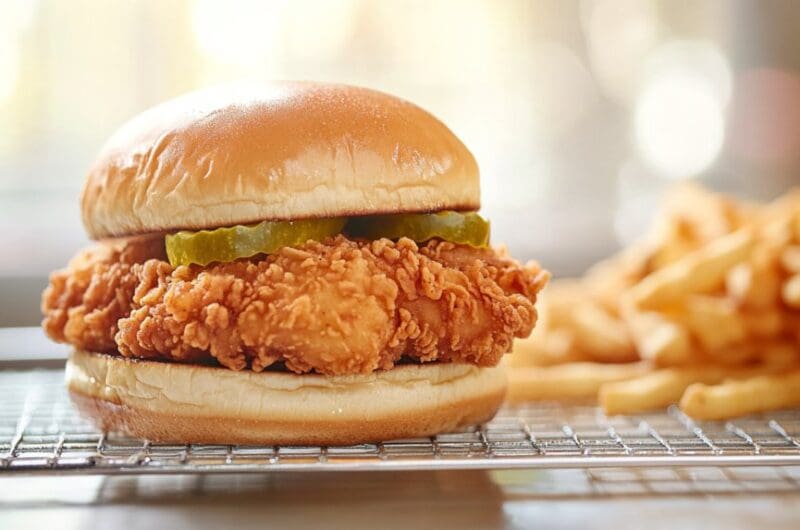
Copycat Chick-fil-A Chicken Sandwich
Course: Main CourseCuisine: American2
servings30
minutes10
minutes600
kcalThe pickle-brined, double-dipped fried chicken sandwich that gets you through a Sunday craving.
Ingredients
2 small chicken breasts (3.5 to 4 oz each)
Dill pickle juice and water, mixed 50/50, enough to cover the chicken
1 cup all-purpose flour
1 tablespoon powdered sugar
1/2 teaspoon paprika, 1/2 teaspoon chili powder, 1/2 teaspoon salt
1 teaspoon black pepper and 1/2 teaspoon baking powder
1 egg whisked with 1/2 cup milk
Canola oil for frying (peanut oil if you have it)
2 sandwich buns, buttered and toasted, plus pickle slices, lettuce and Chick-fil-A sauce or similar
Directions
- Pat the chicken dry so every piece is ready for the marinade. If any spot is thicker than half an inch, lay the filet between two sheets of wax paper and flatten it gently with a mallet. Uniform filets cook through before the crust gets too dark.
- Stir together equal parts dill pickle juice and water in a bowl, enough to cover the chicken. Add the filets, cover, and refrigerate for 30 minutes. Drain and dry the chicken well with paper towels so the coating has something to grip.
- In a wide bowl, whisk the flour, powdered sugar, paprika, black pepper, chili powder, salt and baking powder until there are no streaks. Break up any lumps with your fingers or push the mix through a strainer. The sugar is what gives the crust its faint sweetness, so do not skip it.
- In a second bowl, whisk the egg and milk together until smooth. Drizzle 2 to 3 tablespoons of that mixture into the seasoned flour and rub it through with your fingertips until small beads form throughout. Those beads fry up into the craggy, crunchy bits on the finished crust.
- Dip a filet in the egg wash and let the excess run off, then press it firmly into the flour mixture with the palm of your hand. Dip it back in the egg and back into the flour a second time for a thicker shell. Shake off the loose flour before it goes anywhere near the oil.
- Pour about an inch of canola oil into a heavy saucepan and bring it up to frying temperature over medium-high heat. A pinch of flour should sizzle immediately without smoking. Work in batches of two so the temperature does not crash.
- Fry each filet 3 to 4 minutes per side, until deep golden brown and crisp and the chicken reaches 165 degrees inside. Move the finished pieces to a wire rack set over a baking sheet rather than stacking them on paper towels. Air circulating underneath keeps the bottom crust from going soft.
- Butter both halves of the buns and toast them cut side down in a pan while the chicken fries. Spread sauce on the toasted bun, add lettuce and two pickle slices, set the chicken on top and close the sandwich. Serve right away, with waffle fries if you have them.
Notes
- Swap the powdered sugar for the same amount of granulated sugar if you want to skip the cornstarch that powdered sugar is usually cut with.
- Two pickle slices per sandwich, and do not let them overlap. Vlasic Ovals Hamburger Dill Chips were the closest match of the brands tested at Walmart.
- For a deeper seasoning, brine the filets 6 to 8 hours in salted water with MSG, sugar, paprika, black pepper and mustard powder instead of using pickle juice.
Frequently Asked Questions
Q: Can I make this without deep frying?
A: Yes. In an air fryer, preheat to 370 degrees, grease the basket, lay in the coated filets, spray the tops lightly and cook 11 to 13 minutes, flipping halfway. In the oven, set it to 450 degrees, put the chicken on a wire rack over a baking sheet, spray both sides with oil and bake 12 minutes, then flip and bake about 15 more, until the chicken reads 165 degrees inside.
Q: Do I have to use peanut oil?
A: Chick-fil-A cooks its chicken in peanut oil, but refined peanut oil is close to flavorless, so canola or vegetable oil gets you nearly the same result. Use whatever your household can have.
Q: Can I use chicken thighs?
A: You can, and they will taste good. Chick-fil-A uses white meat, so thighs will not be an exact match for the original.
Q: Will this recipe work for nuggets or strips?
A: It will. Cut the breasts into nugget-sized pieces and use the same marinade, breading and frying method, or save the tenderloins from each breast and bread them whole for strips.

