

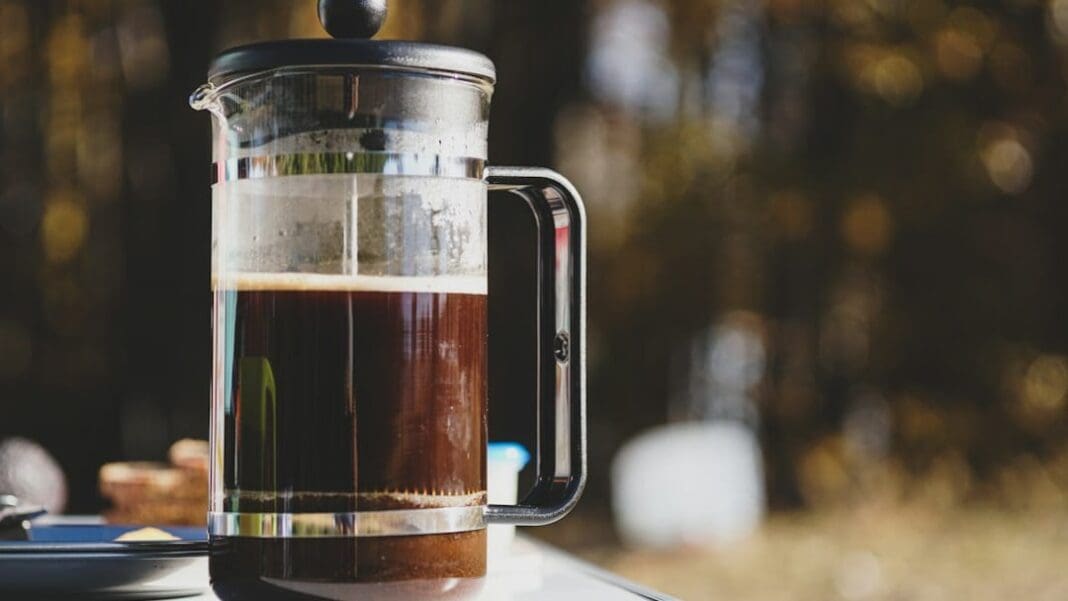
The spoon in your silverware drawer is the problem. Not the grind, not the water temperature, not the plunger you push down every morning while you wait for the fog to clear. It’s the metal spoon people use to stir grounds into hot water inside a glass carafe, and it is now behind a recall of nearly six million French presses.
Bodum USA is recalling about 5.9 million French press coffee makers with replaceable glass carafes, the U.S. Consumer Product Safety Commission announced Thursday, Oct. 29. The carafes can unexpectedly break during use if the glass is already damaged or cracked, including from stirring with a metal spoon, and the agency says that poses a risk of serious burn injury.
Bodum has received 70 reports of glass carafes breaking while in use. Forty-eight of those reports involved burns.
Eight Model Names, Two Sizes
The recall covers Bodum 8-cup and 12-cup French presses with replaceable glass carafes sold under eight names: Bistro, Brazil, Caffettiera, Chambord, Crema, Java, Jesper and Kenya. The Chambord is the one most people picture when they picture a French press, the chrome frame with the little feet and the domed lid.
Checking yours takes about ten seconds. The Bodum name appears on the frame and the inner lid of most models, and the company name and product warnings are engraved on the glass carafe itself. The recall number is 27-055.
Size matters here. Only the 8-cup and 12-cup glass carafes are named. No other sizes are named. If you own a different size and you’re not sure, that’s a question for the company rather than a guess you should make standing in your kitchen.
The presses sold for roughly $15 to $65, which is part of why there are nearly six million of them out there. This has been the default cheap-but-nice coffee gift for decades.
Sold Since 1974
The sales window on this one is enormous. The recall covers products sold from 1974 through October 2026, more than five decades of continuous sales. A press bought during the Ford administration is included alongside one bought in October 2026.
They were sold at Target and Walmart, at coffee shops and home goods stores nationwide, and online through Amazon, Target.com and Walmart.com.
Fifty-two years of sales means these things have moved through estate sales, garage sales, wedding registries, office kitchens and hand-me-down boxes. The person with a recalled carafe on their counter may have never bought it in the first place, and may never see a recall alert. If you gave one as a gift, that’s a text message worth sending.
What Actually Breaks The Glass
Two things are named as the cause, and neither is a factory flaw. The first is stirring the coffee in the glass carafe with a metal spoon or another hard utensil, which can chip or scratch the glass. The second is continuing to use a carafe that is already cracked or damaged.
Put hot water into glass that has been nicked a few hundred times and the math eventually stops working in your favor. That’s the whole mechanism. The recall is about how the presses get used, not a product defect, not a bad batch or a bad production year, which is exactly why it reaches back to 1974 instead of covering a narrow run of serial numbers.
Damage you can’t see counts too. Owners are warned that a carafe can fail during normal use even when it looks fine, so “mine’s never had a problem” is not the reassurance it sounds like.
70 Breakages, 48 Burns
Those two numbers are doing the heavy lifting in this recall. Seventy reports of carafes breaking during use. Forty-eight of them ended with someone burned.
That’s a high conversion rate from breakage to injury, which makes sense when you think about where your hand is when a French press fails. You’re holding the handle or the plunger knob, your other hand is near the lid, and the carafe is full of water that was boiling a few minutes ago.
Against 5.9 million units, 70 reported incidents is a small fraction, and Bodum has said as much. Federal regulators still treated it as worth a nationwide notice, which tells you how they weigh scalding liquid in a glass container you hold in your hands.
There Is No Refund
This is the part most owners will find annoying. The remedy is not money back. It is not a new carafe. It is not store credit toward a different coffee maker.
What you get for contacting the company is a free Bodum-designed plastic stirring spoon and a warning label. The label reminds you not to use a cracked or damaged carafe and not to stir with metal utensils inside the glass.
Going forward, Bodum said, these presses will ship with the plastic spoon and the extra warning label included in the box.
So the official fix for a 5.9 million unit recall is a spoon and a sticker. Whether that feels like enough probably depends on how old your carafe is and how many times you’ve scraped a teaspoon around the bottom of it.
What The Company Says
Bodum USA, the New York-based arm of a Danish-Swiss company that makes coffee gear, called the action voluntary and said it takes any reports of injury extremely seriously.
“This recall is an opportunity to reinforce warnings against using a cracked or damaged carafe and in particular, against using metal spoons to stir coffee in the glass carafe, which can damage the glass and lead to breakage during use,” the company said in a statement. It added that the rate of reported breakage during use is extremely low given how many of these it has sold in the U.S. over decades, and that the recall will further encourage safe use of its French presses.
The company also described itself as the North American market leader in the category and said the extra steps are meant to reinforce its instructions and warnings. It also noted that it is family-owned. Bodum was founded in Denmark in 1944 and makes household products, including coffee and tea makers.
How To Check The One On Your Counter
Stop stirring with metal right now. Not “after this pot.” The guidance is to quit using metal spoons and utensils inside the glass carafe immediately, and that applies whether or not you ever request the free spoon.
Then look at the glass. Hold the carafe up to a window and check for chips and hairline cracks, especially around the base and the rim where a spoon would have hit. A damaged carafe is the second documented risk factor, and swapping your spoon does nothing about it.
To get the spoon and the label, call Bodum toll-free at 888-879-8213 between 8 a.m. and 5 p.m. ET Monday through Friday, email Bodum3302@sedgwick.com, or go to www.bodumfrenchpressrecall.expertinquiry.com. You can also go to bodum.com and click on “Recall Information.”
Is A Plastic Spoon Enough?
Partly. Ditching metal handles one of the two causes, and it costs you nothing. Any plastic or wooden spoon in your drawer does the same job today while you wait for Bodum’s version to show up in the mail.
The glass is the piece worth your actual attention. Bodum builds these presses around a carafe it calls replaceable, which means the beaker is designed to come out of the frame and be swapped. That swap is not part of the remedy here, so if yours is chipped, scratched or has been through fifteen years of morning abuse, replacing the glass is on you.
My honest read: a press that’s been scraped with a teaspoon for a decade has already taken the damage this recall is about, and a warning sticker doesn’t undo it. Retire that carafe. Keep the frame, keep the plunger, get clean glass in it, and stir with something soft. The coffee tastes the same and nobody ends up holding a shattered beaker of near-boiling water at 6 a.m.
And tell the people who own one. Five decades of sales means the person most likely to be using a damaged carafe is the one least likely to be reading a product safety notice.

