

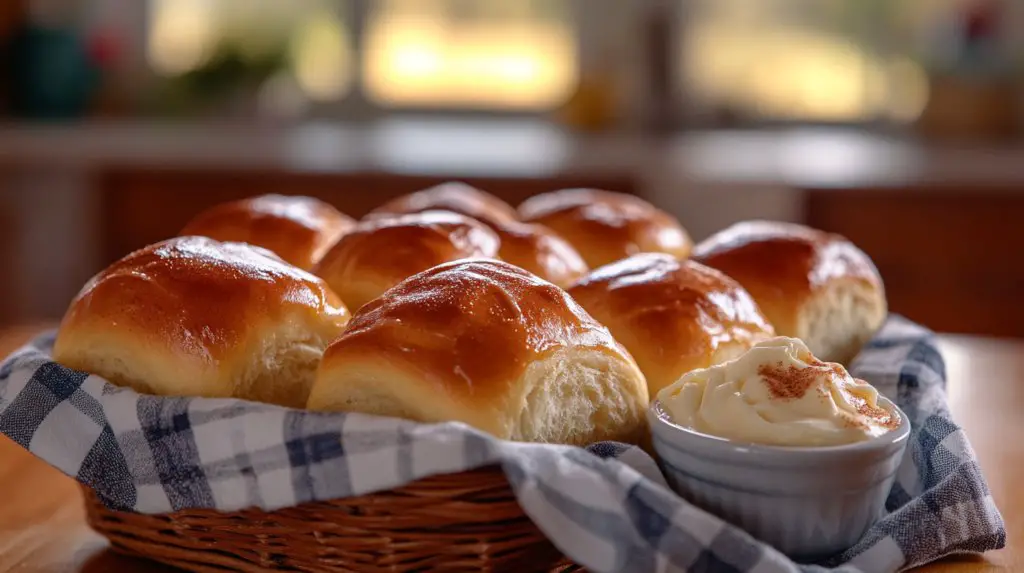
The basket hits the table before you’ve even settled on a steak. Four or five warm squares, a little tub of whipped butter speckled with cinnamon, and a server who will cheerfully bring more. Texas Roadhouse bakes those rolls fresh every five minutes, which is why they show up hot enough to melt the butter on contact. Copying them at home is not hard, but it turns on one ingredient most dinner roll recipes barely use: honey, and a serious amount of it. A half cup in one batch, backed by a mix of bread flour and all-purpose flour, is what gets you a roll that tastes like the restaurant’s instead of like a potluck dinner roll.
Honey Is Doing All The Work
These rolls are sweet. Not dessert sweet, but noticeably sweeter than any roll you’d pull off a holiday table, and that comes from honey standing in for granulated sugar. Honey brings moisture along with the sweetness, which is why the crumb stays tender instead of drying out an hour after baking. Use real honey. The squeeze-bear stuff from any grocery store is fine; corn syrup blends are not the same thing.
Two Flours, Not One
The version worth making uses 2 1/2 cups of bread flour and 3 cups of all-purpose, along with 1 1/4 cups water, 1/2 cup milk, 1/3 cup unsalted butter, 1 1/2 teaspoons salt and 2 eggs. Bread flour builds structure and a bit of chew, all-purpose keeps the middle soft, and the combination lands on that specific texture the restaurant rolls have: sturdy enough to hold a slab of butter, light enough to pull apart with two fingers. If your pantry only has all-purpose, you can swap it straight across. The rolls come out slightly less chewy and still very good.
Measure the flour by spooning it into the cup and leveling it off with a knife. Scooping straight from the bag packs it down, and packed flour is the fastest route to a dense roll.
Buy Instant Yeast And Skip A Step
This dough calls for 4 1/2 teaspoons of instant yeast, which is two envelopes. On the shelf it may be labeled quick rise or rapid rise. Instant yeast gets whisked straight into the dry flour, so there is no proofing bowl and no waiting around for foam. Active dry yeast is a different product and should be saved for recipes that ask for it.
If you do end up proofing yeast in liquid, temperature is the whole game. Warm water should sit between 105 and 115 degrees. Hot water kills yeast outright, and dead yeast means a pan of flat squares an hour later.
Squares, Not Balls
The shape is half the recognition. Texas Roadhouse rolls are squares and rectangles with flat sides, not round pull-apart balls, and the only way to get there is with a rolling pin. Roll the risen dough into a big rectangle about 1/2 inch thick, then run a pizza cutter or a dough blade through it to make 24 squares.
Space them about 1.5 inches apart on buttered baking sheets so the sides have room to puff without fusing together. Some home bakers cut 2×3-inch rectangles and fold the short edges under to round the tops. That works too, but plain squares are closer to what lands in the basket.
Give It Two Rises And Learn The Poke Test
Budget about an hour for the first rise and 30 minutes for the second. Enriched dough, meaning dough with eggs, milk, butter and honey in it, rises slower than lean bread dough, so faster yeast does not buy you much time here.
Clock times are guidelines. The reliable check is to press a finger gently into the dough: if the dent springs back slowly, it’s ready. If it snaps back fast, it needs more time. If it doesn’t move at all, the dough has gone too far. Cold kitchens stall everything, so warm the oven for one minute, shut it off, and let the bowl rise in there, or use a 200-degree oven that’s been turned off to hold steady warmth without drafts.
Bake At 350, Then Butter Them While They’re Screaming Hot
Fifteen to 18 minutes at 350 degrees gets the tops golden. Watch the second pan if you’re baking both at once and rotate them halfway through, because a pan on the lower rack browns differently.
Brush the rolls with 2 tablespoons of melted butter the second they leave the oven, not after they’ve cooled on the rack. The crumb is still porous and still hot, so the butter sinks in rather than sitting on top in a greasy film. That final brush is what gives them the shine and keeps the tops soft.
The Cinnamon Honey Butter Is Not Optional
You can eat these rolls with jam. You shouldn’t. The whipped cinnamon honey butter is as much a part of the experience as the bread, and it takes about three minutes with a hand mixer. Beat 1/2 cup of softened unsalted butter with 1/4 cup honey, 1/4 cup powdered sugar and 1 teaspoon ground cinnamon until it’s pale and fluffy.
Powdered sugar is the right call over granulated. It dissolves into the butter instead of leaving a sandy texture on the back of your spoon. Let the butter sit on the counter for 30 to 45 minutes first so it’s soft but not melting, and a pinch of salt sharpens it if you’re using unsalted. It keeps in the fridge for a week or two, so make it a day ahead and let it come back to room temperature before serving.
Where Home Cooks Blow It
Too much flour is the number one killer. The dough should feel soft and slightly tacky when you’re done kneading, not dry and smooth like clay. Add flour a tablespoon at a time at the end if it’s sticking heavily to your fingers, and stop there.
Second mistake: rushing or skipping the second rise. Those 30 minutes on the sheet pan are what make the inside airy instead of tight. Third: overbaking, which dries them out fast. Pull them when the tops are golden and the rolls still give under light pressure.
And read the ingredient list twice. Stephie of Stephie Cooks, who adapted this recipe from her great-grandmother’s yeast rolls, needed four tries over a full week before she realized she kept forgetting the water. Nobody is above that.
Why Yours Still Won’t Be Identical
Honest answer: the restaurant has an advantage you can’t buy at Kroger. Texas Roadhouse uses yeast cultivated in house and fed constantly, which is a big part of why the rolls sit right between dense and fluffy. Founder Kent Taylor and his kitchen manager worked through bags and bags of flour testing which one behaved best with that yeast. Taylor had originally considered giving guests free popcorn and decided the smell of baking bread would win every time. He was right. Taylor died in 2021.
The chain opened its first location in Clarksville, Indiana, in 1993 and had 755 Texas Roadhouse locations across the U.S. and 10 other countries by mid-2026, all baking rolls from scratch throughout the day. Your kitchen gets you about 90 percent of the way there, which is more than enough when the rolls are coming out of your own oven at nine on a Tuesday.
Make Them Ahead, Because Nobody Wants This On Thanksgiving Morning
Shape the squares, put them on the sheet pans, cover tightly and refrigerate overnight. The next day, let them come to room temperature, finish the second rise, and bake. Shaped dough holds in the fridge for up to 15 hours.
Baked rolls freeze for up to three months in a sealed freezer bag. Reheat them wrapped in foil at 350 degrees for 5 to 7 minutes, or wrap one in a damp paper towel and microwave it for a few seconds. Either way, hit them with melted butter again before they go to the table. That step is the difference between a leftover and a roll.
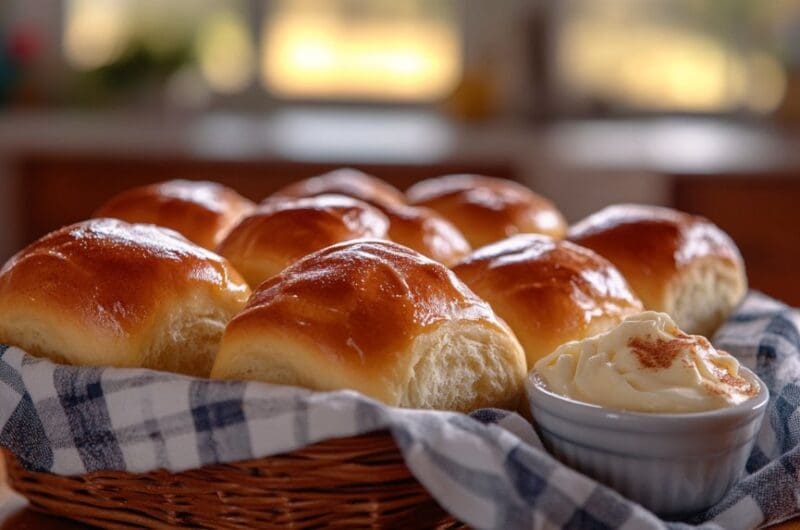
Copycat Texas Roadhouse Rolls with Cinnamon Honey Butter
Course: Side DishCuisine: American24
rolls30
minutes18
minutes200
kcalSoft, sweet, square dinner rolls brushed with butter and served with whipped cinnamon honey butter.
Ingredients
2 1/2 cups bread flour, divided
3 cups all-purpose flour
4 1/2 teaspoons instant yeast (2 envelopes)
1 1/4 cups water
1/2 cup milk
1/2 cup honey
1/3 cup unsalted butter, plus 2 tablespoons salted butter, melted, for brushing
1 1/2 teaspoons fine sea salt and 2 large eggs
Cinnamon honey butter: 1/2 cup softened unsalted butter, 1/4 cup honey, 1/4 cup powdered sugar, 1 teaspoon ground cinnamon
Directions
- Whisk 2 cups of the bread flour together with the instant yeast in the bowl of a stand mixer. Fit the mixer with the dough hook and set the bowl aside while you heat the liquids.
- Add the water, milk, honey and 1/3 cup unsalted butter to a saucepan and set it over medium heat. Warm the mixture just until it is hot to the touch. The butter does not have to melt completely.
- Run the mixer on low and pour the warm milk mixture into the flour and yeast. Mix for 2 minutes, until everything is well combined and no dry pockets remain.
- Add the remaining bread flour, the salt and the eggs, and mix on low until combined. Turn the mixer to medium and add the all-purpose flour 1 cup at a time, stopping when the dough pulls away from the sides of the bowl.
- Turn the dough out onto a well-floured counter and knead for 5 to 8 minutes, until it is smooth and elastic. Push with the heel of one palm, fold the dough back over itself, turn it 90 degrees and repeat.
- Place the dough in a lightly greased bowl and cover it with a clean tea towel. Let it rise in a warm spot for about 1 hour, until doubled in size and a gently pressed dent springs back slowly.
- Turn the dough out onto a lightly floured surface and roll it into a large rectangle about 1/2 inch thick. Cut it into 24 squares with a pizza cutter or dough blade and place them on buttered baking sheets about 1.5 inches apart. Let them rise 30 minutes, until puffy, and heat the oven to 350 degrees F.
- Bake for 15 to 18 minutes, until the tops are golden, rotating the pans halfway through if you are baking two at once. Brush the rolls with the melted salted butter the moment they come out of the oven. Whip the softened butter, honey, powdered sugar and cinnamon until fluffy and serve alongside the warm rolls.
Notes
- No bread flour? Use all-purpose for the full amount. The rolls will be a little less chewy and still turn out soft and sweet.
- To work ahead, cut the squares, arrange them on the sheet pans, cover tightly and refrigerate overnight. Bring them to room temperature and finish the second rise before baking.
- Stop adding flour while the dough still feels slightly tacky. Dry dough bakes into dense rolls, and the poke test is more reliable than the clock for both rises.
Frequently Asked Questions
Q: Can I use active dry yeast instead of instant?
A: This dough is written for instant yeast, sometimes sold as quick rise or rapid rise, which gets whisked into the dry flour. If you only have active dry, dissolve it first in warm water between 105 and 115 degrees with a little sugar and wait for it to foam, about 5 to 10 minutes. Water hotter than that will kill it.
Q: Why are my rolls dense instead of fluffy?
A: Almost always too much flour or not enough rising time. Spoon and level your flour rather than scooping from the bag, stop adding flour while the dough is still slightly tacky, and let both rises finish. The dough should double on the first rise and look visibly puffy on the second.
Q: Do I have to cut them into squares?
A: You don’t have to, but the shape is a big part of why they read as Texas Roadhouse rolls. Roll the dough to 1/2 inch thick and cut 24 squares with a pizza cutter. You can also cut 2×3-inch rectangles and fold the short ends under for a rounded top.
Q: How do I store and reheat leftovers?
A: Keep cooled rolls covered at room temperature for a couple of days, or freeze them in a sealed bag for up to three months. Reheat wrapped in foil at 350 degrees for 5 to 7 minutes, or wrap one in a damp paper towel and microwave it briefly, then brush with melted butter again.

