
Look at the carton, not the brand name on the front. The one that matters here is wrapped in wax paper, sold in an 8-ounce block, and stamped with a best-by date of Nov. 5, 2026. The FDA lists it as shipped to 10 states, and 7,824 individual packages of it are now spoken for.
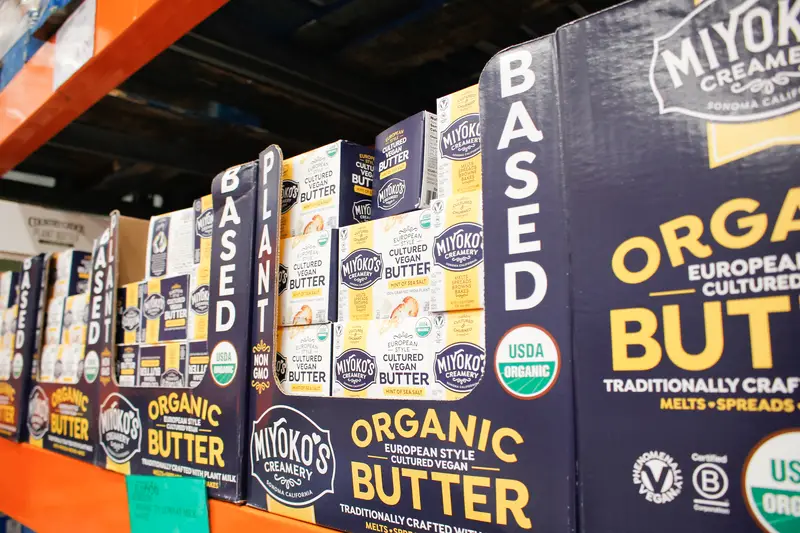
The product is Miyoko’s Creamery European Style Salted Plant Milk Butter, and the Food and Drug Administration has it listed in a recall over yeast, mold and E. coli. The agency gave it a Class II risk classification on Friday, Oct. 23.
How Much Butter Is Actually Involved
Prosperity Organic Foods, Inc., the Boise, Idaho company behind the brand, pulled 1,304 cases. Each case holds six 8-ounce units, which works out to 7,824 packages total, roughly 3 pounds of product per shipping case.
That is a small recall by grocery standards, and it is worth saying plainly: this is one lot of one item. It is not every Miyoko’s product, and it is not every tub of plant butter in the dairy case. The FDA recall listing names the European Style Salted Plant Milk Butter specifically.
The butter is perishable and meant to be kept refrigerated or frozen, according to the FDA report. That matters more than it sounds. Plenty of people buy vegan butter three or four blocks at a time and throw the extras in the freezer, which means a block with a November best-by date can easily still be sitting in a freezer drawer.
The Exact Numbers To Check On The Package
Every recalled retail carton carries the same UPC: 857554005773. The lot number printed on the individual carton is 07871, with a best-by date of Nov. 5, 2026.
The shipping case, which is what a store receives rather than what you carry home, uses a different lot number: 1007871, same Nov. 5, 2026 best-by date. If you are the kind of shopper who buys from a co-op or a small grocer that breaks down cases on the floor, that second number is the one on the cardboard.
The packaging itself is described in the agency’s report as wax paper wrapping inside a solid bleached sulfate carton, with the corrugated case used for shipment. The FDA’s report carries the lot codes, so you can check instead of guess.
The 10 States Where It Was Sold
Distribution covered Connecticut, Florida, Georgia, Illinois, Indiana, Iowa, Maryland, New Hampshire, New Jersey and Wisconsin.
That is where the company shipped it, not a map of every shelf it reached. Sprouts told shoppers the affected lot was in select stores in states off that list, including New York, Pennsylvania and Virginia, so check the carton wherever you live.
What Class II Means, Minus The Jargon
Class II is the FDA’s middle tier. The agency defines it as a situation in which use of or exposure to a violative product “may cause temporary or medically reversible adverse health consequences or where the probability of serious adverse health consequences is remote.”
No illnesses had been publicly reported as of Oct. 28.
The timeline is the part most people miss. Prosperity Organic Foods started the voluntary recall on Sept. 11. The FDA did not assign the Class II risk classification until Oct. 23, six weeks later. That gap is normal, because classification comes after the agency reviews the recall, but it is why a recall that began in September only hit your news feed in late October.
Retailers Moved Before The FDA Did
Shoppers heard about it from stores before they heard from the FDA. Market Basket, the Massachusetts-based supermarket chain, posted a recall notice on Sept. 3 citing quality concerns, eight days before Prosperity’s voluntary recall formally began. The company says it pulled the lot after its own testing flagged a potential food-safety concern.
Voluntary recalls like this one are initiated by the company itself, typically before a federal agency has to force the issue. The FDA’s enforcement report lists yeast, mold and E. coli as the reasons for the recall.
If It Is In Your Fridge Or Freezer
Stop using it. Retailers including Sprouts have told shoppers to bring it back for a refund.
Getting that refund may take a little pushing, because the recall notice itself did not include instructions for returning the product, and the information was not posted on the Miyoko’s website either. Bring the carton, point at lot 07871 and the Nov. 5, 2026 best-by date, and let the customer service desk look it up. Consumers with questions about the recall can reach the FDA at 1-888-463-6332.
If you already dumped the carton and cannot confirm the lot, tossing the remaining butter costs you the price of one block. That is the cheaper call than squinting at a smudged code.
The Founder Wants Her Name Off The Box
Miyoko Schinner, who started the brand, posted an Instagram video asking the company to stop using her name entirely. She says she has not been involved with the business for more than four years.
“Hey, Miyoko’s Creamery, can you just stop calling yourselves Miyoko’s Creamery?” she says in the video. “I want people to know that I have nothing to do with what’s going on right now with your tainted products.”
Schinner described her old food safety setup in a comment under VegNews’ Instagram post, saying products were held in the warehouse until they were fully tested and nothing was released before that. She added that she has no idea what Prosperity Foods is doing now, and that it is hurting her name. In the video she also alleged that product formulas and ingredient quality have changed since she left, and closed with a line aimed squarely at the new owners: “You may have my trademark, but you do not have my name, my spirit, my soul, or my ethics.”
Worth understanding what she is objecting to. The name on the carton is her actual first name, and she no longer controls what gets made under it.
How An Idaho Company Ended Up Owning Miyoko’s
Schinner founded Miyoko’s Creamery in 2014 in California, making artisan vegan cheese, butter and cream products. She was removed from her leadership position in 2022 amid a dispute with the board.
What followed was ugly. The company filed a lawsuit accusing Schinner of taking confidential information. She filed a countersuit alleging she had been pushed out after making HR complaints about male executives. Both sides withdrew their claims in a 2023 settlement and said they wished each other well.
The business entered an Assignment for the Benefit of Creditors process and went up for sale. Schinner tried to buy her own brand back and ran a crowdfunding page to cover the cost. She lost. Prosperity Organic Foods, the private Idaho company behind the Melt Organic plant butter line, won the bidding and announced the acquisition in November 2025. Financial terms were not disclosed.
Prosperity CEO Scott Fischer said at the time that the company was excited to grow the Miyoko’s brand, calling it a fit with a mission to provide plant-based food options that “embody innovation and high-quality craft.” Prosperity also said it would honor the brand’s roots and community along with its standards of quality and taste.
What The Company Says Now
Miyoko’s Creamery responded to criticism on Instagram, saying it voluntarily recalled a specific lot of European Style Salted Butter after testing flagged a potential food-safety concern, and that it worked with retail partners and regulators to clear the affected product off shelves. The statement said the company is committed to earning trust “through transparency, product quality and what we put on shelves every day.”
Shoppers had been grumbling online before any of this. Complaints about quality circulated for months, including a Reddit post in June from a customer who found visible mold inside newly bought Miyoko’s butter, plus another shopper’s report of oil leaking from packaging. Those posts predate the recall and are not tied to the affected lot, but they are the reason this recall landed on an already irritated audience rather than a surprised one.
Our Take On What To Do With It
Check the lot, not the logo. A carton of Miyoko’s European Style Salted Plant Milk Butter with lot 07871 and a Nov. 5, 2026 best-by date goes back to the store. It is the only Miyoko’s product in the FDA’s recall listing, though Market Basket and a Minneapolis co-op separately pulled the brand’s unsalted butter in October over quality complaints.
Freezer stashes are the blind spot. A refrigerated block gets used up within weeks, but a frozen one has no reason to leave, and it is the most likely place a recalled package is still sitting. Pull the drawer, read the code, and move on with your baking. The lot code and best-by date do all the work for you here.

