

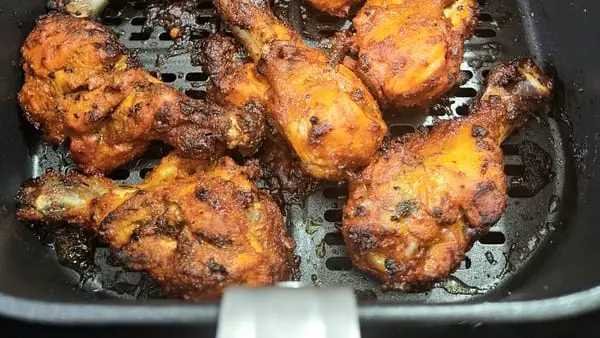
Soggy fries. Bacon that comes out bendy. A basket of wings that browns on top and stays pale and rubbery underneath. The machine almost never deserves the blame it gets for any of that. The food is stacked too high.
An air fryer is a small convection oven with a very aggressive fan. Hot air has to get all the way around every piece of food, and when you pile chicken on top of chicken, the air can’t move. Moisture coming off the bottom layer gets trapped by the top layer, and the whole thing steams instead of crisps.
People bought into these things hard. In 2024 air fryers even made it into the basket of goods Britain uses to track inflation. Almost nobody read the manual. Here are the habits worth breaking.
The Basket Should Be Half Empty, Not Full
Every air fryer lists a capacity, and that number is a lie about how much food you can actually cook well. A basket filled to no more than half its height browns evenly. Anything past that and the hot air gives up. In a 6-quart / 5.7 liter machine, a 1lb / 454g batch of fries is about the ceiling if you want all of them crisp, according to one reviewer’s testing. In a 2-quart / 1.9 liter mini, 0.7 lb / 300g of fries fit comfortably without hurting the browning.
Cook in two rounds. The total time comes out close to the same, and the second batch isn’t the sad one. Shake or flip at the halfway mark, too, because the side touching the basket gets almost no airflow.
Skipping The Preheat
Food dropped into a cold chamber spends the first few minutes warming up instead of browning. Surface moisture needs to start evaporating the second the food lands, and that only happens if the air is already hot. A 2 to 3 minute preheat is usually enough, and most air fryers hit temperature in under 5 minutes.
It matters most with proteins and anything frozen. Some models preheat automatically when you switch them on, others make you do it yourself. Check which one you own before you blame the recipe.
Wet Food Goes In, Sad Food Comes Out
Surface water is the number one reason air fryer food turns out soft. Pat chicken, shrimp and fish dry with a paper towel before you season them. Let washed vegetables sit a few minutes. Fresh-cut potatoes should soak in cold water and then get dried well before they go anywhere near the basket.
Wet batter is a different kind of disaster. Tempura and beer batter drip off before they ever set, gluing themselves to the bottom of the drawer. Breadcrumbs, panko and dry rubs are what work in here. Vegetables loaded with water, like zucchini, tomatoes and asparagus, tend to go mushy because they end up cooking in the liquid they release.
Pouring Oil Into The Basket
More oil does not mean crispier. Oil pooled at the bottom does nothing for the food and can smoke at high heat, which is how your kitchen ends up smelling like a fryer at a county fair. Use a mister or a brush and put it directly on the food. A light spray or a teaspoon or two covers most things.
Fatty cuts need none at all. Chicken thighs and salmon render plenty on their own. The flip side is real too: if you want that golden fried coating on breaded food, skipping oil entirely gets you dusty breadcrumbs and disappointment.
Metal Utensils Are Eating Your Basket
Metal tongs, forks and spatulas scrape the nonstick surface every single time you reach in. Many baskets are coated in PTFE, the same stuff on the frying pan you eventually threw out, and once it’s scratched the coating starts flaking into your food. Replacing a whole air fryer costs a lot more than replacing a skillet. Silicone or wooden tools buy you years.
Same rule for cleaning. A metal scouring pad shreds the coating, and tiny fragments breaking off that scourer can end up near the electrical parts, which is a shock risk you do not need. If your basket is already chipped or peeling, stop using it and replace it. Glass and stainless steel baskets dodge this whole problem because there’s no coating to scratch, though bare stainless will stick without a little oil.
Using Foil Like You’re Using An Oven
The heating element and the fan both live at the top of the machine, so never tent foil over a dish the way you would in the oven. Weigh the foil down with food, poke holes in it so air can move, and don’t pair it with something light like nachos. Loose foil gets picked up by the fan and blown straight into the element.
Skip foil completely for acidic food. Tomatoes, lemon chicken and anything marinated in vinegar react with aluminum and leave a metallic taste behind. Silicone liners do the same job without the drama. Parchment works only if it’s the perforated kind made for air fryers, and it never goes in empty, because it will fly up and hit the element. Light items like a handful of greens have the same habit, which is why skewers and toothpicks exist.
It’s Jammed Against The Wall
There’s a vent on the back of the machine, and all that superheated air has to get out somewhere. Leave about 5 inches (13 cm) behind it, or whatever your manual asks. Block that vent long enough and you can damage the unit or have it shut itself off mid-cook for no obvious reason.
Where you park it matters as much as how you use it. Curtains, dish towels and paper products near the exhaust are a bad idea, since the air coming out is hot and can carry a little grease with it. Don’t store anything on top. It needs a level, heat-resistant surface, not a tablecloth, not a plastic cutting board, and absolutely not the stovetop where someone can turn on a burner underneath it.
Cranking The Temperature To Hurry Things Up
Bumping the dial up gets you a dark outside and a raw middle. Thick cuts want lower and slower. Thin pieces can take a short hot blast. If you want dinner faster, cut the food smaller instead of turning up the heat.
Converting an oven recipe is simpler than most people think. Start at the same temperature you’d use in the oven, then adjust by 9-18F / 5-10C depending on whether it browned too much or not enough. For something that takes 20 to 25 minutes in an oven, knock about five to seven minutes off. An air fryer can cut oven time by as much as 50%. It does almost nothing for speed on a dish you’d normally cook on the stove.
Trusting The Recipe Over Your Own Machine
Two air fryers sitting side by side on the same counter can run at noticeably different temperatures. Recipe times are a starting point. The first time you make something new, check it a few minutes early and write down what your machine actually needed. After a month of that, your results stop being a coin flip.
The booklet that came in the box is also incomplete. Frozen food barely shows up in most of them, and frozen food wants a hotter setting so it can thaw and brown at the same time. For meat, color is a guess and a thermometer is not: chicken at 165°F (74°C), whole cuts of pork and beef at 145°F (63°C) with a 3-minute rest. These machines move fast, and underdone turns into overdone in about ninety seconds.
Leaving Last Night’s Grease In There
Old grease creates hot spots, puts a stale taste on whatever you cook next, and starts smoking the moment the machine comes back up to temperature. Grease sitting near the heating element is a fire risk, plain and simple. Clean it after every use, and never skip it after bacon, sausage or chicken.
The right way to do it: unplug the machine, let it cool all the way down, take out whatever detaches, then use a soft cloth, non-abrasive sponge or soft-bristled brush with warm soapy water. Stubborn baked-on spots come off with a degreaser or a baking soda paste. Go easy on the water, because it seeps into the electrical components and kills the unit over time. That viral trick of dumping water and dish soap in the drawer and running it is as dumb as it sounds. A splash of water under fatty food to stop drippings burning is a different matter, but some makers, Instant among them, forbid liquid in the drawer, so check the manual first.
Cutting Into It The Second It Beeps
Two or three minutes of rest keeps the juices in the meat instead of on the cutting board, and it gives the crust on fries and nuggets time to set. Use the wait to plate everything else. It feels like a tax on a hungry person and it isn’t.
One habit worth adding rather than dropping: stop treating the air fryer as a family-dinner-only appliance. A single serving of leftover fries comes out better than it did the first time, and reheating one piece of chicken in there beats the microwave by a mile.
If you only change two things, change the crowding and the shake. One recipe blogger says fixing those two cleared up about 80% of the uneven batches they were getting. Everything else on this list protects the machine. Those two protect dinner.

