

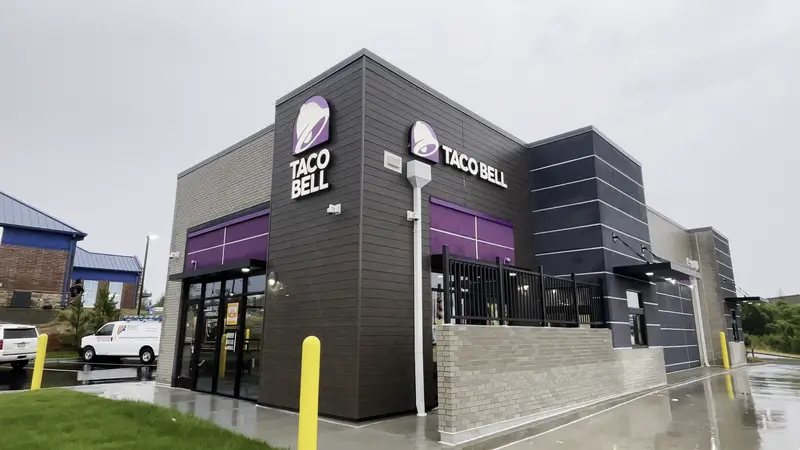
Shredded iceberg lettuce is the cheapest, least interesting thing in a Taco Bell order. It is also the ingredient that dragged the chain into federal court in the summer of 2026, after federal authorities linked an outbreak of the parasitic illness cyclosporiasis to lettuce served at its restaurants.
Taco Bell is facing at least three lawsuits over it, a franchisee is being sued in a separate complaint, and produce supplier Taylor Farms is facing at least four cases. It is the newest file in a cabinet that goes back decades, one that also holds a 2.3 million pound beef recall, a public brawl over what percentage of the beef is beef, and a $3.29 refund that ended up on Facebook.
The Lettuce Suits Started Landing On July 16, 2026
The first complaint was filed on July 16, 2026, as federal authorities connected shredded lettuce served at Taco Bell to the ongoing outbreak. Three of the cases rest on product liability and alleged breaches of warranty: one against Taco Bell, one against the chain and Taylor Farms together, and one against Taco Bell franchisee Pacific Bells and unspecified suppliers. The plaintiffs say they were sickened by food they bought and want damages for missed work and pain and suffering.
The affected lettuce went to Taco Bell locations across Indiana, Kentucky, Michigan, Ohio and West Virginia. By July 22, the Centers for Disease Control and Prevention had reported upwards of 4,100 laboratory confirmed cases of the Cyclospora illness, with another 7,400 cases requiring additional investigation. The agency was looking at multiple clusters at once, including a multistate outbreak tied to iceberg lettuce that spread from five states to at least nine within days, so not every case in that count traces back to a Taco Bell counter.
Taco Bell said on July 17 that it had removed lettuce from an unspecified supplier linked to the outbreak, and described the move as voluntary. Taylor Farms said on July 20 that it had voluntarily recalled all iceberg lettuce grown in central Mexico that was identified as the potential source, and that it was investigating. The FDA said one Taylor Farms lettuce sample came back as a false positive for Cyclospora, and that the company remained under investigation.
One Lawsuit Argues The Food Was Legally Worthless
Not every case is about getting sick. Null v. Taylor Farms, Taco Bell, filed in California, calls itself an economic-loss case rather than a personal-injury case, and asks for the money customers spent on food that could have been contaminated. A proposed class action runs 14 pages and makes the same basic argument in blunter terms.
“Every class member suffered the same economic injury the moment the transaction closed: each paid full price for food that was worth less than represented, and in law was worthless because it could not be sold for human consumption,” that complaint states. The proposed class covers anyone in the United States who, from May 1, 2026 through final judgment, bought Taco Bell food containing recalled Taylor Farms iceberg lettuce, or bought recalled Taylor Farms lettuce products through retail or foodservice channels.
The reach is wider than the drive-thru. Taylor Farms supplies lettuce to national chains and sells packaged salads at Walmart, Whole Foods and Target, and the Granados complaint in California says its plaintiffs bought the products “from Sweetgreen, Costco and other places.” Sweetgreen’s chief executive said on LinkedIn that none of the chain’s products had been linked to the outbreak. Every one of these claims is an allegation, and no court has ruled on any of them.
The Fight Over Who Is Actually Responsible
Lettuce does not get contaminated behind the counter. William Marler, partner at food safety law firm Marler Clark, put the blame upstream in a press release: “By the time lettuce reaches a Taco Bell on Gratiot Avenue, whatever went wrong went wrong a long way upstream. That is why we sued the grower and the processor as well as the chain that served it.”
The plaintiffs in Parrish v. Taco Bell take the opposite tack, arguing the chain owns the problem because it “designed, managed, and controlled the national and regional supply chain through which their restaurants, including the Durand Restaurant, were required to obtain produce and other ingredients, including the contaminated lettuce.” In other words, Taco Bell picked the vendor.
Amira Roess, a professor of global health and epidemiology at George Mason University’s College of Public Health who previously worked for the CDC, pointed at how few companies handle how much of the food supply. “Our food production is so concentrated that if one of the products is contaminated, and it happens to be the product that a third of the country accesses, you have the reason for your national outbreak,” Roess said. The class action also argues Taylor Farms should have known better, citing a 2013 multistate cyclosporiasis outbreak linked to its salad mix and a 2024 E. coli outbreak tied to onions served at restaurants nationwide.
2.3 Million Pounds Of Beef, Pulled Over One Metal Shaving
In October 2019, a customer found a metal shaving in an order. Taco Bell voluntarily recalled roughly 2.3 million pounds of seasoned beef that Friday. By midday Monday, every affected restaurant in 21 states across the eastern Midwest, northern Southeast and Northeast had removed and discarded it.
The beef came from a single plant, on one of two production lines used to make it, and went to distribution centers in Michigan, New Jersey, New York, Ohio and Virginia. The U.S. Department of Agriculture said there were no confirmed reports of adverse reactions from eating it.
The number only sounds enormous until you see the scale of the operation. Taco Bell is one of the largest beef buyers in the country and serves 290 million pounds of ground beef a year, according to its own website. One shaving in one order was enough to empty 21 states’ worth of walk-ins.
The 36 Percent Beef Claim That Never Died
Ask anyone over 35 what they have heard about Taco Bell and you will get this one. In 2011 an Alabama law firm took legal action demanding the chain label its product “taco meat filling” instead of “seasoned beef,” claiming it was only about 36 percent actual beef. The firm withdrew the suit relatively quickly, saying it had only wanted Taco Bell to disclose its ingredients.
Taco Bell came out swinging, buying newspaper ads demanding an apology. “… to so falsely and recklessly put these accusations out there and impact all these people is just so unacceptable. I think the public should be outraged,” then-CEO Greg Creed said. The company then spent between $3 and $4 million on advertising and videos explaining that the filling is 88 percent beef.
The other 12 percent turned out to be mostly pantry stuff: onion powder, salt and sea salt, chili pepper, tomato powder, garlic powder, oats, yeast extract and natural smoke flavor, plus maltodextrin, soy lecithin, lactic acid and sodium phosphate. Cocoa powder and caramel color are in there for the color. The uglier rumors never held up either. There is no such thing as “Grade D” beef, and the mealworm story collapses on cost alone, since worms run $10 to $20 a pound, well above what a chain buying in bulk pays for beef.
The Crunchwrap That Doesn’t Look Like The Picture
In 2023, New York City resident Frank Siragusa sued the chain, alleging its advertising is “unfair and materially misleading” because it overstates how much “beef and/or ingredients” its menu items contain. The complaint says the photos in stores and on delivery apps show “at least double” the meat and vegetables actually found in Crunchwraps and Mexican Pizzas.
To make the point, the filing set stock images of the food against slimmer real-world examples pulled from Reddit and user reviews. The ads “are unfair and financially damaging to consumers,” it argues, and are “especially concerning now that inflation, food and meat prices are very high and many consumers, especially lower income consumers, are struggling financially.”
Siragusa was not the first to notice. When the Mexican Pizza came back in 2022, reviewers kept saying the same thing: it looked smaller and less loaded than the commercial version, even when it tasted fine. That gap between the menu board and the box is the complaint that never stops recurring.
The Older Ones Customers Still Bring Up
In 2006, an E. coli outbreak that sickened 71 people in five states was traced back to Taco Bell. The CDC named shredded lettuce as the most likely source. Lettuce, again.
Six years earlier, Taco Bell was caught up in Kraft Foods’ nationwide recall of Taco Bell-branded grocery store taco shells over a genetically altered corn seed used in manufacturing. It was the first time in U.S. history that a food product made with contaminated genetically modified organisms had to be recalled.
Then there was the 2011 salmonella outbreak that sickened 68 people across 10 states. The CDC blamed an unnamed “Restaurant Chain A,” which Oklahoma health officials identified as Taco Bell, but investigators never pinned down the ingredient responsible, which is the kind of unfinished ending that keeps a story alive in people’s heads for years.
A $3.29 Refund In Hopewell, Virginia
The smallest number in this whole story is the one that made people the angriest. In October 2026, a Virginia customer named Essence Johnson said she was partway through her order when she spotted a small, hairy object in the lettuce that she believed was a bug. She took it back to the Hopewell, Virginia location to complain.
The shift leader refunded her $3.29, the price of her order, and told her there was nothing else they could do. Johnson posted about it on Facebook on October 18, pushed harder, and was eventually given the district manager’s contact information. She said the district manager told her she wanted to trace where the lettuce came from, promised a full refund and a follow-up call, and asked her to come back and fill out an incident report. Johnson said she had not confirmed whether the refund or the call ever came.
Here is our read on the pattern. Almost none of these started inside a Taco Bell kitchen. The metal came from a plant, the lettuce came from a grower in Mexico, the taco shells came from a Kraft supply chain, and the 36 percent claim came from a law firm that walked it back. What customers actually judge the chain on is what happens after: the chain buying newspaper ads and spending millions to defend its beef, versus a store handing over $3.29 and calling it settled. Taco Bell has shown it can move 2.3 million pounds of product in a weekend when it wants to. The scandals that still sting are the ones where the response was smaller than the problem.

