

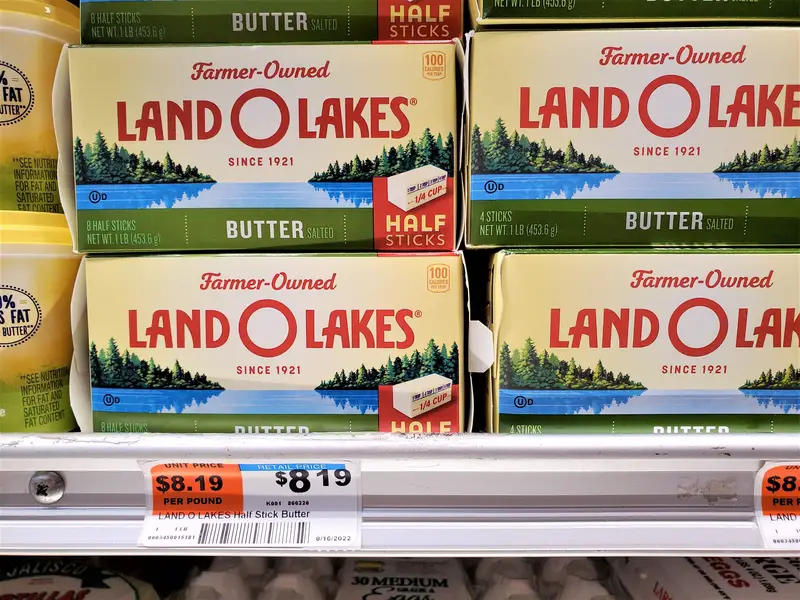
I used to think butter was butter. Grab whatever stick is in the fridge, cream it with sugar, and move on. Then I baked the same sugar cookie recipe twice in one week and got two completely different results. The only thing that changed? One batch used salted butter and one used unsalted. That little green box of salted stuff had quietly wrecked my cookies.
Here’s the thing nobody tells you when you start baking. Salted butter has no set amount of salt in it. In the U.S., there’s no rule saying how much salt a brand has to add, so one company might put in twice as much as another. That means when you swap it into a delicate recipe, you’re guessing at your salt level. And in baking, guessing is how you end up with a batch you have to toss.
Below are the nine baking situations where you should reach for unsalted every single time. And because I’d rather show you than just lecture, I’m ending with the recipe that started my whole grudge against salted butter: the classic sugar cookie.
1. Classic Sugar Cookies
Sugar cookies are the worst offender because there’s nothing to hide behind. No chocolate, no cinnamon, no strong add-in to cover up an off balance. The dough is small, the bake time is short, and every bit of salt shows. When tasters at one test kitchen compared cookies, the unsalted versions came out golden with crisp edges. The salted ones were pale and doughy. Use unsalted plus your own measured pinch and you get the exact cookie you were promised.
2. Layer Cakes and Cupcakes
A birthday cake should taste sweet and buttery, not weirdly savory. When butter flavor leads the recipe, an extra salty edge feels out of place. Bakers lean on unsalted here because it keeps the sweet-to-salty ratio exactly where they want it. Two identical cake recipes made with two different salted brands can taste noticeably different, and that’s a gamble you don’t want to take on a party cake.
3. Buttercream Frosting
This one gets people every time. A buttercream might call for 1/2 teaspoon of salt to balance the sweetness. Swap in 1 cup of salted butter without adjusting and you add roughly another 1/2 teaspoon on top of that, sometimes more depending on the brand. That’s the difference between frosting that tastes perfect and frosting that tastes like a mistake. Start unsalted, add salt by hand, and taste as you go.
4. Swiss Meringue Buttercream
Swiss meringue buttercream deserves its own spot because it’s so butter-heavy. A standard batch uses 1 and 1/2 cups (340g) of unsalted butter, softened but still cool at about 60°F. Salted butter makes this silky frosting taste overwhelmingly salty and buttery in a way that fights the whole point. It’s supposed to be light and not too sweet, the kind you’d put on a wedding cake. Salted butter turns that elegance into confusion.
5. Flaky Pie Crust
Pie crust lives and dies on its fat-to-water ratio. Salted butter almost always holds more water than unsalted, sometimes 10 to 18% more. That extra water messes with how the gluten develops, and in a tight crust that means the difference between flaky and tough. For an all-butter crust, cold unsalted butter plus your own table salt gives you control. Table salt beats coarse here because the small crystals spread evenly through the dough.
6. Croissants and Puff Pastry
Laminated doughs are all folds, turns, and thin layers of butter between sheets of dough. The whole magic depends on precision. That extra water in salted butter can shift your layers and undermine the flaky structure you worked so hard to build. If you’re spending an afternoon rolling and folding puff pastry, don’t let a random amount of salt undo your effort. Unsalted every time.
7. Pound Cakes and Butter Cookies
Anything with butter in the name is a butter-forward recipe, and those are exactly where you want that sweet cream flavor to shine. Pound cakes and butter cookies rely on an exact butter and salt amount for their tender, crumbly texture. Use unsalted and you get that clean, rich taste. Use salted and the added salt fights the delicate flavor you were trying to feature in the first place.
8. Browned or Clarified Butter
This is a sneaky one I learned the hard way. When you brown or clarify butter, the salt particles stay behind and can leave the finished butter gritty. You’ll feel those little crystals in your frosting or your blondies, and no amount of stirring fixes it unless you strain it through a fine mesh sieve a few times. Just start with unsalted and save yourself the extra step and the sandy texture.
9. Yeast Breads and Doughs
Yeast is alive, and salt controls how fast it works. Too much salt can slow it down or even kill it, which leads to bread that doesn’t rise the way it should. Since you can’t know how much salt is hiding in your salted butter, you can’t control the rise. Baking is chemistry, and yeast doughs are where sloppy salt math shows up as a dense, sad loaf. Measure your salt separately and let the yeast do its job.
The Simple Fix When You Only Have Salted
Life happens and sometimes salted is all you’ve got. You can still make it work. If a recipe calls for unsalted butter and all you have is salted, just cut the added salt by about 1/4 teaspoon for every 1/2 cup of butter. Going the other way, if a recipe wants salted and you only have unsalted, add 1/4 teaspoon of salt per 1/2 cup. One more tip from most bakers: unsalted butter tends to be fresher, since salt works as a preservative and lets salted butter sit longer.
The Sugar Cookie That Proved My Point
Here’s the recipe that turned me into a salted-butter skeptic. It’s a classic cutout sugar cookie, the kind that holds its shape and tastes clean and buttery. Make it with unsalted butter and a measured amount of salt, and you’ll taste the difference. This is where controlling your salt matters most, and it’s the perfect way to see the whole point of this article on a plate.

Classic Cutout Sugar Cookies
Course: DessertCuisine: American24
cookies20
minutes11
minutes120
kcalClean, buttery sugar cookies that prove why unsalted butter wins every time.
Ingredients
1 cup (226g) unsalted butter, softened
1 cup (200g) granulated sugar
1 large egg
1 teaspoon pure vanilla extract
2 and 1/2 cups (313g) all-purpose flour
3/4 teaspoon fine table salt
1/2 teaspoon baking powder
1/4 teaspoon almond extract (optional)
Extra flour for rolling
Directions
- In a large bowl, beat the softened unsalted butter and granulated sugar together with a mixer until light and fluffy, about 2 to 3 minutes. Scrape down the sides of the bowl as you go so everything blends evenly.
- Add the egg, vanilla extract, and almond extract if using. Beat until fully combined and smooth. The mixture should look glossy and even before you move on.
- In a separate bowl, whisk together the flour, fine table salt, and baking powder. Using table salt instead of coarse salt matters here because the small crystals spread evenly through the dough.
- Add the dry ingredients to the wet ingredients in two batches, mixing on low just until the dough comes together. Do not overmix, or the cookies can turn tough.
- Divide the dough in half, shape into two flat disks, and wrap each in plastic. Chill in the refrigerator for at least 45 minutes so the butter firms up and the cookies hold their shape.
- Preheat the oven to 350°F and line two baking sheets with parchment paper. Roll out one disk on a lightly floured surface to about 1/4 inch thick.
- Cut out shapes with your favorite cookie cutters and place them about 1 inch apart on the baking sheets. Gather and re-roll the scraps to use all the dough.
- Bake for 9 to 11 minutes, until the edges are just barely golden. Let the cookies cool on the sheet for 5 minutes before moving them to a wire rack to cool completely.
Notes
- If you only have salted butter, drop the added salt to about 1/4 teaspoon so the cookies don’t turn savory.
- Chilling the dough is not optional. Warm dough spreads and loses its cutout shape.
- A touch of granulated sugar in the mix helps the edges brown, so watch closely near the end of baking.
Frequently Asked Questions
Q: Why does salted butter mess up baking if it’s just a little salt?
A: Because there’s no rule for how much salt goes in. One brand can have almost double what another has, so your salt level becomes a guess. In small recipes like cookies, that guess is enough to change the taste and texture.
Q: Can I still use salted butter if it’s all I have?
A: Yes. Just reduce the added salt in the recipe by about 1/4 teaspoon for every 1/2 cup of butter. It won’t be quite as precise, but an under-salted cookie beats an over-salted one.
Q: Does salted butter really have more water?
A: It usually does, often 10 to 18% more. That extra water affects gluten and can make pie crusts tougher and biscuits pasty, which is why precision recipes call for unsalted.
Q: When is salted butter actually fine to use?
A: For spreading on toast, cooking vegetables, or salty-sweet treats like caramel and crumbles where a little extra salt fits. For delicate baked goods, stick with unsalted and add your own salt.

