

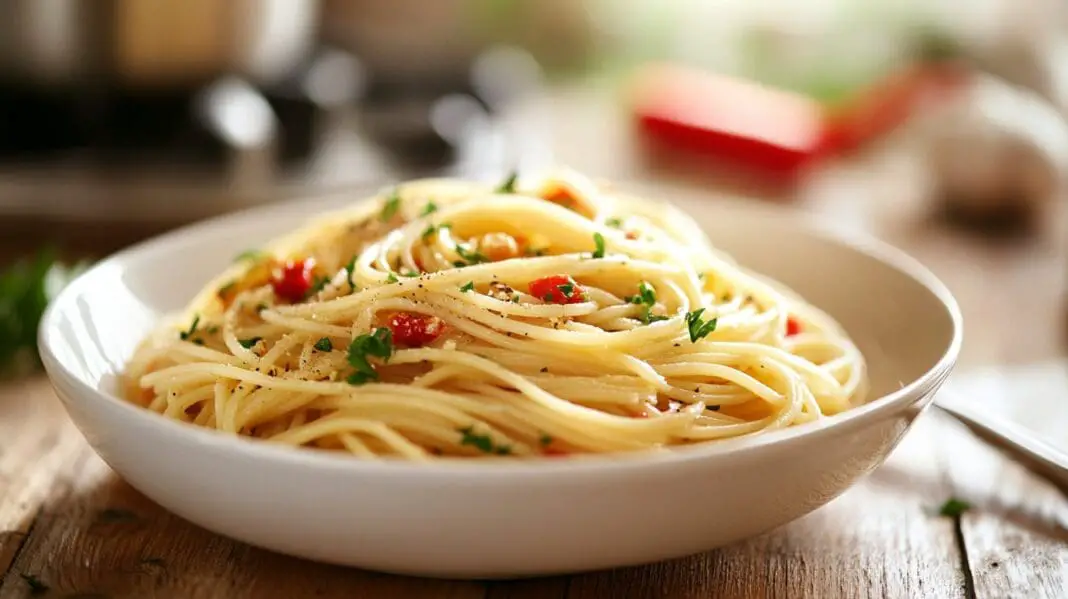
You’ve heard the line at least a hundred times. Salt your pasta water until it tastes like the sea. Every cooking show, every nonna quote on Instagram, every guy who once ate a bowl of spaghetti in Rome will tell you the same thing. And I believed it too, right up until I actually tasted ocean water on a beach trip and realized nobody in their right mind would cook noodles in that.
Here’s the truth that ruins the myth. Scientists recently used a particle accelerator to look inside cooking spaghetti at the atomic level, and they found that ocean-level salt does not make your pasta better. It makes it worse. The sweet spot is far lower than that salty maxim suggests. So today I’m going to walk you through exactly how much salt to use, what your water should taste like, and I’ll give you a simple spaghetti recipe that shows off perfectly seasoned pasta with almost nothing on it.
The Number That Actually Matters
Let’s get specific, because vague advice is how we ended up with the ocean thing in the first place. The research points to about 7 grams of salt per liter of water, which works out to roughly 0.7 percent salinity. In American kitchen terms, that’s close to 1.5 to 2 teaspoons of table salt per quart of water. Ocean water, for comparison, sits at about 3.5 percent salinity, or 35 grams per liter. That is five times more salt than your pasta wants.
When the science team doubled the salt toward ocean levels, the internal structure of the pasta broke down faster. The gluten in regular spaghetti works like a scaffold, holding the starch granules together so the noodle stays firm. Salt strengthens that scaffold, but only up to a point. Cross that point and you’re tearing the structure down instead of building it up. So more is not better. More is just saltier and mushier.
Why the Ocean Comparison Never Made Sense
Somebody actually ran the experiment. A test cooked eight batches of spaghetti at salt levels ranging from zero all the way up to Mediterranean Sea saltiness, and the result was exactly what you’d guess. Seawater is too salty. The batch people liked best tasted like a light chicken stock, not a mouthful of tide.
Here’s a fun detail. The ocean myth probably didn’t even come from Italy. In real Italian kitchens, salted water just means a palmful of salt tossed into a big five-liter pot. That palmful looks dramatic, but it lands far below sea level. The actual debate in Italy is about when to add the salt, not whether to drown your pasta in it. Somewhere along the way the advice got exaggerated, and now people are pouring half a container of Morton’s into their pot thinking they’re doing it right.
What Properly Salted Water Should Taste Like
If you don’t feel like measuring, use your tongue. Properly salted pasta water should taste like a nice soup broth. Well-seasoned, pleasant, something you wouldn’t mind sipping. If a spoonful makes you wince, you’ve gone too far. If it tastes like nothing, you haven’t gone far enough.
And don’t panic about eating all that salt. Pasta only absorbs about a quarter of the salt you add to the pot. The rest dissolves into the water and runs down the drain when you strain it. So salting your water well seasons the noodle from the inside without turning your dinner into a salt lick. Unsalted pasta, on the other hand, has a flat, starchy taste that no amount of sauce ever fully fixes, because the middle of the noodle never got seasoned.
The Salt in Your Cabinet Changes the Math
This trips people up more than anything else. Not all salt measures the same. A teaspoon of table salt weighs about 6 grams, while a teaspoon of Diamond Crystal kosher salt weighs only about 3 grams because the flakes are lighter and airier. So if a recipe says a tablespoon of table salt and you use a tablespoon of Diamond Crystal instead, you’re using roughly half the actual salt. You’d need to about double the kosher salt to hit the same saltiness.
My advice: pick one salt and stick with it so your hand learns the amount. A lot of cooks skip iodized table salt for pasta because it can leave a slightly off, metallic taste. Kosher salt or fine sea salt both work great. Whatever you grab, salt the water right after it comes to a boil, when it dissolves fastest. And no, salt does not make water boil quicker. That’s another myth. It actually nudges the boiling point up a hair. Salt is a flavor move, not a speed trick.
The Real Amount That Ends Up in Your Bowl
People who worry about a heavily salted pot should see the actual lab numbers. One test cooked six different pasta shapes, from thin spaghetti to chunky rigatoni to little orzo, all using 1 tablespoon of table salt per 4 quarts of water. Every single shape absorbed about the same amount, roughly a quarter teaspoon of salt per pound of cooked pasta. That’s tiny. So salting your water well doesn’t dump a ton of salt into the noodle. It just seasons it right.
The shape doesn’t change much either. Whether you’re cooking penne, linguine, or campanelle, the salt gets in at about the same rate. So you can use one salting rule across your whole pasta drawer and stop overthinking it.
Save the Water Before You Drain
One more habit that separates a good plate of pasta from a great one. Before you drain, scoop out at least a cup of that starchy, seasoned cooking water. That liquid is gold for finishing a sauce. The starch helps the sauce cling to every noodle, and you can loosen a thick sauce a few tablespoons at a time without watering down the flavor or adding more fat. I keep a coffee mug by the stove just for this so I never forget.
The Recipe That Proves the Point
The best way to taste properly seasoned pasta is to cook something with almost nothing on it. That’s why I love spaghetti aglio e olio. It’s just spaghetti, garlic, good olive oil, and a little heat. There’s no heavy sauce hiding a bland noodle, so the seasoning of the pasta itself does most of the work. For a simply dressed dish like this, you can push the water toward the higher end of the range, around 1.5 percent, since there’s no salty sauce coming to help.
Cook the spaghetti for about 10 minutes, or until it’s al dente with a little bite left in the center. That timing lines up with what the researchers found for regular wheat pasta. If you’re using gluten-free spaghetti, go about 11 minutes and be extra careful not to over-salt, because those noodles break down much faster without gluten holding them together. Make it once with the right salt level and I promise you’ll never chase the ocean again.
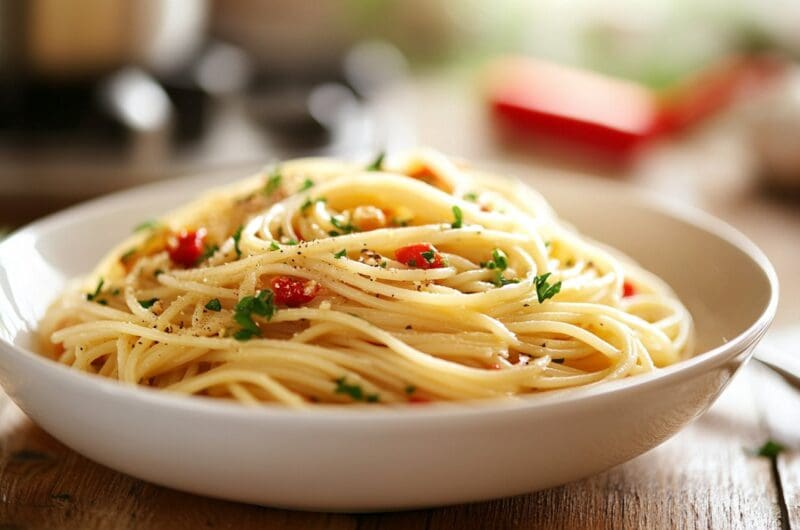
Perfectly Salted Spaghetti Aglio e Olio
Course: DinnerCuisine: Italian4
servings10
minutes15
minutes480
kcalSimple garlic and oil spaghetti that shows off pasta seasoned just right, no ocean required.
Ingredients
1 pound (16 oz) spaghetti
4 quarts water
1 tablespoon table salt (or 2 tablespoons Diamond Crystal kosher salt)
1/2 cup extra-virgin olive oil
6 cloves garlic, thinly sliced
1/2 teaspoon red pepper flakes
1/4 cup fresh parsley, chopped
1/2 cup grated Parmesan (optional)
Freshly ground black pepper, to taste
Directions
- Bring 4 quarts of water to a rolling boil in a large pot. Once it is boiling hard, add the salt and stir until it dissolves. The water should taste like a well-seasoned broth, not the ocean.
- Add the spaghetti and cook for about 10 minutes, stirring now and then. Pull it a minute early so it stays al dente, since it will finish cooking in the pan with the oil.
- While the pasta cooks, warm the olive oil in a large skillet over medium-low heat. Add the sliced garlic and cook slowly, stirring often, until it turns pale gold and smells sweet. Do not let it brown or it will taste bitter.
- Stir the red pepper flakes into the warm oil and let them sizzle for about 30 seconds. Turn off the heat so the garlic and pepper do not scorch while you finish the pasta.
- Just before draining, scoop out at least 1 cup of the starchy pasta water and set it aside. This seasoned liquid is what pulls the whole dish together.
- Drain the spaghetti and add it straight to the skillet with the garlic oil. Turn the heat back to medium and toss well so every strand gets coated.
- Add the reserved pasta water a few tablespoons at a time, tossing constantly, until the oil and water come together into a light, glossy sauce that clings to the noodles.
- Take the pan off the heat and toss in the parsley, black pepper, and Parmesan if using. Taste, adjust, and serve right away while it is hot and glossy.
Notes
- If you use kosher salt instead of table salt, remember the flakes are lighter, so you need about double the amount to hit the same saltiness.
- Planning to add anchovies, bacon, or extra Parmesan on top? Salt the water a touch less so the finished plate does not turn too salty.
- For gluten-free spaghetti, cook closer to 11 minutes and keep the salt moderate, since those noodles break down much faster when overcooked or over-salted.
Frequently Asked Questions
Q: How much salt should I really add to pasta water?
A: Aim for about 7 grams per liter, or roughly 1 tablespoon of table salt per 4 quarts of water. That lands near 0.7 to 1.5 percent salinity, which is well below the 3.5 percent of the ocean. The water should taste like a nice soup broth, not the sea.
Q: Won’t heavily salted water make my pasta too salty to eat?
A: No. Pasta only takes in about a quarter of the salt in the pot, and lab tests show that comes out to roughly a quarter teaspoon of salt per pound of cooked pasta. The rest just goes down the drain when you strain it.
Q: Does salt make water boil faster?
A: It does not. That is an old myth. Adding salt actually raises the boiling point of water by a tiny amount. You salt the water for flavor, not for speed, so add it once the water is already boiling hard.
Q: Should I salt the water the same way for gluten-free pasta?
A: Go a little easier. Gluten-free noodles do not have the gluten scaffold that keeps regular pasta firm, so they break down faster with too much salt or overcooking. Keep the salt moderate and cook them about 11 minutes for the best texture.

