

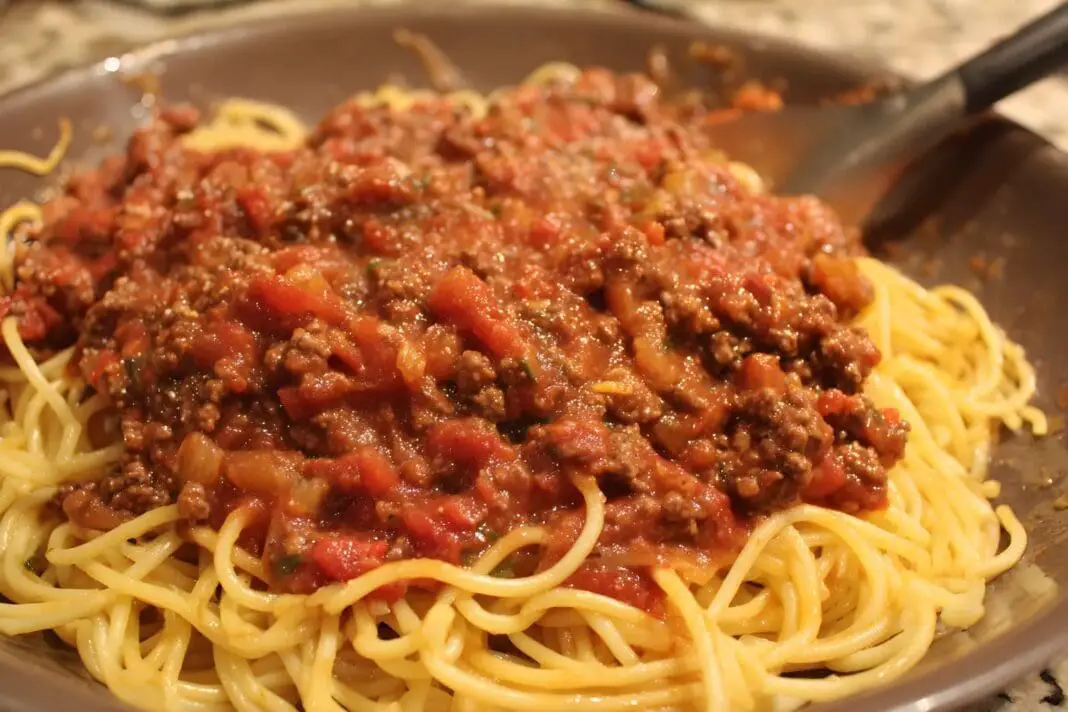
You simmered it for two hours. You used good ground beef, fresh garlic, a can of imported tomatoes that cost more than the box of spaghetti. And the sauce still tastes flat, like someone poured a store-bought jar into a pot and waved oregano at it. More basil won’t fix that. Neither will another clove of garlic or a longer simmer. What the pot is short on is savory weight, and the cheapest bottle in your refrigerator door fixes it: Worcestershire sauce.
What Worcestershire Sauce Actually Does To Tomatoes
Worcestershire is salty and tangy at the same time, which is exactly the one-two punch a pot of tomatoes needs. It balances the tomato instead of competing with it, and it leaves behind the kind of savory depth that makes people ask what you did differently.
That savory quality has a name and a chemistry behind it. Glutamic acid is what gives Parmesan cheese, tomato paste and kombu their deep, mouth-filling taste. A meat sauce built on beef, canned tomatoes, onion and garlic already has plenty of that going on. Worcestershire pushes it past the point where the sauce tastes like a recipe and into the territory where it tastes like something a restaurant has been making for thirty years.
The best part is that nobody can identify it. Tasters know something is in there. They almost never guess what.
How Much To Use, And When It Goes In
Three tablespoons handles a big pot built on two 28-ounce cans of tomatoes. If you are nervous, start with one tablespoon, taste, and work up. You can always add more. You cannot take it back out.
Timing matters more than most people realize. Pour the Worcestershire over the ground beef while it is browning, not into the finished sauce at the end. Salty, savory liquids added at the browning stage season the meat itself rather than just floating around in the tomato. The same logic applies to soy sauce and fish sauce, which plenty of cooks add right along with the beef for the same reason.
If you forget and the sauce is already simmering, stir it in anyway and give it another ten minutes on low. You lose a little, not everything.
Brown Sugar Does The Other Half Of The Work
Worcestershire handles the savory side. Something has to handle the tart side, because canned tomatoes are acidic and that acid can turn harsh over a long simmer. Brown sugar tones down the tartness and rounds the whole pot out.
Two tablespoons is right for a large batch, but add it the same way you add the Worcestershire: a little at a time, tasting after each addition. Fixing an oversweet sauce is far more work than sweetening a sharp one. Brown sugar and raw sugar tend to be the chef picks over plain white, and if you are out, maple syrup, agave or honey all calm acidic tomatoes the same way.
You are not trying to make sweet sauce. You are trying to make the garlic, herbs and beef audible over the acid.
Pick Beef With Fat In It, And Whole Tomatoes
Ground beef at 80/20 or 90/10 carries flavor that extra-lean beef simply does not. Hot Italian sausage works just as well, and a half-and-half mix of the two is worth trying once you have the base recipe down. Ground chicken is the one swap that leaves the pot tasting thin.
On tomatoes, skip the pre-diced cans. Whole peeled tomatoes crushed by hand give you a richer sauce with better texture, and the easiest shortcut is to open the can and dip an immersion blender straight into it. Imported San Marzano is the classic choice, and Cento’s cans of it are easy to find in most American supermarkets.
Char The Tomato Paste Before Anything Else
Before the onions, before the beef, before a single tomato goes in, coat the bottom of the pot with a thin layer of tomato paste and a few drops of olive oil. Cook it on medium-low until it caramelizes and develops actual char. Then build the rest of the sauce on top of it.
As the sauce simmers, that charred layer flakes off. The small bits dissolve into the sauce and carry a smoky note all the way through. Any large pieces are easy to fish out.
There is a reason Italian cooks tell you to stop stirring the pot every two minutes. Left alone on a slow simmer, a thin layer of sauce creeps up the walls of the pot and starts to char on its own. Stir it back in too early and you lose it.
Deglaze With Red Wine While You Are At It
Once the beef is browned, a quarter cup of dry red wine lifts all the browned bits off the bottom of the pot and puts them back into the sauce. Alcohol also pulls out flavor that broth or water alone leave sitting there.
Add it early. It takes roughly an hour on a low simmer for the raw alcohol taste to cook off, which is the mistake most home cooks make when they splash wine in near the end. Low-tannin, fruit-forward bottles are the safe bet: Pinot Noir, Gamay and Valpolicella all play nicely with tomato acid. Chianti and Sangiovese are naturals too. Stay away from anything sweet.
Doctoring a jar of sauce for a weeknight? A quarter cup of wine stirred in does real work there too.
Simmer Low, And Let It Sit Overnight
Thirty minutes gets you dinner. Two hours uncovered on low gets you the sauce people remember. The herbs, the Worcestershire, the brown sugar and the tomato all need time to settle into one flavor instead of five.
The sauce is better the next day, and that is not a figure of speech. Cool it, refrigerate it overnight in glass or stainless steel, and reheat it gently before serving. It freezes well too. Stir it and give it a short simmer after thawing to bring it back together.
Make the full batch even if you are feeding two people. The leftovers are the best part.
Three Finishing Moves Worth The Extra Minute
Drop a Parmesan rind into the pot once everything else is in and let it go on low for about 35 minutes, then pull it out like a bay leaf. Giada De Laurentiis uses the rind from an entire block in her pomodoro. Save your rinds in a zip-top bag: a couple of months in the fridge, up to a year in the freezer.
One to two tablespoons of butter stirred in right before serving gives the sauce a silky finish that olive oil alone never delivers. Brown the butter first if you want a nutty edge.
A tablespoon of lemon juice, about half a lemon, stirred in at the very end brightens everything without reading as citrus. It is the move for a sauce that tastes heavy and dull after a long simmer.
If You Still Want More Depth
A teaspoon of instant coffee dissolved in water or stock, stirred into a full batch, adds richness without any coffee taste. Use unflavored only.
Cocoa powder works on the same principle. Ana Sortun of Oleana in Cambridge, Massachusetts adds it to her pasta sauce because it gives the sauce “a complex, meaty taste.”
Two tablespoons of soy sauce and one tablespoon of fish sauce, added with the beef as it browns, push the savory side harder than Worcestershire alone. Fish sauce also rescues a dull jar of marinara, a few teaspoons at a time.
Try them one at a time. Worcestershire plus brown sugar is the pairing that does the heavy lifting, and everything after that is decoration.
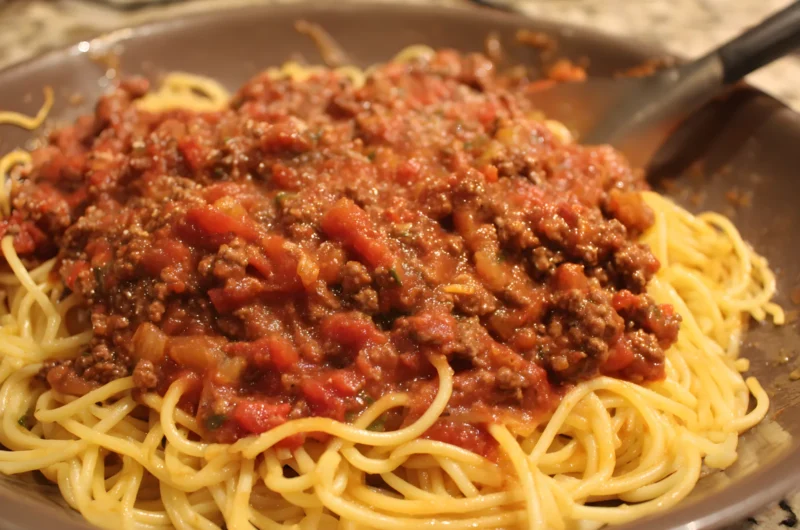
Secret Ingredient Spaghetti Meat Sauce
Course: Main DishCuisine: Italian-American8
servings20
minutes2
hours320
kcalThe savory bottle in your fridge door turns ordinary red sauce into the pot everyone asks about.
Ingredients
1 1/2 pounds ground beef (80/20 or 90/10), or hot Italian sausage
1 large yellow onion, chopped, and 4 garlic cloves, minced
2 tablespoons olive oil and one 6-ounce can tomato paste
Two 28-ounce cans whole peeled tomatoes (imported San Marzano, such as Cento), crushed
3 tablespoons Worcestershire sauce
2 tablespoons packed brown sugar
8 ounces fresh mushrooms, sliced, and 1 green bell pepper, chopped
1/4 cup Heinz chili sauce, 1/4 cup dry red wine, and 1 Parmesan rind
2 tablespoons fresh basil, 1 tablespoon fresh oregano, 1 teaspoon fresh rosemary, 1 teaspoon crushed red pepper flakes, 1 tablespoon butter, salt and black pepper
Directions
- Spread the tomato paste in a thin layer across the bottom of a heavy pot and add a few drops of the olive oil. Cook over medium-low heat, undisturbed, until the paste darkens and develops char on the bottom of the pot. Do not scrape it up yet.
- Add the remaining olive oil, the chopped onion and the garlic. Cook on low to medium heat until the onion is soft and translucent, stirring just enough to keep the garlic from burning.
- Add the ground beef and pour the Worcestershire sauce directly over the meat. Break the beef up with a wooden spoon and cook until browned all the way through, then drain off most of the fat.
- Pour in the red wine and scrape the bottom of the pot to lift the browned bits and the charred paste. Let it bubble for a minute or two before moving on.
- Open the cans of whole tomatoes and crush them by hand, or dip an immersion blender right into the can. Add the tomatoes, chili sauce and brown sugar to the pot and stir once to combine.
- Stir in the mushrooms, green pepper, basil, oregano, rosemary and red pepper flakes. Tuck in the Parmesan rind and season lightly with salt and black pepper, remembering the Worcestershire and the rind both bring salt.
- Simmer uncovered on low for at least 30 minutes, and up to 2 hours for the deepest flavor. Resist the urge to stir constantly so the sauce can form and char along the sides of the pot.
- Fish out the Parmesan rind and taste the sauce, adding more Worcestershire or brown sugar a little at a time until it is balanced. Stir in the butter just before serving and spoon over hot spaghetti with grated Parmesan on top.
Notes
- The sauce tastes better after a night in the refrigerator. Cool it, store it in glass or stainless steel, and reheat gently the next day.
- If the finished sauce tastes too sharp, drop in two small peeled carrot sticks and simmer, then remove them. They take the edge off with less sweetness than shredded carrot.
- Short on time? Stir a teaspoon of Worcestershire, a splash of red wine and a pat of butter into a jar of store-bought sauce for a fast version of the same effect.
Frequently Asked Questions
Q: Will my spaghetti sauce taste like Worcestershire sauce?
A: No. At three tablespoons in a pot built on two 28-ounce cans of tomatoes, it reads as savory depth rather than as itself. Start with one tablespoon and taste as you go if you want to be cautious.
Q: Can I use this trick on jarred sauce?
A: Yes. Start with a teaspoon per jar, warm it through, and taste. A quarter cup of dry red wine and a tablespoon of butter stirred in at the end do the rest.
Q: What should I use for a meatless version?
A: Soy sauce covers the same savory ground. Two tablespoons stirred in early, along with a Parmesan rind during the simmer, keeps the sauce from tasting thin without any beef in the pot.
Q: My sauce ended up too acidic. How do I fix it?
A: Add brown sugar a teaspoon at a time, or stir in a tablespoon or two of finely shredded carrot. For a savory fix with no sweetness, a small amount of baking soda is alkaline and settles the tang.

