

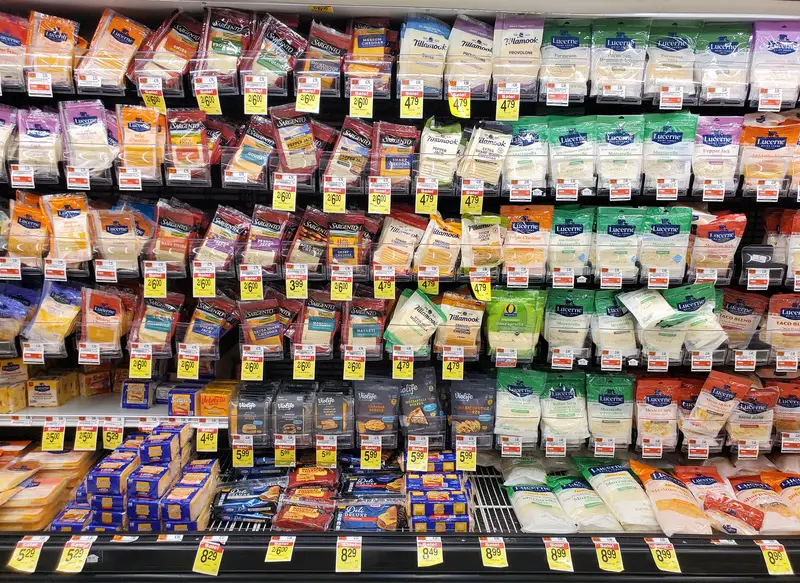
The bag has been in the back of the fridge since taco night, whenever taco night was. You pinch it open, shake some over a plate of nachos, and something is off. The shreds are not falling out loose anymore. They are clinging together in a damp clump, and when you rub a few between your fingers they leave a slick film behind. Stop right there. A slimy or sticky texture is the single clearest sign that shredded cheese is done, because it means bacteria have been multiplying on the surface long enough to leave their byproducts behind. You cannot rinse it off, you cannot bake it out, and you cannot save the bag by picking out the good parts.
Slimy, Sticky, Wet Or Spongy Means The Bag Is Done
Fresh shredded cheese should feel dry, loose and a little papery. That is the whole point of the stuff. When it turns slick, that slimy film is spoilage bacteria at work, and it is the one texture change nobody argues about. A wet or spongy feel gets the same treatment.
Dry and hard is a different story. Cheese that has gone stiff and crunchy at the edges has lost moisture and flavor, which makes it worse cheese, not spoiled cheese. It will melt fine in a casserole where nobody is judging the texture. Slime never gets that pass.
Pre-shredded bags come with anti-caking agents and moisture-reducing additives specifically to keep the shreds separate, which is why store-bought always feels drier than what you grate at home. When a bag that was engineered to stay dry has turned tacky, the additives have been outrun.
Mold Kills The Whole Bag, Not Just The Spot
On a block of parmesan you can cut at least an inch around and below a moldy patch and carry on. That trick does not transfer. Shredded cheese has been cut into hundreds of pieces that have been tumbling around together in one bag, so the visible spot is not the whole story. One fuzzy patch means the entire package goes in the trash.
What you are looking for is not always a green blob. Mold on shreds can show up as blue or dark spots, or as a fine web of white strands laced across the surface that looks almost like cobweb. Fuzzy specks in green, white, black or gray all count.
Check the cheese in real light before you dump it into a bowl. Fridge light and a half-open bag hide a lot, and once the shreds are mixed into a pan of enchiladas you are not getting a second look at them.
Smell It Before It Goes Anywhere Near Your Food
Your nose beats the date on the label every time. Shredded cheese should smell like the cheese it was cut from, usually creamy, sometimes a little musty if a sharp aged variety went into the blend. A mild, slightly tangy smell is normal.
Sour, ammonia-like or just plain unpleasant is not. The most common description of spoiled shredded cheese is spoiled milk, and it is not subtle once you catch it. An off odor that reminds you of sour milk is enough on its own, even with no mold and no slime.
Here is where people get tripped up. Some cheeses smell like feet on purpose. Cheesemaking uses bacteria, and a few of those bacteria are relatives of the ones living on human skin, which is why certain famous cheeses have that funk baked in. The question is not whether it smells strong. It is whether it smells different than it did when you opened it.
Some Color Changes Are Fine And Some Are Not
Slight yellowing along the edges of the shreds is oxidation from air contact. It happens to cheddar sitting in a half-empty bag and it does not mean anything is wrong.
Darkening across the whole bag is a different signal, and so is any color that has no business being there. Green, blue, or patches of odd yellow on a hard cheese like cheddar or parmesan all point one direction. If the cheese no longer looks like shredded cheese, if the shreds have distorted or matted into something else, throw it out rather than trying to talk yourself into it.
The White Powder Is Not What The Videos Say It Is
The fine white dust coating every bag of pre-shredded cheese is powdered cellulose, and it is there to stop the shreds from welding into a brick. It also absorbs moisture, which helps keep the shreds dry in the bag.
A run of viral videos on Instagram, Facebook and TikTok has been telling people the powder is wood shavings, bark or sawdust, and plenty of viewers have said they are done buying shredded cheese because of it. The cellulose used as a food additive is usually made from wood pulp or cotton lint, according to the Center for Science in the Public Interest, which rates it as safe to consume. Registered dietitian Kristina Cooke told TODAY.com that the edible cellulose used in food “is molecularly the same cellulose that exists in virtually all plant matter.” Celery is loaded with it.
While we are clearing the docket: crunchy white crystals in cheese are most likely calcium lactate crystals from the natural breakdown of the cheese. Annoying to bite into, not a sign of spoilage.
The Clock Starts When You Open The Bag
An unopened package of shredded cheese can stay good past the printed date as long as it stays cold. Once that seal is broken, the useful window is 3 to 5 days, with some guidance stretching it to 5 to 7 if the cheese is sealed up tight and the fridge is holding at or below 40 degrees.
Cheese you shred yourself gets 3 to 5 days, no matter which cheese it is, because grating introduces some contamination no matter how clean your grater is. That is the tradeoff for the better melt.
The date on the bag is a manufacturer’s best guess at peak quality, not a safety switch that flips at midnight. Cheese can be fine a few days past it and can be garbage a week before it if somebody left the bag open on the counter during a party.
If you are not going to finish it, freeze it early in small portions instead of late. It comes back crumblier than it went in, so use it in cooked dishes where nobody notices, and do not refreeze it after it thaws.
Check The Brand On The Bag, Too
Spoilage is not the only reason a bag gets pulled. Great Lakes Cheese Co. recalled bagged shredded cheese sold under more than two dozen brands in October 2025, after its mozzarella supplier warned that the cheese might contain metal fragments from raw ingredients. The company told retailers to clear the product off shelves.
Consumer Reports put the total at about 1.5 million bags. The brand list ran across nearly every chain in the country, including Great Value at Walmart, Good & Gather at Target, Happy Farms at Aldi, Publix, Food Lion, H-E-B, Sprouts Farmers Market, Schnuck’s, Stater Bros., Borden, Cache Valley Creamery and Laura Lynn. The blends involved mozzarella, parmesan and provolone. The recall was not posted to the FDA’s Enforcement Report site until December 1, 2025, when the agency designated it Class II. Anyone holding a recalled bag was told not to eat it.
Some Bags Are More Filler Than Others
Flip the bag over and read the ingredients, because the anti-caking situation varies a lot. Cellulose is the famous one, but potato starch, corn starch and modified food starch all show up doing the same job, and natamycin gets added as a mold inhibitor. Whole Foods keeps natamycin on its list of unacceptable food ingredients, though other watchdog groups and regulators consider it fine.
Velveeta Shreds is the one to leave on the shelf. It stacks modified food starch, potato starch and cellulose powder into a product that is doing a lot of work to imitate a bag of cheese. Borden’s shredded lineup is not far behind, with cellulose powder, potato starch and natamycin all present. Kraft 2% Shredded Cheese lands in the middle: corn starch plus natamycin, nothing alarming, just not clean.
The best bag on the shelf is Whole Foods 365 Shredded 3 Cheese Blend, which uses potato starch and cornstarch instead of cellulose and does not cost a fortune. If you want a block to grate yourself, Cabot Sharp Light is an easy place to start.
What I Actually Do
Buy the block. It is usually cheaper per ounce than the shredded version, it melts more smoothly without the starch coating, and it tastes fresher to most people. That is the honest verdict, and it has nothing to do with sawdust conspiracy theories.
But convenience is a real thing, and a bag of pre-shredded on a Tuesday night beats standing at the sink with a box grater and then washing a box grater. If you buy it, pour it out rather than reaching in with your hand, keep it sealed tight in the fridge, and give it 5 days of your attention rather than 3 weeks of neglect.
And when you find that mystery bag behind the pickles, use your fingers before your eyes. Slick shreds are the tell. Toss it and open a new one.

