

You are two hours from home, hungry, and there are two pizza places on the same block. One has a plain sign and a short menu board over the register. The other has a laminated list of fifty toppings taped to the glass, pineapple down to pulled pork. Most people pick the second one, because more choices feels like more value. Mike Bausch, founder of The Unsliced Restaurant System and owner of Andolini’s Worldwide, says that giant topping list is the loudest warning a pizzeria can give you. “When I see a pizzeria advertising 50 toppings, I already know what I’m walking into,” he told Food Republic. “That operator is chasing the customer instead of chasing the craft.” Count the toppings before you get in line. If the number is absurd, keep walking.
Fifty Toppings Means Nobody Is Minding The Pizza
The biggest red flag Bausch names is “a menu loaded with toppings but zero attention to detail.” A great pizza cook, he says, is “obsessed with doing one thing correctly.” That one thing is the pie. A topping list that runs to the bottom of the page is a shop trying to please everybody instead of getting one thing right, and it is nearly impossible to keep quality control on that many ingredients at once. Cheap components slip in because nobody has time to notice. Statista counted almost 80,200 pizza restaurants in this country in 2022, nearly 9,000 more than a decade earlier, so you can afford to be picky. A short, tight menu usually means somebody spent years narrowing it down.
The reverse is also true, and it is the best shopping advice in this whole article. “When you find a place with unbranded boxes, no marketing budget, no flashy signage, just a focused operator who clearly does not care about anything except the pizza itself, that is someone worth paying attention to,” Bausch said. Plain white box, ugly awning, four pizzas on the board. Order there.
Look For The Mixer, Not The Sheeter
Equipment tells on a shop faster than any review. The first things Bausch looks for when he walks into a pizzeria are a mixer and dough boxes sitting out where you can see them, because that means somebody in the building treats time and temperature as ingredients. The other machine is the problem. “If I see a sheeter and commercial freezers front and center, I already know the dough is being forced rather than developed,” he said.
A sheeter is a roller. It flattens dough fast and makes every crust the same size and shape, which is what you want if your goal is volume and not flavor. Hand stretching and tossing hold moisture in the dough and build the airy texture and the crisp-tender balance that separates a real pizza from a cracker with cheese on it. Commercial freezers up front point to frozen dough, and freezing cuts the rise and fermentation short and wrecks gluten development.
Fancy ingredients do not rescue any of it. Bausch says San Marzano tomatoes and pizzeria-grade 00 flour mean “nothing in the hands of someone who does not understand how to build a pizza from the ground up with actual technique.” Plenty of shops advertise the tomatoes and skip the technique.
Ask One Question And Watch Their Face
You do not have to eat a bad slice to learn what you need to know. “Ask if the dough is made in house and watch how they answer,” Bausch said, “because the right operator lights up when you ask that question.” A shrug, a mumble, or a change of subject is your answer.
The same test works after the food arrives. Say something if your pie is wrong. In a shop that cares, the reaction is close to physical pain. “They feel genuine embarrassment when something goes out that is less than spectacular,” Bausch said, and he calls that embarrassment the green flag, the thing that separates the truly great operators from everyone else selling pizza. A shop that takes the complaint, fixes it, and looks a little sick about it is a shop worth returning to. One that argues is not. Being able to see the prep work, dough getting tossed, sauce going on, toppings lined up, tells you roughly the same story without asking anyone anything.
Whole Pies In The Window Are A Bad Bet
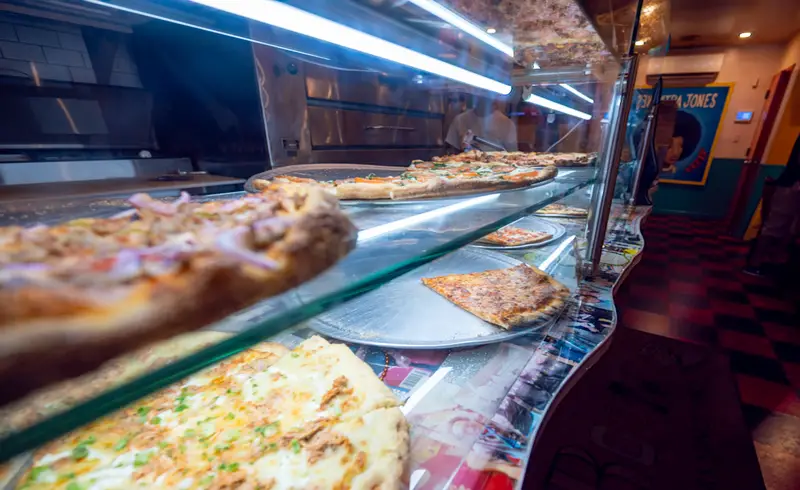
Do the math on the display case. If the pies behind the glass are still whole, plenty of people have walked past them and chosen something else, and those pizzas have been sitting a while. The one exception is timing, since you might have wandered in right as a fresh pie hit the case, and your eyes and nose will tell you which situation you are in.
Read the slice itself next. Crust should look plump, not dried out and cracked. Cheese should look shiny, not matte and stiff. Time under a heat lamp does a specific kind of damage: the base under the sauce goes soggy while the crust loses moisture, the cheese firms into something chewy, and the toppings dry out. Sloppily thrown-on toppings and pale, undercooked crust in the case are what your pie will look like too. It is 4 p.m. and nobody has touched the chicken bacon ranch since lunch. Neither should you.
The Pepperoni Is Curling When It Should Not Be
Curled pepperoni cups are a badge of honor now, and they are earned when the pepperoni has a natural casing, gets sliced to a moderate thickness, and hits hard heat from above. Those little charred edges taste better than flat discs, full stop. Angelo Competiello, owner of Alta Irpinia in Suffern, New York, who beat Bobby Flay on Season 32 of Beat Bobby Flay in 2023, told Chowhound “Cup and char is very popular,” and that style is supposed to curl.
Everything else should lie flat and look a little oily. Pepperoni that is curling when it is not cup and char has been sitting out, and so has pepperoni that has gone dull instead of shiny. The tell Competiello watches for on a cup and char pie is the oil in the cups: “Oil congealing or turning solid.” Flat, soggy pepperoni on a fresh pie points to artificial casing, a bad slice thickness, or an oven with flat, even heat, which is the same heat that fails to blister a crust properly.
A Bottle Of Sauce Where Customers Can See It
Sauce is where lazy shops get caught. Pizza sauce should be a handful of things: good canned tomatoes, a solid pinch of salt, maybe olive oil, basil, or oregano, and then the oven finishes the job. Bottled sauce is usually cooked already, which flattens the fresh tomato flavor, and it carries extras that exist to keep it shelf-stable. If a place cuts that corner on one of the three things a pizza is made of, assume the same thinking applies to the cheese and the dough.
What Competiello likes to see is the opposite of a hidden sauce station: “Ingredients being shown, cans of tomatoes to see the quality of products.” Shops proud of their tomatoes stack the cans where you can read the label. A jar on the counter is a shop hoping you are not paying attention.
You Cannot Smell Anything From The Sidewalk
A working pizzeria announces itself half a block away: hot cheese, tomato, baking dough. That smell gets in your coat. When you open the door of a pizza place and nothing hits you, the ovens are not busy and not much is coming out of them fresh. Be suspicious of the opposite too, of a shop where the strongest thing you smell is air freshener, covering something the staff has given up on cleaning.
No Parmesan Shaker, No Offer To Heat Your Slice
Two things should be within arm’s reach at any slice counter: grated Parmesan and red pepper flakes. They cost the shop almost nothing, and a place that skips them is not thinking about the person eating. Check the shaker itself while you are there, because clumped cheese inside means it has been out for a long stretch.
The reheat is the bigger one. Ordering a slice should come with the oven question, or the slice should just go in the oven automatically. You can always say no. A counter that hands you a lukewarm slice without asking has told you where you rank.
The Front Door Tells On The Kitchen
Lawrence Longo, CEO of Prince Street Pizza, told Food Republic the entrance is the giveaway: “Neglected landscaping and litter around the entrance could be a key indicator of an unclean business.” Look at the vestibule too. Half-built pizza boxes stacked in a corner, old food sitting around, nobody at the host stand because they got pulled away to cover a slammed floor. That is a shop running behind before your order even exists.
If you can see the pass, the counter where finished pizzas wait for a server, watch how long a pie sits there. Pizza is wide and flat, so it dumps heat fast, and you generally have only a few minutes before it goes lukewarm. A pie parked under the lights while servers walk past it is your dinner getting worse in real time.
When To Ignore Every Rule Above
There is one kind of place that breaks all of this and still deserves your money. “The dive pizzeria gets a pass,” Bausch said, “and I say that with full awareness of what I’m admitting. You know the place. Beat-up counter, slice in the window, someone behind the register who has clearly been worn down by life and does not particularly want to talk to you.” The pizza at those shops is often just okay. The history and the feeling of the room carry it, and that memory sticks around longer than the slice does.
Nostalgia only stretches so far. “A fantastic slice sitting in a window for six hours from someone who stopped paying attention will always disappoint you,” Bausch said. A dive that is still trying is a treasure. A dive that quit is just an old room with cold pizza in it.
Our call: the topping list is the one you can read from the sidewalk, before you spend a dime or waste twenty minutes. Fifty toppings, a sheeter, a freezer by the front counter, bottled sauce on display, whole pies going stale in the window. Any one of those is enough. Walk to the next block and find the ugly shop with four pizzas on the menu, flour on the counter, and somebody who gets excited when you ask about the dough.

