

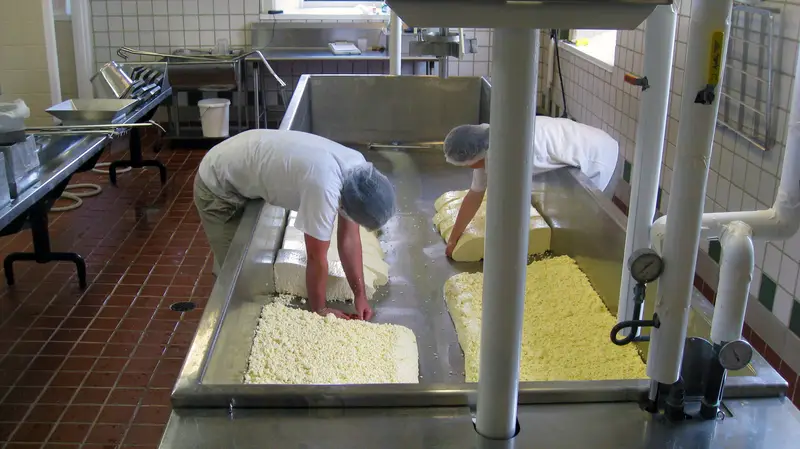
A block of cheddar can sit in the back of a refrigerator for months and still look completely fine. That is the problem federal investigators are up against. Sierra Nevada Cheese Company has pulled every Graziers Raw Milk Cheese product in distribution, including its medium cheddar and sharp cheddar, after the cheese was tied to a multistate E. coli outbreak that had sickened 13 people and sent eight of them to the hospital as of Sept. 25, 2026.
The recall was initiated on Sept. 24, 2026, and it covers the whole Graziers raw milk line sold nationwide: medium cheddar, sharp cheddar, jalapeño jack and Monterey jack. The illnesses were traced epidemiologically to the medium cheddar, but no single lot, date code or production date has been identified, so everything in distribution is coming back.
The Full List of Recalled Cheese and UPC Numbers
Retail shoppers are looking for 8-ounce squares and one 16-ounce brick. Restaurants, delis and wholesalers got the big stuff. The recalled products are:
- Graziers Raw Milk Monterey Jack, 8-ounce square, UPC 6-87652-16400-9
- Graziers Raw Milk Jalapeño Jack, 8-ounce square, UPC 6-87652-16403-0
- Graziers Raw Milk Medium Cheddar, 8-ounce square, UPC 6-87652-16506-8
- Graziers Raw Milk Sharp Cheddar, 8-ounce square, UPC 6-87652-16507-5
- Graziers Raw Milk Medium Cheddar, 16-ounce brick, UPC 6-87652-16501-3
- Graziers Raw Milk Monterey Jack, 5-pound loaf, item 6425
- Graziers Raw Milk Jalapeño Jack, 5-pound loaf, item 6426
- Graziers Raw Milk Medium Cheddar, 5-pound loaf, item 6510
- Graziers Raw Milk Sharp Cheddar, 5-pound loaf, item 6511
- Graziers Raw Milk Cheddar block, 40-pound block, items 6515 and 6516
Every variety in the line is included, which means the jack cheeses are out too, even though the sickness pattern points at the medium cheddar. If you bought Graziers and the label says raw milk, it is on the list.
Thirteen People Sick Across Nine States
Cases have turned up in California, Colorado, Georgia, Kentucky, Michigan, Nevada, Oregon, Tennessee and Utah. California and Nevada have three each. The other seven states have one apiece. Eight of the 13 people have been hospitalized, three developed hemolytic uremic syndrome, a type of kidney failure, and no deaths have been reported.
The age range in this outbreak runs from 1 to 58 years and more than half the people counted so far are younger than 5. That skew is the detail that makes this recall different from a routine one, and it is why the agencies pushed the company to act on the whole line instead of waiting for lab work to narrow things down.
Illness onset dates run from July 7, 2026 through Aug. 26, 2026. In other words, people were getting sick for roughly seven weeks before the recall notice went up, which tells you how long it takes to connect scattered cases in nine different states to one brand of cheese.
Nine Out of Nine People Interviewed Ate the Same Cheese
State and local health officials interview sick people about everything they ate in the week before symptoms started. Nine people in this outbreak were interviewed. All nine said they had eaten Sierra Nevada Graziers grass-fed raw milk cheese. A hit rate like that is about as clean as food outbreak evidence gets, and it is the reason the FDA picked up the phone and recommended a recall.
The strain involved is E. coli O26:H11, a Shiga toxin-producing type. Raw milk cheese is unpasteurized, meaning it skips the heating step that would kill bacteria in the milk before the cheese is made. The FDA says it is still working to pin down how the contamination happened and whether any other products are affected.
Why the Entire Line Got Pulled Instead of One Batch
Most food recalls come with a tidy list of lot codes and best-by dates, and you can check your package in about four seconds. This one does not work that way. Sierra Nevada Cheese Company said in its recall notice posted to the FDA website that “at this time, the investigation has not been narrowed to a specific lot, date code, or production date,” and that it is therefore recalling all Graziers Raw Milk Cheese products currently in distribution out of an abundance of caution.
Practically speaking, that means the date stamped on your package is irrelevant. No lot has been cleared. A sharp cheddar square from a different production run than the medium cheddar that made people sick is still part of the recall, and the company is treating it that way.
The Willows, California-based company stopped production and shipment of all Graziers Raw Milk Cheese after the FDA contacted it about the outbreak investigation. It notified the customers who bought directly from the company, posted notices on its website and social media accounts, and said it is cooperating with the FDA and CDC while the investigation continues.
It Was Sold Nationwide, Including Online
The cheese went out through distributors, retailers and direct-to-consumer sales across the country. The FDA has not named specific stores. It also confirmed the products were sold online, which is why states with zero reported illnesses are still in play. Texas, for example, has no cases in this outbreak, but shipped orders could easily have landed there.
The 5-pound loaves and 40-pound blocks were sold to wholesalers and food service customers. If you have eaten a grilled cheese or a cheeseburger at a small restaurant that brags about local raw milk dairy, that is the channel those items moved through. The company has notified its direct customers.
The Long Shelf Life Is the Whole Problem
Aged cheese does not spoil the way bagged salad does. It keeps for a long time, which is exactly why the FDA is telling people to go look in their refrigerators and freezers rather than assume anything bought weeks ago is long gone. A square of cheddar bought in July could still be sitting in a drawer behind the pickles.
The agency’s guidance on unlabeled cheese is blunt. If you refrigerated or froze cheese without the original packaging and cannot tell whether it is part of the recall, throw it away. Vacuum-sealed leftovers, cheese rewrapped in plastic wrap, a wedge in a deli container with no label: none of that can be checked against a UPC, so the FDA says it goes in the trash.
What to Do With a Package You Already Have
Do not eat it, do not serve it and do not sell it, the FDA says. You have two options: take it back to the store where you bought it for a refund, or throw it out. If you are tossing it, bag it so nobody pulls it out of the garbage.
Clean up after it too. Cutting boards, knives, cheese drawers, storage containers and counters that touched the cheese should be washed and sanitized to cut the risk of cross-contamination. A commercial kitchen sanitizer works, or you can mix one tablespoon of bleach into one gallon of water.
Sierra Nevada Cheese Company is taking consumer questions about the recall at 530-934-8662, Monday through Friday, 8:30 a.m. to 5:00 p.m. Pacific time. The company did not respond to questions from Consumer Reports about how the cheese may have become contaminated before that outlet published.
Symptoms and the Timing Window
E. coli symptoms usually show up within three to four days of eating contaminated food, and the FDA notes they can start as late as nine days out. Severe stomach cramps, diarrhea, fever, nausea and vomiting are the common ones. Anyone who ate the recalled cheese and gets sick should see a doctor.
Young children and older adults are more likely to get an E. coli infection in the first place, and more likely to run into complications. In this outbreak, three people have been hospitalized with hemolytic uremic syndrome.
The Case Count Is Probably Not Final
Thirteen is the confirmed number, not the real one. The CDC notes that the true total is likely higher because plenty of people get over an E. coli infection at home without ever seeing a doctor or getting tested. On top of that, it can take three to four weeks to confirm that a sick person belongs to a larger outbreak, so recent illnesses would not show up in the count yet.
The investigation is listed as open. The FDA is still trying to determine the source of the contamination and whether any other products are involved. Until that changes, the instruction on the Graziers line is the same for every variety and every date: check the fridge, check the freezer, and get it out of the house.

