

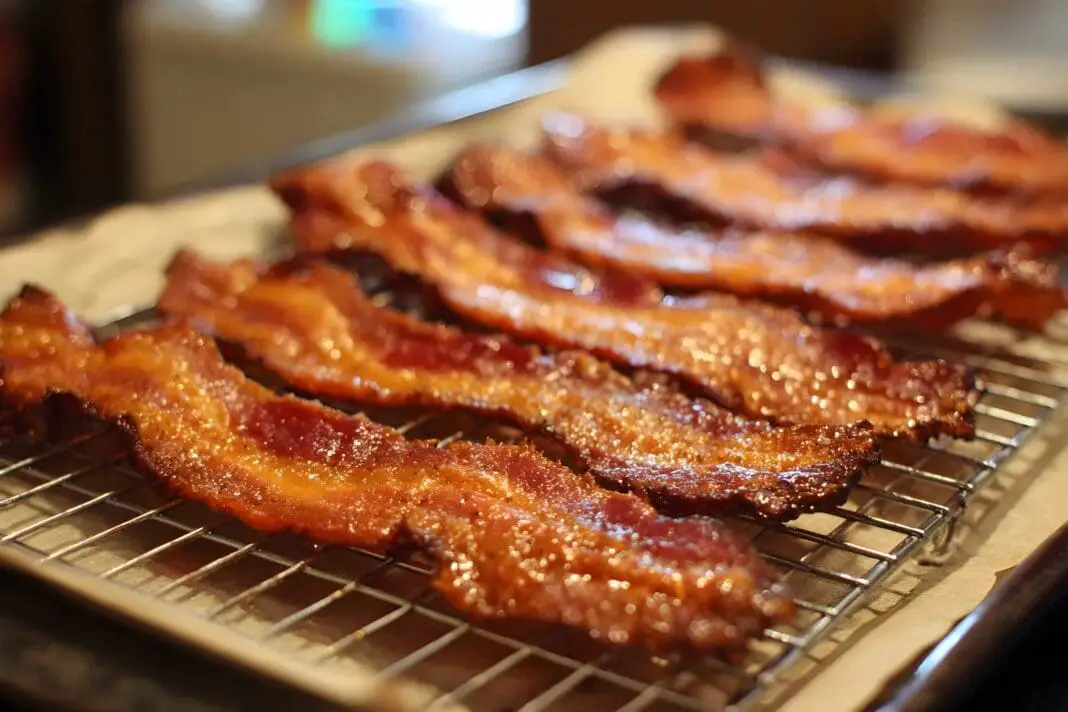
There is a specific kind of letdown that comes out of the oven on a Saturday morning. Burnt tips, pale chewy middles, two strips curled up like party horns, and a sheet pan swimming in grease. You bought decent bacon. You did nothing obviously wrong. Pork belly is just stubborn, because the fat and the meat refuse to cook on the same schedule. The fix that cooks keep landing on is sitting in your baking cupboard, and it costs two or three cents a batch: a light dusting of all-purpose flour on each raw strip before it ever sees heat.
Two to three tablespoons per pound is the whole trick. Dust both sides, lay the strips flat on a lined sheet pan, bake, and you get bacon that snaps instead of bends. No flour taste. No visible coating. Just a crust so thin you would never know it was there if you had not put it there yourself.
What the Flour Is Actually Doing
Raw bacon is wet on the surface. That moisture has to boil off before any browning starts, which is why the thin edges scorch while the fatty center is still flabby. Flour soaks up that surface water and grease right away, so browning begins sooner and the pan spits far less.
Then the second thing happens. As fat renders out, it meets the flour and the two combine into a micro-thin shell around each strip, something close to a very shallow fry happening right on the surface of the meat. The flour also feeds the Maillard reaction, the browning process that gives bacon its color and its roasted, savory edge. You end up with a strip that is crisp from end to end instead of crisp at the tips and rubbery in the middle.
One promise attached to this trick deserves a caveat. Plenty of versions claim flour stops bacon from curling. Eliza Cross, the cookbook author behind one of the most detailed floured-bacon recipes online, has said that in her own kitchen, the flour does not do much for flatness. Her curls just come out crispier. If you want genuinely flat strips, a bacon press on the stovetop is the honest answer. Use the flour for crunch, not for geometry.
How Much Flour, and How To Apply It
Restraint is the entire game. Two to three tablespoons coats a full pound. Go heavier and you risk burnt bits or a strangely doughy texture, which is the opposite of what you came for.
Two methods work. The tidier one: lay the strips on the pan first, then sift flour over the top through a fine-mesh sieve, flip each strip with tongs, and sift the other side. The sieve is the difference between an even veil and clumps. The other method is a classic dredge. Put the flour in a shallow bowl, drag each strip through on both sides, and tap it against the rim to knock off the excess. A half cup of flour in the bowl is plenty for eight slices, and you will not use most of it.
Season the flour, not the bacon. A quarter teaspoon each of black pepper and seasoning salt per batch is about right, and the bacon is already salty, so a light hand matters. Tony Chachere’s Creole seasoning is a good shortcut if you have it. Smoked paprika makes the smoke louder, a pinch of brown or maple sugar caramelizes into candy-crisp edges, and garlic powder leans the whole thing toward sandwich bacon.
Plain white all-purpose flour is neutral and disappears. Whole wheat and rye will change the flavor, so skip them unless you want that. Cornstarch and rice flour both work for gluten-free cooks, though cornstarch clings aggressively and needs a firm shake before the strips hit the pan.
Buy Thin-Cut, Not Thick-Cut
Thick-cut bacon is the better buy for almost everything else and the wrong buy here. The crunch this method produces is cracker-like, and an eighth-inch slab of pork belly never gets there. It renders slowly, the center stays meaty, and you are left with a crisp shell around a chewy interior.
Standard thin-sliced bacon is what makes this recipe sing. Smoked or unsmoked, cured or uncured, store brand or not, it all works. What does not work is bacon that is watery and stringy to begin with. Flour sharpens good bacon; it does not rescue bad bacon. If your package weeps a pool of liquid into the pan every time, the problem is the brand.
If thick-cut is what is in your fridge, it still comes out well. Give it a longer bake, 18 to 22 minutes, and expect a heartier chew rather than a shatter.
The Right Oven Temperature
Recipes for floured bacon land anywhere from 350°F to 450°F, and the spread is not an accident. At 350°F you need 20 to 30 minutes and the margin for error is wide, which is the move if your oven runs hot or your flour hand is heavy. At 450°F you are done in 10 to 20 minutes and watching it the whole time.
Split the difference and use 400°F for 14 to 20 minutes. That window browns the flour crust properly without racing ahead of the fat. Rotate the pan once at the halfway mark, since every home oven has a hot corner. Do not flip the strips. The bottom side is cooking in rendered fat and that is exactly where you want it.
Line the pan with foil, then put parchment on top of the foil. The parchment stops floured bacon from welding itself to the sheet, and the foil means cleanup is one crumpled ball in the trash. Keep the strips in a single layer with no overlap, because any spot where two strips touch is a spot that stays soft.
The Overnight Version Is Better
Dredge the bacon the night before, lay it on a plate or sheet pan, and park it in the fridge uncovered until morning. Even a few hours helps. The flour has time to pull in surface grease and stiffen against the strip, so what goes into the oven already has a dry, set coating rather than a damp one.
It is also the only sane way to do bacon for a crowd. Dredge two pounds on Saturday night, and Sunday morning is a sheet pan and a timer.
On the Stovetop and in the Air Fryer
Floured bacon pan-fries, with one rule: shake off every bit of loose flour before it hits the skillet, or the stray dust scorches in the fat and tastes like it. Start in a cold pan on medium-low and let the strips come up with the heat. Pulling the bacon out of the fridge 15 minutes ahead helps too, so the fat and meat start at the same temperature.
Judge doneness by the grease, not the clock. Big, loud bubbles mean there is still water leaving the meat. When the bubbles shrink to something like foam and the sizzle goes quiet, you are at maximum crisp and it is time to lift the strips out.
Air fryers handle floured bacon fine. The limit is real estate, since most baskets cannot fit a full pound without crowding, and crowded bacon steams.
The other popular add-in is water. Lay the strips in a cold skillet, pour in just enough to cover the bottom of the pan, and simmer until it evaporates before letting the bacon finish in its own fat. That trick solves a different problem. Water buys you even, gentle rendering and a calm stovetop. It does not build a crust. Flour does.
The Two Mistakes That Ruin It
Too much heat, too early. Food science consultant Ed McCormick puts the underlying problem plainly: “The biggest issue is that bacon contains both fat and water, and those components don’t leave the meat at the same rate.” Blast it and the meat seizes and browns while the fat is still sitting there.
The second mistake is leaving it in until it looks finished. Pull floured bacon while it still has a slight give, because it firms up as it cools and the coating sets. Move the strips to a wire rack or paper towels and let them rest for a couple of minutes. Bacon that looks perfect in the oven is usually bacon that will be brittle and bitter on the plate.
Leftovers keep in an airtight container in the fridge for up to two days. Reheat on a sheet pan at 350°F for six or seven minutes, or give them two to three minutes in the air fryer. Skip the microwave, which undoes everything the flour did.
Frequently Asked Questions
Q: Will the bacon taste like flour?
A: No. A light dusting of plain all-purpose flour disappears into the rendering fat and leaves a crust you can hear but not identify. You will taste flour only if you coat the strips too heavily, which also leaves scorched specks on the pan. Whole wheat and rye flour are the exceptions, since both will nudge the flavor.
Q: Can I pan-fry floured bacon instead of baking it?
A: Yes, with one precaution. Shake off every bit of loose flour first, or the stray dust burns in the hot fat. Start the strips in a cold skillet over medium-low heat and let them come up with the pan. Watch the grease bubbles and lift the bacon out when the sizzle quiets and the bubbles shrink to a foam.
Q: Does this work on turkey bacon?
A: It does, though turkey bacon crisps differently from pork because there is far less fat to combine with the flour. You will get browning and some crunch, but not the shattering texture that pork belly produces.
Q: How do I store and reheat the leftovers?
A: Wrap the strips tightly or seal them in an airtight container and refrigerate for up to two days. Reheat on a baking sheet at 350°F for about six or seven minutes, or give them two to three minutes in the air fryer. A quick sear in a dry skillet also works.
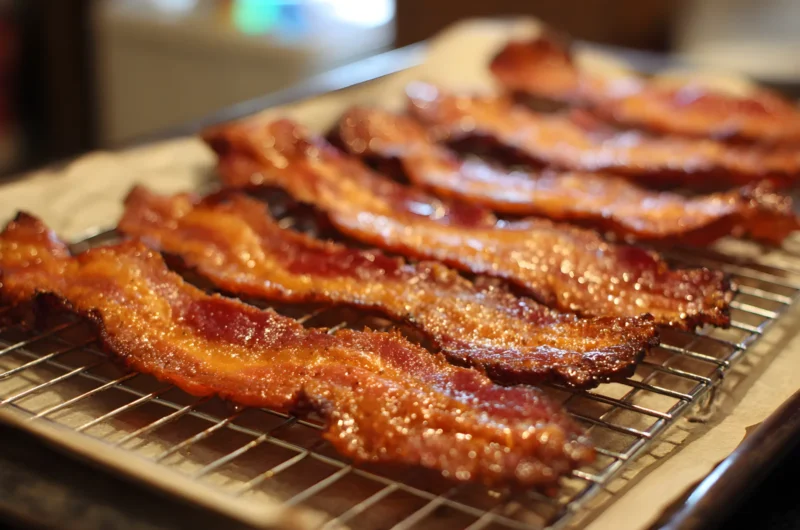
Flour-Dusted Crispy Oven Bacon
Course: BreakfastCuisine: American6
servings5
minutes20
minutes141
kcalA light dusting of pantry flour turns ordinary bacon into shatteringly crisp, diner-style strips.
Ingredients
1 lb regular thin-sliced bacon
2 to 3 tablespoons all-purpose flour
1/4 teaspoon ground black pepper
1/4 teaspoon seasoning salt (optional)
Pinch of smoked paprika (optional)
Pinch of brown or maple sugar (optional)
Aluminum foil
Parchment paper
Paper towels or a wire cooling rack
Directions
- Take the bacon out of the refrigerator about 15 minutes before you plan to cook it so the fat and the meat reach the same temperature. Cold bacon straight from the fridge cooks unevenly, and the edges get ahead of the centers.
- Heat the oven to 400°F. Line a large rimmed baking sheet with aluminum foil, then lay a sheet of parchment paper on top of the foil. The parchment keeps the floured strips from sticking and the foil turns cleanup into one crumpled ball.
- Stir the flour, black pepper and seasoning salt together in a shallow bowl. Add the paprika or sugar here if you are using them. Mixing the seasoning into the flour spreads it far more evenly than sprinkling it over the finished strips.
- Drag each strip of bacon through the flour on both sides, then tap it firmly against the side of the bowl to knock off the excess. You want a barely visible dusting, not a batter. A fine-mesh sieve held over the strips works just as well if you prefer to sift it on.
- Arrange the coated strips in a single layer on the parchment with no overlapping. Any place where two strips touch will stay soft. Use a second pan rather than crowding one.
- Bake for 14 to 20 minutes, depending on the thickness of your bacon and how crisp you like it. Rotate the pan front to back at the halfway point so the hot corner of your oven does not scorch one end of the tray.
- Do not flip the bacon while it bakes. The underside is sitting in its own rendered fat, which is exactly what builds the crust, and turning the strips breaks the coating.
- Pull the pan while the strips still have the slightest give and lift them onto a wire cooling rack or paper towels with tongs. Let them rest two to three minutes before serving. They tighten up and reach full crunch as they cool.
Notes
- Thin-sliced bacon gives the cracker-like snap this method is known for. Thick-cut still works, but run it 18 to 22 minutes and expect a chewier center.
- For gluten-free, swap in cornstarch or rice flour. Cornstarch clings hard, so shake the strips well before they go on the pan.
- Dredge the night before and chill the strips uncovered in the fridge. The flour sets against the bacon and the finished crust is noticeably crisper.

