

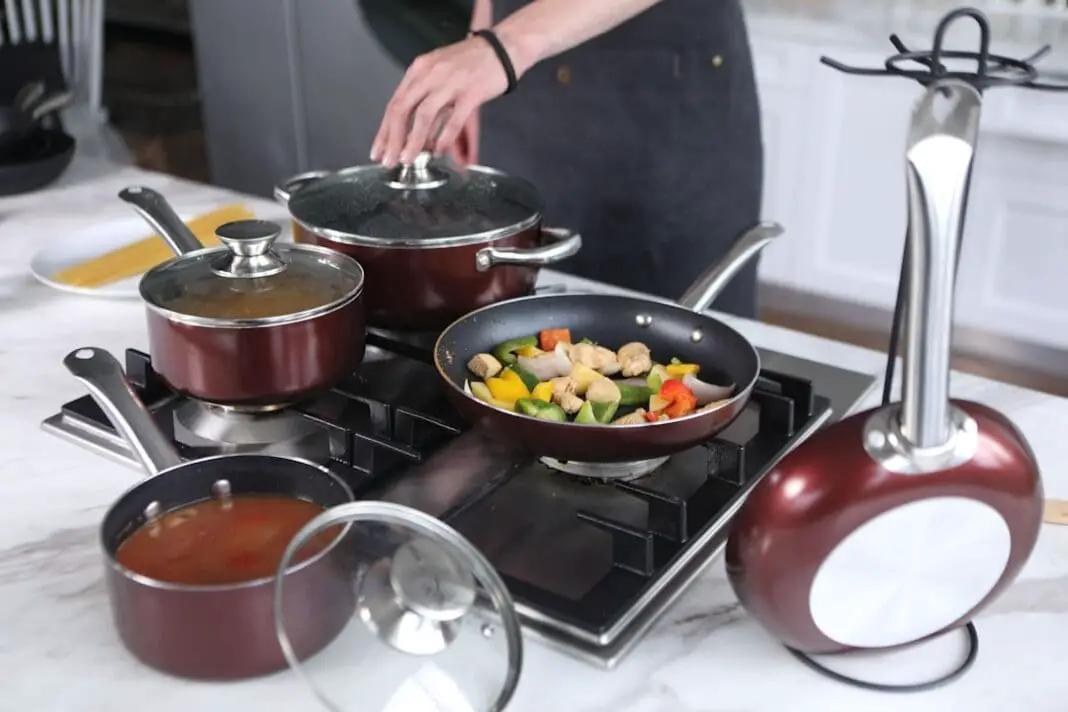
Your nonstick pan is a hero for a short list of jobs. Eggs slide out clean. Pancakes flip without tearing. A grilled cheese browns up and lifts off in one piece. For soft, quick, low-drama cooking, nothing beats it.
Then people push their luck. They crank the burner, throw on a steak, and wonder why the crust looks gray and the pan starts flaking a year later. A nonstick coating has real limits, and a few common foods blow right past them. Some ruin the food. Some ruin the pan. A couple manage both. There are two ways these foods do damage: brutal heat that breaks down the coating, and long cooking or hard scrubbing that wears it thin. Keep these four off the nonstick and grab a different pan.
Steak
A great steak lives or dies on the crust, and that crust needs a screaming-hot pan. For searing, cast iron wins hands down over nonstick. It reaches and holds the kind of heat that turns the surface of the meat brown and deeply savory, the reaction that gives a good steak its flavor.
To get a real sear, the pan surface has to hit somewhere around 400 to 450 degrees Fahrenheit. That is still inside what nonstick is rated for, but it leaves no room. The coating starts breaking down and giving off fumes at 500 degrees, and a dry pan on a high burner blows past that fast. Strip the coating and some of it can end up on your steak.
There is also the flavor you leave behind. A hot cast iron pan builds up browned bits stuck to the bottom, called fond, and you turn those into a pan sauce with a splash of wine or broth. Food still browns in nonstick, but the bits will not stick to the pan, so there is nothing to deglaze. No fond, no sauce, no depth.
Even a company that sells nonstick pans admits the truth here. Made In concedes that regular high-heat searing will damage the coating, and their workaround only functions because their pan is built on a thick stainless clad body. Their method also flips everything you know: you start with a cold pan and add the steak before any heat, the exact opposite of how searing is supposed to work.
If you own a cast iron or stainless steel skillet, that is your steak pan. Let the meat sit out about 30 minutes, pat it bone dry, and get the pan smoking hot before the steak goes down. It will stick at first, and that is fine. As the crust forms, the meat releases on its own when it is ready to flip.
Crispy Bacon
Bacon gets crispy when it hits serious heat and renders its fat fast. That level of high heat sits right at the edge of what a nonstick coating can take, and running a pan that hot over and over wears the coating down quicker than almost anything else you cook.
Then there is the grease. Bacon throws off a lot of fat, and it splatters everywhere. On a nonstick surface, that fat can bake onto the coating in spots that are a pain to scrub off, and hard scrubbing is exactly what kills a nonstick pan faster.
Cast iron handles bacon better in every way that counts. It gets crispier, it shrugs off the high heat, and a well-kept cast iron skillet basically lasts forever. The rendered fat even helps keep the seasoning in good shape. Cook your bacon on iron, then use a little of the leftover grease to fry your eggs in the nonstick if you want.
Acidic Tomato Sauce
Tomatoes are acidic, but the coating itself is not what acid goes after. PTFE is chemically inert, and a marinara will not eat through it. The trouble is what sits underneath. Once the surface is scratched or worn thin, an hour or two of simmering puts acid straight onto the bare aluminum, which does react and can leave a metallic taste in the sauce.
Coating does end up in food sometimes, but acid is not how it gets there. Scratches from metal utensils and heat past 500 degrees are what break a nonstick surface down. Nobody wants either one in their Sunday gravy.
Long-cooked acidic recipes belong in stainless steel or enameled cast iron. Both handle acid without reacting, they hold up to hours on the stove, and they will not leave your marinara tasting like the pan. Stainless steel in particular is built for this kind of work. Save the nonstick for gentler, faster jobs where the food is out of the pan in a few minutes.
Deep-Fried Foods
Deep frying means dropping food into oil sitting at around 350 to 375 degrees Fahrenheit. That is well inside what nonstick is rated for, so the heat is not what should stop you here. The pan is.
The issue is safety and volume. Filling a lightweight nonstick pan with a couple inches of hot oil is asking for trouble. Thin pans warp, whatever they are made of, and a warped pan full of frying oil can tip and spill. That is a mess you do not want anywhere near a hot burner.
A heavy Dutch oven or a dedicated deep fryer is the move for anything fried. The thick walls hold a steady temperature, the weight keeps everything planted, and you are not slowly cooking off your coating in the process. Fries, wings, doughnuts, none of it belongs in your everyday skillet.
What To Use Instead
Your nonstick pan is not the enemy. It is a specialist. Keep it for eggs, pancakes, delicate fish fillets, and quick sautés, and it will earn its spot in the drawer for years.
For everything hot and heavy, keep a few backups in the cabinet. Carbon steel can get nearly as slick as nonstick once you season it, and it is tougher and free of the coating chemicals. Cast iron is the most durable pan you can buy and handles the highest heat without blinking. Stainless steel is your go-to for acidic sauces and pan sauces. If you want a coated pan without the old-school chemistry, ceramic skillets are generally made without PFAS, though they tend to wear out sooner. Check the box actually says PTFE-free; independent testing has turned up pans sold as PFOA-free that were PTFE-coated anyway.
A few habits keep any nonstick alive longer. Never crank it past medium-high on the stovetop, and keep it under 450 degrees in the oven so it never crosses the 500 degree line where the coating breaks down. Always add fat or food before you turn on the heat, because an empty pan spikes in temperature fast. Skip the metal spatulas that scratch the surface, and wash it with a soft sponge instead of anything scratchy. Treat it like the specialist it is, and stop handing it the jobs it was never built to do.

