

Fourteen teams of Secret Service agents spent three days last June walking into stores across New York City. When they finished, they had pulled 35 tiny devices off checkout machines and card readers. Those little gadgets were quietly copying people’s card numbers, and agents figure they stopped around $36.5 million in fraud before it ever hit a single bank account.
That sweep was just one weekend in one city. Police departments in Georgia, Texas, Arkansas, and small towns most people never hear about are all putting out the same warning right now. Someone is messing with the card readers you use every day, and the newest versions of this trick are almost impossible to spot without knowing what to look for. So let’s talk about what’s actually going on and how these things work.
The device that goes in faster than you can blink
A skimmer is a small piece of hardware a criminal snaps onto or slides inside a card reader. It sits there and grabs your card info the second you swipe or insert. Some of them look exactly like the real thing, right down to the shape and color of the machine. According to the Secret Service, these can go in during a few seconds when nobody is watching, and many of them beam your stolen numbers straight to the crook’s phone over a wireless connection. He doesn’t even have to come back for the device.
In 2025 alone, agents and local police checked about 60,000 terminals at more than 9,000 businesses and yanked out 411 skimmers. They estimate that kept more than $428 million out of thieves’ hands. And that’s only the devices they found.
The parking lot version with no device at all
Here’s a twist on the card reader trick that doesn’t involve hiding anything inside a machine. Police in Charleston are warning drivers about people who walk up to your car in a grocery store parking lot with a sad story. They ask for a donation to some urgent cause, then pull out a handheld card reader to take your payment. One tap and they run a charge that turns out to be way bigger than you agreed to. It can drain your account in seconds.
Real charities almost never work parking lots with a stranger holding a card machine. Officers say keep the conversation short, say no, and drive off if someone pressures you. A tap that takes less than a second can approve a huge transaction, so the fewer strangers who get near your card, the better.
It’s not just gas pumps anymore
For years people thought of skimmers as a gas station problem. That’s changed. In May, Dougherty County police in Albany, Georgia found a skimmer on a checkout terminal inside a Dollar General on Newton Road. They asked anyone who paid with a card at that store to watch their bank account closely.
Bodegas, corner stores, and small shops are big targets too. One Secret Service agent in New York put it bluntly, saying the city is a rich hunting ground because there are so many small stores where a device can go unnoticed. The takeaway is simple: any place you stick a card in a slot is a place a criminal might have gotten to first.
The shopper who caught one with her own hands
Savannah Dansby was checking out at a Pyburns grocery store in southwest Houston before Memorial Day weekend when something felt off. She went to swipe her EBT card and the machine “snugged” it, like it was gripping the card harder than normal. She gave the reader a tug, and the whole fake front popped right off. It was a skimmer.
She called police, checked her account, and locked her card. What makes her story stick is that she noticed the device only because it felt wrong, not because it looked wrong. That gut feeling of “this isn’t right” is worth trusting. The week before she found it, agents had already pulled more than a dozen skimmers off machines around Houston during a larger operation.
Why store owners break down when police show up
The people who own these stores usually have no clue anything is wrong. A financial analyst who works these cases said business owners react with shock or embarrassment because they never wanted to expose their customers to this. During one Boston check, a bakery owner started to cry when agents found a device in his shop.
One agent shared a story that says it all. A manager swore up and down he had already checked his store. The agents asked to look anyway, he said go ahead, and they spotted a skimmer right away. The manager dropped to the floor. He was crushed. So no, you can’t assume the store already caught it.
The new version you literally cannot see
Old-school skimmers grab the data off the magnetic stripe on the back of your card. Those you can sometimes find because they sit on the outside of the machine. The scarier upgrade is called a shimmer. It’s a paper-thin device that slips inside the card slot and reads the chip data as your card talks to the reader. Some people call it skimming 2.0.
A shimmer hides between your card and the reader, so it’s nearly invisible from the outside. You can’t jiggle it or spot it the way you might catch a bulky overlay. As one Arkansas police chief said, the newer tech leaves the device buried inside where you just can’t tell it’s there. That’s a big reason so many of these go undetected for weeks.
How to check a reader before you pay
You won’t catch every device, but a quick habit helps. Give the card reader a gentle wiggle and tug before you use it. A real reader is bolted down tight. If a piece feels loose, moves, or comes off, walk away and tell the store or the police. Look for parts that bulge, sit crooked, or don’t match the rest of the machine. At gas pumps, check that the security seal near the card slot doesn’t say “void.”
Comparing machines helps too. If one register looks a little different from the one next to it, that’s a red flag. Police say thieves put these devices where cameras can’t see and lighting is bad, so the sketchy back terminal deserves more of a look than the busy one up front. And if the reader gives your card that same weird tight grip the Houston shopper felt, stop right there.
The easiest way to skip the whole problem
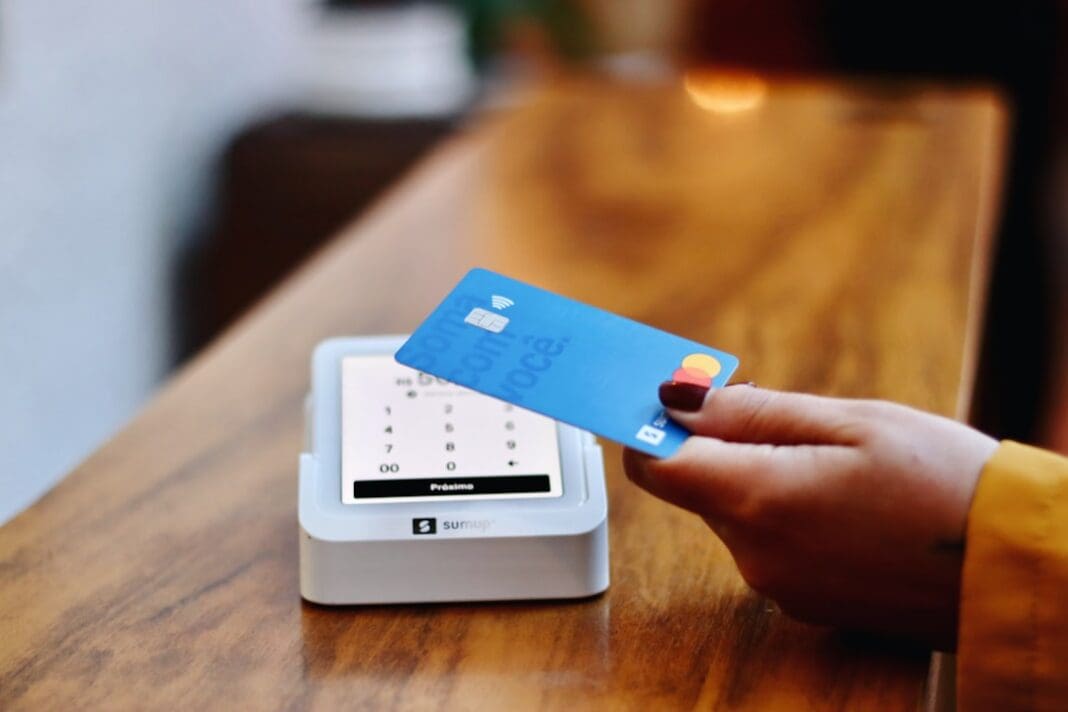
Tap-to-pay and phone wallets like Apple Pay and Google Pay are basically skimmer-proof. When you tap, the machine gets a one-time code instead of your real card number, and your card never touches the part of the reader a skimmer or shimmer can reach. A stolen code is useless to a thief. If a store takes contactless payment, that’s the move.
The numbers show why this matters. FICO’s card alert service found more than 243,000 U.S. debit cards were hit by skimming in 2025, a 5% jump over the year before. And about three out of four of those compromises happened at non-bank machines like the terminals in convenience stores and gas stations, not at your bank’s own ATM.
What to do if you think you got hit
Speed is everything. Federal law caps what you owe at $50 on a credit card. On a debit card, you can owe as little as $0 if you report it within two business days, but that window closes fast and the longer you wait the more you can be on the hook for. So check your statements often instead of once a month, and set up text alerts from your bank so a charge you didn’t make shows up on your phone right away.
If you spot a strange charge, call your bank or card company and lock the card. If you find an actual device on a machine, don’t yank it home as a souvenir. Leave it and call the local police, because they and the Secret Service can pull data off it to figure out when it was planted and check store cameras to catch who did it.
Some small towns are getting proactive. Pottsville, Arkansas police bought scanner tools that light up green when a reader is clean, then hand safe stores a plaque so shoppers know their card is fine there. That kind of local push is spreading. Until it reaches your town, the best protection is a quick wiggle of the reader, a tap instead of a swipe when you can, and a close eye on your account. It takes ten seconds, and it beats spending a month fighting charges you never made.

