

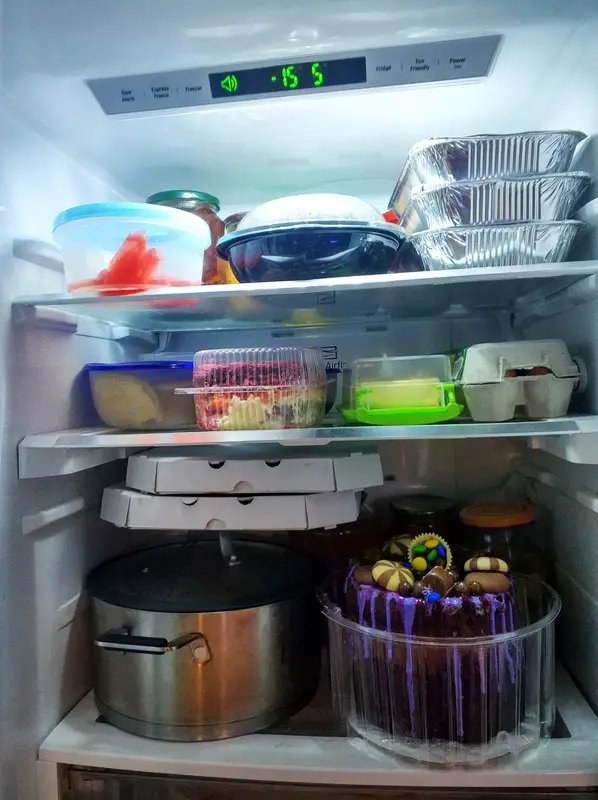
Most people load a fridge the way they load a car trunk. Whatever fits, wherever it fits. That habit is how raw chicken ends up parked on a shelf right above a bowl of cut watermelon, and it is the one stacking mistake worth fixing before you put away another bag of groceries.
The problem is drip. Juice from raw meat, poultry and fish can leak out of its packaging and run straight down onto whatever sits below it. If that lower food is something you eat cold, like a salad or last night’s leftovers, nothing gets a chance to kill what came off the meat. Storing food in the wrong order raises the risk of cross-contamination, and the fix costs nothing but a few minutes of rearranging.
The rule pros use is to stack by cooking temperature. Food that needs the least heat, or none at all, goes on top. Food that needs the most heat goes on the bottom. Flip that order and you have flipped the safety of your whole fridge.
Raw meat belongs on the bottom, no exceptions
Public health guidance from Clatsop County, Oregon lays out the exact pecking order inside a fridge. Raw chicken goes below raw ground beef. Ground beef goes below raw seafood and raw eggs. And every one of those raw animal proteins goes below any ready-to-eat food. Poultry sits at the very bottom because it carries the highest risk and has to reach 165 degrees.
One refrigerator guide puts the meat rule bluntly: uncooked meat, fish and poultry should never go on the top shelf, because juices and other fluids can leak onto the lower shelves. Those juices can carry E. coli and Salmonella, which is why raw cuts also belong in water-tight containers on the bottom, not loose on a plate that can slosh around when you shut the door.
Casseroles and stuffing that contain already-cooked food belong down low too, since they need a good blast of reheating before they hit the table. When in doubt, ask yourself how hot the food has to get. The hotter, the lower.
The top shelf is for food you never heat
Whatever needs no cooking goes up high, where nothing can drip on it. The top shelf is for prepared salads, washed produce, desserts, and cooked food that is ready to serve. These items go straight from shelf to plate, so they get the most protection and the least second chance.
Keep them covered or sealed even up there. A lid keeps out odors and stray drips, and it stops the food from drying out. If your top shelf is currently holding a package of ground turkey, you have the whole system upside down.
The shelves in between have an order too
Between the top and the bottom, the same logic keeps going. Whole cuts that only need to reach 145 degrees, like whole fish, roasts, and whole cuts of beef, pork, veal and lamb, sit higher than ground meat. Ground meat has to hit 160 degrees at home, or 155 in a commercial kitchen working to the FDA Food Code, because grinding spreads bacteria all through it instead of leaving it on the surface.
A commercial storage chart sorts it the same way restaurants do. Whole raw seafood sits high, whole cuts of raw meat sit below that, and ground or tenderized meat drops another level down. Whole eggs share a shelf with those whole cuts. It is a fine distinction that most home fridges skip completely, but it follows one clean idea: the messier the meat is to cook safely, the lower it lives.
Milk and eggs do not belong in the door
The door is the warmest part of any fridge because it takes a blast of room air every time you open it. That makes it the worst spot for the two things people shove there out of pure habit: milk and eggs. Dairy stored in the fridge door can spoil early from the constant temperature swings.
Save the door for things built to handle a little warmth. Condiments, salad dressings, jams, pickles and bottled drinks all hold up fine out there. Milk and eggs keep far better toward the middle or the back, where the cold stays steady all day long.
Cramming the fridge full backfires
A packed fridge feels efficient. It is actually fighting you. When food is jammed into every gap, cold air cannot circulate, and you get warm pockets where nothing chills the way it should. The compressor then runs harder to keep up, and an overworked one can quit entirely and take everything inside down with it.
Signs you have gone too far include ice forming around the vents, items in the door feeling warmer than the ones in the middle, condensation on the shelves, and a faint musty smell in spots. If that sounds like your fridge, pull some things out, repack into smaller containers, or move a shelf. Cold air needs room to circulate around your food, not a solid wall of Tupperware to fight through.
Set the temperature, then actually check it
Numbers matter here. The FDA says a fridge should sit at 40 degrees or below and the freezer at zero or below. Appliance makers quote a wider operating range, and GE calls 37 to 42 degrees normal for the fresh food section, but that is how the box runs rather than a safety number. Once you climb above 40, bacteria start multiplying fast.
Plenty of people never touch the dial and leave it on the factory setting for years. Worse, they trust the display on the door. Put a cheap appliance thermometer near the center of the fridge instead, away from the door where warm air sneaks in with every open. That reading tells you what your food is actually feeling, not what the panel wants you to believe.
Know where your fridge runs cold
Cold is not spread evenly inside the box. Cold air sinks, so the bottom shelves and the back usually run coldest, which is one more reason raw meat does well down low. The catch is that cold can tip into frozen. GE’s own troubleshooting pages name the spots, and they vary by model: on top-freezer units the back of the top shelf runs coldest, and on side-by-sides the door bins can freeze when they sit level with the freezer vents.
Most fridges blow their coldest air from a vent above the top shelf, so keep food a few inches clear of it unless you want your lettuce frozen solid. One wrinkle worth knowing: in models with a built-in ice maker, the upper shelves can be the coldest zone instead of the bottom, which flips the usual map. Learn your own fridge before you lock in a layout.
Rotate what you have and cover it up
Order on the shelves only helps if the food does not rot in the back. Restaurants live by “first in, first out,” pulling older items to the front and tucking new groceries behind them so nothing gets lost and fuzzy against the back wall. Do the same at home and you throw away a lot less every month.
Cover your leftovers, too. Uncovered food dries out, soaks up fridge odors, and sits open to whatever might drip. An airtight container keeps last night’s pasta from tasting like this morning’s fish. Stack with care while you are at it, because one badly balanced container can topple and set off a chain reaction of spills, which turns into a real mess if raw meat is anywhere in the pile.
Fixing all of this does not require new gear or a lost weekend. Flip the order so raw meat and poultry sit at the bottom in sealed containers. Put ready-to-eat food up top. Get milk and eggs out of the door. Leave room for air to move. Your groceries last longer, your fridge works less, and you stop tossing money in the trash every single week.

