

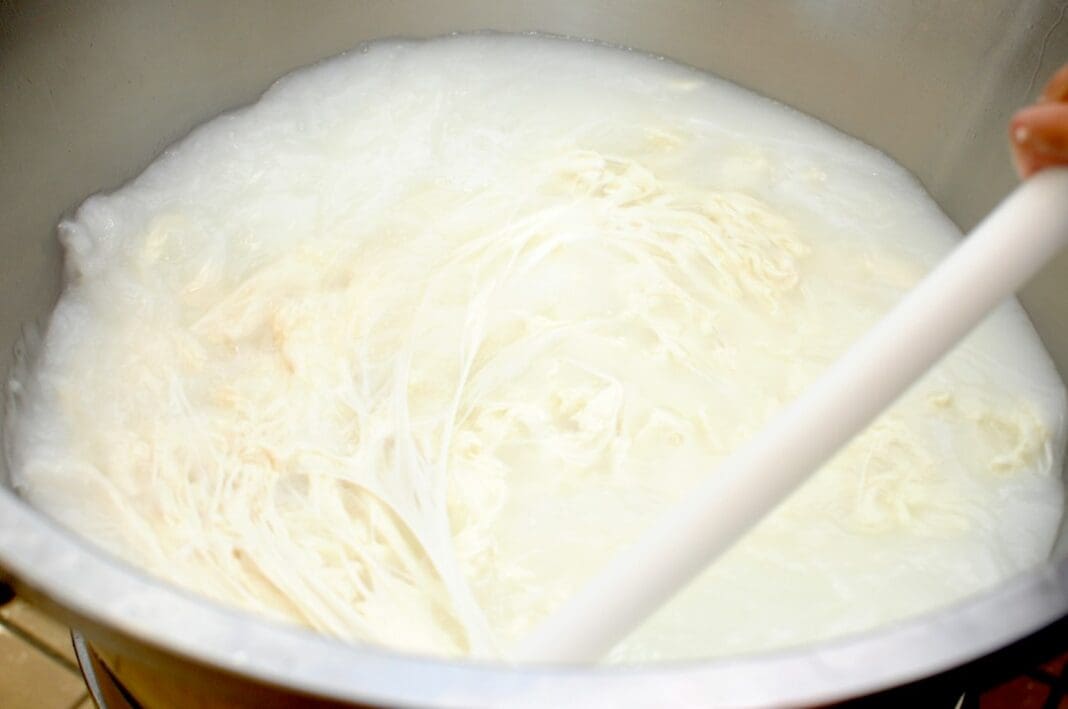
Every box of spaghetti ends the same way. The pot comes off the burner, the colander goes in the sink, and a gallon of cloudy water vanishes down the drain while the steam fogs up your glasses. That water is not waste. It is the single ingredient standing between the pasta you made and the pasta you ordered at a restaurant, the kind where the sauce actually clings to the noodles instead of sitting in a sad puddle at the bottom of the bowl. Starch comes off the pasta as it boils, and that starch thickens, it binds oil and water together, and it carries salt. One cup of it will do more for dinner than another spoonful of butter.
The Cloudy Water Is Doing Real Work
Dry pasta is packed with starch granules, and boiling water pushes its way into the ones near the surface. They swell to many times their original size, and some burst and release two starch polymers into the pot. Amylose is a long, fairly straight chain, and it thickens liquid. Amylopectin is branched, and it gives you that slightly sticky, gelatinous water you get from a pot that has already boiled three batches. Less water and longer cooking both make it more concentrated.
That dissolved starch also helps emulsify a sauce. A thin oil-based sauce like aglio e olio will separate and pool on the plate unless something holds the fat and the water together. Starch bridges the two, suspending the fat droplets in a loose emulsion so the sauce coats every piece of pasta evenly.
Save A Cup, And Grab It Before You Drain
A cup covers almost every situation. For a single serving, half a cup is usually plenty, and for a big batch or a sauce that needs real loosening, reserve one to two cups. Scoop it with a heat-safe measuring cup or an old coffee mug right before you drain, when the water is carrying the most starch.
Better yet, stop draining. Lift the pasta out with tongs or a spider and leave the whole pot of water sitting on the stove. You will never forget to reserve it, and you have the rest of the pot for everything further down this list.
Pull The Pasta Early And Finish It In The Pan
Pasta cooked all the way through and then simmered in sauce comes out overcooked. Austin chef Jo Chan cooks hers just shy of al dente instead. “What’s great about using pasta water is that you can pull the pasta when it is 85% cooked and finish the last 15% in the sauce using the pasta water to help it continue cooking, so the pasta and sauce marinate together,” she says.
The method Made In’s cookware guide lays out: reserve about a pint, then add it to the sauce one tablespoon at a time until the sauce is thick and almost spreadable. Keep it at a constant simmer, add the pasta back, and toss. Too thick, add another tablespoon. The whole thing comes together in seconds. The sauce gets absorbed into the outer starch layer of the noodle rather than sitting on top of it.
How Salty Is Too Salty
Chan goes big. “I tell people to add enough salt so that it tastes like the salinity of an oyster,” she says. If you have never tasted an oyster, a good fistful, or about four tablespoons, is the usual place to start. Kitchen testing puts the sweet spot lower than seawater, around 1 percent salt by weight. For a gallon of water that is roughly four tablespoons of Diamond Crystal kosher salt or two and a half of Morton, and the water tastes well seasoned rather than briny. Salt at that level seasons the pasta all the way through, and unsalted pasta tastes flat and starchy no matter what you pour on it.
My take: salt until you can clearly taste it, then back off if your sauce already brings its own. Very salty water turns a finished dish harsh when there is Parmesan, Pecorino or cured meat in the pan. And skip the olive oil in the pot entirely. As Chan puts it, “Adding olive oil actually makes it harder for your pasta and sauce to come together.” Stir during the first few minutes instead and nothing sticks.
Cacio E Pepe Lives Or Dies On It
Three ingredients, and the fourth one is the water. Cacio e pepe clumps when the cheese hits too much heat too fast. The proteins in the Pecorino seize up and turn stringy instead of melting, and you end up fishing rubbery knots out of a watery pan.
The fix is starch and patience. Mix the grated cheese with a small amount of the hot water first, a little at a time, until it forms a thick cream. Take the pan off the heat completely and let it cool for a moment before the cheese paste goes in. Then add more starchy water gradually while you toss. Cooking with less water in the first place helps here, because the starch has nowhere to dilute.
Pesto Needs It, But Off The Stove
Pesto is the sauce most likely to abandon your noodles. You take a bite, get slick bare pasta, and look down at a green ring on the plate. A few tablespoons of pasta water stirred slowly into the pesto fixes the consistency and makes the two stick together.
Do it away from the burner. High heat dulls the fresh smell of the basil and browns it. The residual heat in the water is enough to bring the sauce together without wrecking the flavor.
Pizza Dough Comes Out Crispier
Swap the plain water in a bread or pizza dough recipe for pasta water, warmed first. Kyle Taylor of HE COOKS explains the effect this way: “The starch in the pasta water gelatinizes during cooking, helping the crust brown better and become crispy while staying tender on the inside.”
Cookbook author Kat Lieu, founder of Subtle Asian Baking, takes it a step further and spritzes the crust mid-bake. “If you spray the crust while it’s baking in the oven with some pasta water, it will add to the crispiness,” she says, comparing it to the steam bakers use for baguettes. One catch: if your water is well salted, cut back or skip the salt the recipe calls for.
Soup, Gravy And A Two-Minute Pan Sauce
Lieu describes pasta water as being “like a very diluted cornstarch slurry and can help slightly thicken your soups, sauces, or stews, or make food more velvety, and the salt in it will help season your food.” That is exactly how to use it. It thickens a weeknight soup without the extra step of whisking cornstarch into cold water.
It also deglazes a pan after you sear something, and it stands in for broth in a gravy. Recipe developer Natasha Kravchuk, of Natasha’s Kitchen, puts the sauce case plainly: “Using pasta water gives the sauce a creamy and luxurious texture without the need for extra fat or cream.”
Rice And Dried Beans Drink It Up
Pour the leftover water into a second pot and cook rice in it. The salt seasons the grains and the starch makes them a little stickier. If you are making rice that already calls for salt, use less and adjust at the end.
Dried beans are the better trick. Use pasta water for both the overnight soak and the cooking, with a separate batch for each, then simmer covered until tender, usually one to two hours depending on the bean. Salt softens the pectin in the skins so the beans absorb water faster and split less, and the starch turns the cooking liquid into a creamy broth. Taste before you add any more salt, and throw in garlic, onion or herbs if you want.
Steam The Vegetables Over The Same Pot
Broccoli, green beans and carrots can go in a steamer basket set right over the pasta pot while the noodles boil, or in a pot of scooped-out water that is already screaming hot. You skip waiting for a second pot to come to a boil. The same water will also loosen the starchy film ringing the inside of the pot, which saves you some scrubbing at the sink.
Keep It A Few Days, Or Freeze It In Cubes
Let the water come to room temperature, move it to an airtight container, and it keeps in the fridge for a few days. For anything longer, pour it into ice cube trays and freeze it. Cubes are the smarter format anyway, since most of the time you want a few tablespoons, not a quart.
Two Things People Get Wrong
Watering houseplants with pasta water gets passed around constantly, and it only applies to water with no salt, no spices and nothing else added, cooled down before it touches soil. If you seasoned the pot like you should have, that water belongs in a sauce, not a planter.
The second one undoes everything else. Do not rinse cooked pasta under cold water unless you are making pasta salad. Rinsing strips the surface starch that makes sauce stick, and you just spent the whole dinner trying to hang onto that starch.
Leave a mug next to the stove. That is the entire habit. Dip it before you drain, and the next bowl of pasta you make will be noticeably better than the last one, without buying a single new ingredient.

