

Your air fryer isn’t broken. Your fries came out pale and floppy in the middle, your chicken tenders shed half their breading, and the whole thing took ten minutes longer than the bag promised. The machine did exactly what it was built to do. You just loaded it wrong, and so does almost everybody else who owns one.
There is one habit that wrecks more air fryer dinners than bad recipes, cheap oil, and wrong temperatures put together. It feels efficient. It saves you a second batch. And it quietly ruins your food every single time. Let’s talk about it, plus a few other loading habits that are costing you crispy edges.
The one habit a real chef wants you to quit
Award-winning chef Ozoz Sokoh has cooked for a living, and if she could fix one thing in your kitchen, it wouldn’t be your knife skills. It would be how much food you cram in the basket. She says overcrowding and skipping the single layer lead straight to uneven cooking and patchy browning. When dinner is late and everyone is hungry, the temptation is to dump everything in at once and hope for the best. That’s the exact moment you sabotage the meal. Pack the basket too tight and the food comes out pale, soft, and sad instead of golden. She’s not asking for fancy technique. She’s asking you to give the food some breathing room. That’s the whole ask.
Your basket is a fan with a rack, not a bowl
The reason this matters comes down to what an air fryer actually is. It is not a pot. It is not a storage container that happens to get hot. Think of it as a tiny roasting rack with a fan, which means every piece of food needs an exposed surface for the hot air to hit. Pile the food up, stack it, or hide pieces under a top layer, and the air simply cannot reach it. So instead of crisping, the buried food starts to steam in its own moisture. That is why a crowded basket gives you those weird results where the top looks great and the bottom is limp. The single layer rule isn’t picky cooking snobbery. It is just how the appliance works.
What overcrowded food actually looks like on the plate
You already know the signs even if you never connected them to the cause. Limp fries. Rubbery shrimp. Breading that slid right off. Pale vegetables that went soft without browning. Chicken tenders that never got that crunch. Every one of those problems traces back to food packed too tight. When the basket is overfilled, the hot dry air has nowhere to move, so the moisture each piece releases builds up as steam and softens everything around it. If your breading fell off, the pieces were probably touching. If your shrimp turned rubbery, it cooked unevenly in a jammed basket. If your veggies wilted instead of roasting, they steamed. Same machine, same recipe, totally different outcome depending on how much you shoved in there.
The “just add more time” trap
When food comes out underdone from a stuffed basket, most people reach for the same fix: crank the timer and give it a few more minutes. That move backfires in a way that is almost funny. The outside keeps cooking and darkening while the buried inside is still trying to catch up. You end up with burned exteriors and raw interiors at the same time, which is a special kind of disappointing. A packed basket also drips more grease into the hot bottom, which pools and can start to smoke. The real fix is boring but works every time. Pull some food out, spread what remains into a looser layer, add two to four minutes at the same temperature, and shake it once. That shake usually rescues the steamed texture on its own.
Stacking chicken is a proven disaster
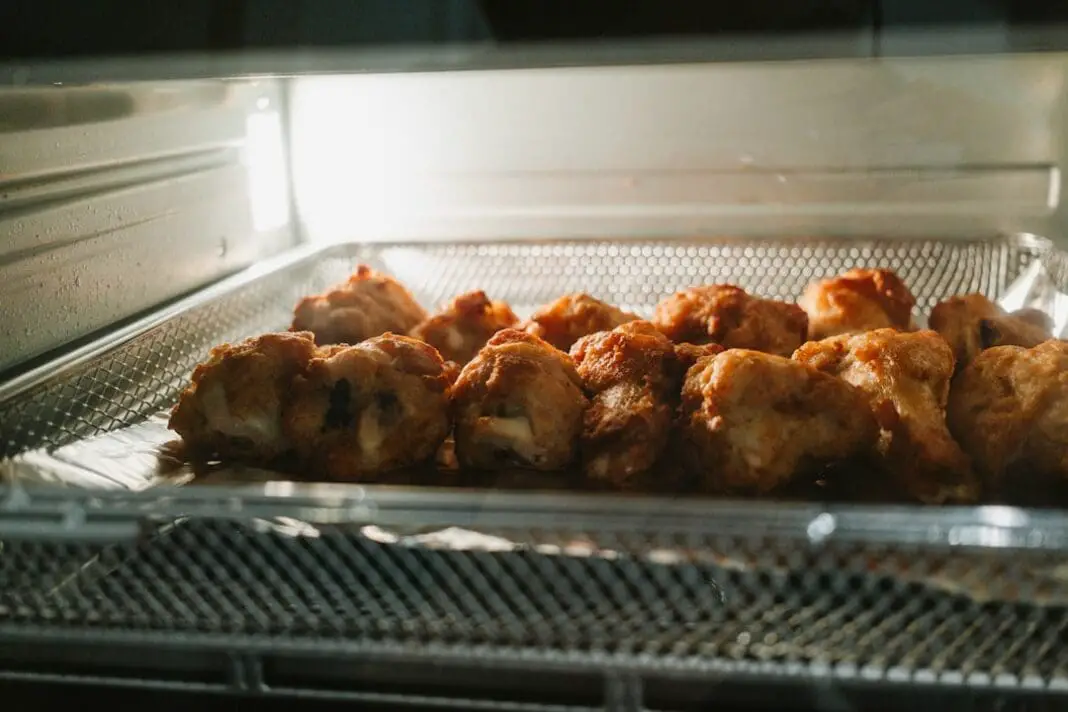
Someone actually put this to the test with chicken. They stacked breasts in the basket, shook it every few minutes, moved the pieces around with tongs, and did everything you’d think would help. The verdict? The breasts stuck together and came out soggy and practically inedible. Thighs and nuggets flopped just as badly, because their flat sides press together and seal off the middle of the stack from any air at all. Meanwhile a single boneless, skinless breast brushed with a little olive oil and laid flat came out with a crisp surface that tasted like it had skin on it. That result is so good it tempts people to make more at once, which is the exact trap. Stack it and you throw the whole thing away.
Wings and drumettes get a small pass
There is one crowd that can bend the rule, and it’s game day food. Chicken wings and drumettes are lumpy and irregular, so when you stack them, little pockets of air stay open between the pieces. You can pile them two layers deep, no more than two, and shake them every few minutes to keep the cooking even. Fair warning though, even the wings cooked in a single layer came out crispier than the stacked ones. If you’re trying to fit the most wings possible for a party, there’s a clever trick. Stand the drumettes upright along the sides of the basket like little soldiers to save floor space, then flip them halfway through. You still get airflow, and you fit more without turning the whole batch into a soggy pile.
The batch method beats the shortcut
Nobody wants to hear this, but cooking in two rounds beats cramming everything into one. Make sure nothing overlaps, keep it to a single layer whenever you can, and run a second batch if you’re feeding a few people. Those extra few minutes are worth it for food that actually crisps. If waiting drives you nuts, grab an air fryer rack. Those little metal shelves let you cook a second level of food while the air still moves around every piece, so you get more done without choking off the airflow. As a simple rule of thumb, never fill the basket past two-thirds full for most models, and cut big items like whole chicken breasts in half so the hot air can reach all sides.
Pat your food dry before it goes in
Loading isn’t just about how many pieces go in. It’s also about how wet they are when they hit the basket. Chicken, fish, and marinated vegetables carry surface moisture, and if you skip drying them off with a paper towel, that water turns to steam the second things heat up. Steam is the enemy of a crisp crust. This gets even worse in a crowded basket, where washed veggies and wet proteins all release moisture with nowhere for it to go. A quick pat down before food goes in does more than you’d expect. While you’re at it, skip the aerosol cooking spray, since it can wear down the nonstick coating over time. Toss your food with oil in a bowl or use a refillable spray bottle instead.
Skip the foil and paper liner trick
Lining the basket with foil or baking paper to make cleanup easier feels smart, and it’s one of the most popular hacks out there. It’s also one of the worst for your results. A liner that covers too much blocks the airflow your food needs, so the crisping you were chasing never happens. Loose foil is worse, because the fan can lift it into the heating element. If you truly hate scrubbing, a properly fitted silicone liner that lets the hot air move is the better pick. And a quick note on preheating, since a hot basket helps too. Running the machine empty for three to five minutes before food goes in means browning starts right away instead of lagging. Cold start, and your food sits there getting soggy while the air fryer slowly warms up.
Give the air room and it all clicks
The fix for the most common air fryer letdown costs you nothing. You don’t need a new machine, a different recipe, or fancier ingredients. You just stop treating the basket like a bucket and start treating it like the little convection oven it is. Spread the food out. Leave gaps. Run a second batch when you have to. Pat things dry, preheat, shake halfway, and quit smothering everything under foil. Do that, and the fries crisp, the chicken stays juicy, and even sad freezer snacks taste better than they have any right to. Same appliance you already own, suddenly doing the job you bought it for.

