

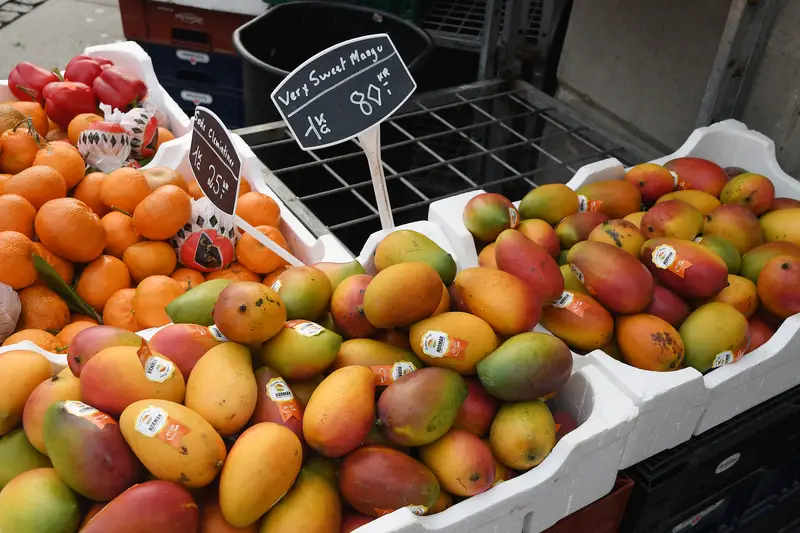
I spent years picking mangoes like a rookie. I’d walk up to the display, grab the reddest one I could find, and march to the register feeling like a genius. Then I’d get home, slice it open, and end up with something either rock hard and sour or stringy and disappointing. Turns out I was doing the one thing every mango expert says you should never do. I was shopping with my eyes.
The color of a mango tells you almost nothing about whether it’s ready to eat. That red blush you’re chasing? It’s just genetics for some varieties. Here’s what actually works, and why your grocery run is about to get a whole lot better.
Color Is Basically A Trap
The people who literally exist to know mangoes, the National Mango Board, come right out and say color is not the best indicator of ripeness. Mangoes come in a wild range of colors, shapes, and sizes depending on the type. That red you see on some of them is not a sign of anything except the variety it happens to be.
So a bright red mango can be totally unripe, and a plain green one can be dripping with sweetness inside. If you don’t know the exact variety in your hand, the color reading is a coin flip at best. Stop staring and start touching.
Give It A Gentle Squeeze
This is the big one. A ripe mango behaves exactly like a ripe peach or avocado. You cradle it in your hand, press gently with your thumb, and feel for a slight give. Not mushy, not hard, just a little bump of softness when you push.
If it feels like a baseball, it needs more time. If your thumb sinks in like it’s fighting a marshmallow, it’s past its best days. One farm guide claims the squeeze test hits about 95% accuracy when you pair it with a smell check. Just don’t get aggressive with it. Press too hard and you’ll dent the fruit, and then you own it whether you want it or not.
Put Your Nose On The Stem
Feels a little silly in the produce aisle, but sniffing works. Bring the stem end up to your nose and take a whiff. A ripe mango gives off a fruity, honey-sweet smell, sometimes strong enough that people nearby can smell it too. That scent is your green light.
If you get nothing, no aroma at all, the fruit still needs to ripen. And if it smells sour, boozy, or a bit like fermentation, that mango has gone too far and started breaking down inside. Sweet and fragrant means go. Sour or funky means leave it on the shelf.
The Green Ones That Fool Everybody
Some mango types stay green even when they’re perfectly ripe, which is where most shoppers get burned. The Keitt is the classic offender. It keeps that deep green skin whether it’s ready or not, so color is completely useless for it. Keitts have firm flesh and a citrusy taste, and they hold their shape great in salsa or a chopped salad.
Langra and Himsagar do the same thing, staying green while hiding all that sweetness inside. Here’s a twist worth knowing: with green-skinned types, the color often lightens as they ripen. So a super dark green Keitt might actually need a few more days on your counter.
When Color Actually Earns Its Keep
Now for the exceptions, because there are a few. Some varieties really do turn golden-yellow when they’re ready, and for those you can trust your eyes a little more. The small yellow honey mango, also called the Ataulfo, deepens into a rich yellow-gold and gets slightly wrinkled when it’s ripe. Funny thing about that one, it barely smells at all even when it’s sweet, so lean on color and wrinkles for that variety instead of scent.
The Alphonso and Sindhri also turn a reliable golden-yellow as they ripen. Those are the color-honest members of the family. But unless you’re 100% sure which type you’ve got, still fall back on the squeeze.
The Tommy Atkins Trap
If you shop at a regular American supermarket, odds are strong you’re grabbing a Tommy Atkins. It’s the most common mango in North America because it travels well and shrugs off rough handling. It turns a pretty red no matter what stage it’s at, so a deep red Tommy Atkins can still be underripe. That red is a lie.
Here’s the honest truth nobody tells you: even a perfectly ripe Tommy Atkins tends to be fibrous and a little tart. So if you tried a mango once, got a mouthful of stringy fibers, and swore off them forever, blame the Tommy Atkins. Don’t judge every mango by that one. Use it for grilling, chutney, or pickling, and grab a different variety when you want to eat it fresh.
Meet The Kent, Your New Best Friend
If you want the size of a Tommy Atkins but the smooth, sweet flesh of a honey mango, look for a Kent. It’s got the best of both. The flesh is creamy, loaded with sweetness, and way less stringy than its more famous cousin.
Kent mangoes develop some yellow tones and a few wrinkles as they ripen, and softness still tells you when they’re ready. They’re great for juicing and they blend beautifully. Once you’ve had a ripe Kent, the standard grocery-store mango starts to feel like a downgrade. Mangoes have been grown in India for over 5,000 years, and after all that time, there’s really no reason to settle for a bad one.
Ripen A Hard One At Home Fast
Mangoes keep ripening after they’re picked, which is great news if you brought home a firm one. The easy move is the brown paper bag. Fold the top loosely so a little air still gets through, leave it on the counter, and it’ll soften in about 24 to 48 hours. The bag traps the natural ethylene gas the fruit gives off and speeds things up.
Want it faster? Toss a banana in the bag. Bananas pump out a ton of ethylene and push the mango along. The fastest trick of all is burying the mango in a bowl of uncooked rice, which can do the job in as little as 12 to 24 hours. Just check it every few hours, because with rice it can jump from rock hard to mush overnight.
The Mistakes That Wreck A Good Mango
A few things will ruin your fruit, so keep these in mind. Never put an unripe mango in the fridge. Cold shuts down the ripening process entirely, and you can end up with fruit that stays hard, rubbery, and flavorless. Once a mango is ripe, though, the fridge is fine and buys you up to five more days.
Skip the sealed plastic bag too, since it traps moisture and invites mold instead of ripening. Don’t stack mangoes on top of each other, because the pressure leaves brown bruise spots. And don’t bother microwaving one to soften it. All you get is warm mush that’s still starchy and sour, because heat doesn’t build the sugars and aroma real ripening does.
How To Spot One That’s Gone Too Far
There’s a line between perfectly ripe and past it. A mango that’s over the hill feels very soft and squishy, sinks deeply when you press it, and shows dark brown spots, heavy wrinkling, or sunken areas on the skin. Watch out for black spots near the stem, because those spread fast and mean you should use the fruit right away.
Smell is a giveaway here too. When a mango turns, that lovely honey scent goes sour or even boozy, and the flesh can pick up a strange turpentine-like taste. A little wrinkling by itself isn’t bad, though. Slight wrinkles just mean the fruit lost a bit of moisture and is often extra juicy inside. It’s the deep, sunken, spotty stuff you want to avoid.
Where To Actually Buy The Good Stuff
Your regular supermarket is fine in a pinch, but if you want a mango that’ll blow you away, head to an Asian grocery store, especially one that carries Indian foods. That’s where you’ll find the sweeter, smoother varieties that never make it onto most American shelves. Peak season runs through the summer months, though thanks to all the different types, you can find mangoes nearly year-round.
One last thing about those imported mangoes. If one refuses to soften after a week on the counter, it was probably picked way too early for shipping and simply doesn’t have the internal reserves to ever get sweet. It’ll wrinkle and go soft but stay bland. So squeeze, sniff, and skip the color chase. Your future self, standing over a bowl of golden mango, will thank you.

