

You know the ear I mean. The husk peels back in gray flakes, the silk has welded itself to the cob, and half the kernels are shriveled while the other half taste like hot water. For years I blamed the grill, then the corn, then whatever was left in the bin at the store in late August. The problem was upstream of all that. Good grilled corn starts at the kitchen sink, with the ears sitting in cold salted water before they ever touch a grate.
Why Wet Husks Cook Better Corn
The water does two jobs at once. It sits between the husk layers and turns that wrapper into a little steam pouch, so the kernels cook through from the inside while the leaves take the heat. Dry husks are kindling. Put them over a hot grate and they flare, blacken, and fall apart long before the corn is tender. Plenty of cooks swear by it: soaked husks burn slower and hold more steam. Nobody has run a proper side by side, though, and America’s Test Kitchen grills husk-on corn without soaking at all. Treat it as a preference, not a rule. Ten minutes of prep, no foil, no boiling pot, no tools.
Put Salt In The Water, Not Just Water
Plain water works. Salt water works better. Fill the sink with cold water, stir in 1 to 2 tablespoons of kosher salt, and drop the silk-free ears in for 10 to 15 minutes. That salty water helps the husks hold steam and keeps them from drying out on the grate. It will not season the kernels through a closed husk. If you want salt actually in the corn, shuck it first: America’s Test Kitchen dissolves half a cup of salt in a gallon of cold water and soaks the bare ears for at least 30 minutes, which keeps them moist and seasons them at the same time. Some cooks add a spoon of sugar or a few herb stems to the salt-water soak too. Optional, but the salt is not.
How Long Is Long Enough
Ten minutes is about the shortest soak anyone recommends, and it is enough to damp the husks down so they do not go up in flames. An hour of hands-off soaking while you prep burgers costs you nothing, though no test kitchen has shown that an hour beats ten minutes. Thirty minutes is the usual middle ground. The only soak limit anybody has put a number on is eight hours, and that is for shucked corn in a strong brine. The ears float, so put a dinner plate on top to hold them under.
Strip The Silk Before The Soak
This is the step people skip, and they pay for it later. Peel the husks down without ripping them off, leaving them attached at the base, then pull away as much silk as you can with dry hands. Fold the husks back up over the cob. It does not have to be a perfect reseal; covering most of the ear is plenty. Pull off the outer layer or two if they are ragged or dusty, and trim a long stem so the ears fit in the pot or sink. Wrestling wet silk off hot corn while everyone stands around waiting is a bad way to spend five minutes.
Already Shucked? Don’t Bother Soaking
The soak exists to protect the husk. Take the husk off and there is nothing left to protect. Celebrity chef Robbie Shoults, owner of Marshall Mercantile and High Horse 1898 and the third-generation owner of Bear Creek Smokehouse, puts it bluntly: “No need to soak or boil shucked corn before grilling!” His method is oil or butter with your favorite seasoning, then medium-high heat, turning every few minutes. Shoults says that gives you “sweet, smoky kernels with a little char,” and he prefers grilling shucked corn because he believes it gets done faster and he can season it to perfection without the husk in the way. If you are grilling in the husk, though, he says you can soak ahead of time to keep the husk from burning.
Buy Corn Worth Soaking
No soak saves a bad ear. At the store, look for tight, bright green husks and golden brown silk that still feels a little sticky. Give the cob a gentle squeeze from top to bottom; you want plump, firm kernels the whole way down, with no soft gaps where kernels are missing. Skip anything with dry, dark husks or black, brittle silk, and if you see little holes and gritty brown crumbs near the tip, that is corn earworm, which almost always stays in the top inch or two, so cut the tip off rather than passing on the ear. Peel back just an inch of husk on one ear if you need proof. And buy it the day you cook it if you can. Warmth is what turns the sugar to starch, so the fridge is the fix rather than the problem, and most of what stores sell now is supersweet or sugar-enhanced corn that holds its sweetness for several days cold.
Medium Heat, Lid Down, Rotate
Soaked corn goes on a grill set to medium, roughly 350 to 400 degrees, placed on the grates away from any direct flame. Close the lid, because the trapped heat is what steams the kernels inside the husk, and rotate every five or six minutes. Figure 15 to 20 minutes. If you like running your grill hotter, 450 to 500 degrees over direct heat gets there in 12 to 15 minutes with two or three turns, and a cooler grill may need closer to 20 minutes or a bit more. Let the water drain and pat the husks so they are damp rather than dripping. A husk that catches fire is not an emergency: move it to a cooler zone or pat the flame out with tongs. The outer leaves are there to take that hit. Cranking the burners to full blast is how you get ash outside and hard kernels inside.
The Two Minutes Everyone Skips
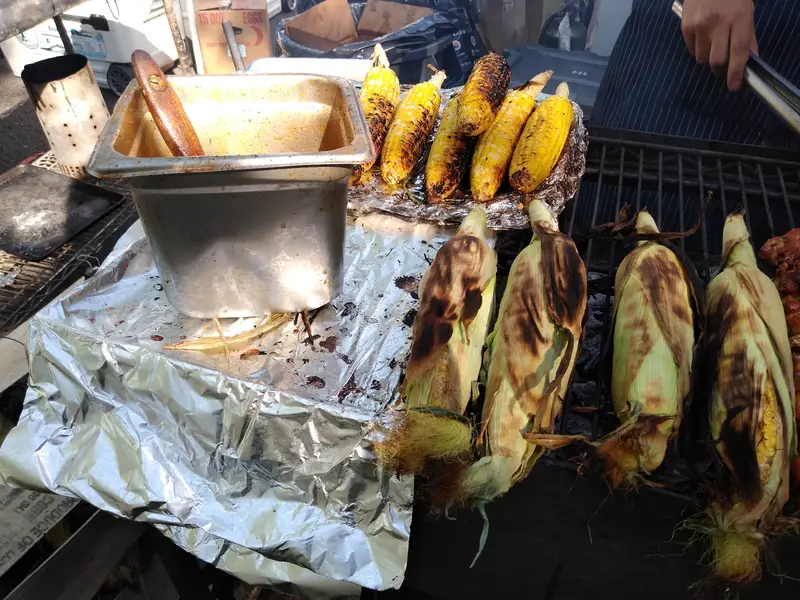
Corn that spends its whole cook wrapped in wet husks is steamed corn. Tasty, but it is not grilled corn, and if you only ever do the soak-and-steam part you will wonder why your kernels look pale. Once the ears are cooked through, pull the husks back and keep them attached at the base, then set the cobs over direct flame for one to two minutes per side, turning as the kernels blister. That is where the smoke and the brown spots come from. You end up with juicy corn that also tastes like it was cooked outdoors. Tie the pulled-back husks together and you have a free handle.
Finish It Smarter Than Butter And Salt
Butter and salt is the default for a reason, but a three-to-one mix of fine sea salt and sugar sprinkled over hot corn is worth a try. It is a cook’s trick rather than a tested one, and at three parts salt to one part sugar you will not taste the sugar. What you should taste is more corn. Beyond that, a compound butter is the easiest upgrade in the backyard: soften a stick of unsalted butter and mash in one minced chipotle pepper from a can of chipotles in adobo, half a tablespoon of honey, half a teaspoon of salt, the zest of a lime, and the juice of half a lime. For elote, char the kernels hard, swipe on mayo and crema, then roll it in cotija, chili powder, and cilantro with lime on the side. Garlic, parsley, and parmesan is the Italian route. Cajun seasoning in melted butter is the lazy one, and it is great.
When The Store Sells It Naked
Plenty of grocery stores now put corn out already shucked and shrink-wrapped, which kills the husk method before you start. Wrapping each ear in aluminum foil gets you close, since the foil traps steam the same way the husk does. Otherwise go the Shoults way and grill it bare. As for keeping corn around, store unshucked ears loose in the fridge rather than bunched in a bag, cook them within a day or two, and bag them if they came already shucked, and cut leftover grilled kernels off the cob to freeze in bags, where they hold their quality for a few months. Corn salad in February is a small act of revenge on winter.
Salt-Water Soaked Grilled Corn on the Cob in the Husk
Course: Side DishCuisine: American6
servings20
minutes28
minutes145
kcalThe 10-minute sink trick that keeps the husks from burning up and the kernels from drying out.
Ingredients
6 ears fresh sweet corn, husks on
Cold water, enough to fully cover the corn
2 tablespoons kosher salt, for the soaking water
1 1/2 teaspoons fine ground sea salt, for finishing
1/2 teaspoon sugar, for finishing
4 tablespoons salted butter, softened or melted
Freshly ground black pepper, to taste
Lime wedges, optional
Chili powder, optional
Directions
- Peel the husk down on each ear without ripping it off, leaving it attached at the base so the corn is fully exposed. Pull away as much of the silk as you can and discard it, then fold the husk back up over the cob. Remove any ragged outer layers and trim long stems so the ears fit in your sink or bowl.
- Fill a clean sink, large bowl or bucket with cold water and stir in the kosher salt until it dissolves. Submerge the corn and set a plate on top to keep the ears from floating. Soak for 10 to 15 minutes, or up to an hour if you have the time while you prep the rest of dinner.
- Preheat the grill to medium heat, about 350 to 400 degrees F, with the lid closed. Scrape the grates clean while it comes up to temperature. You want steady, even heat rather than an open flame licking the husks.
- Lift the corn out of the water and let the excess drain off, giving the husks a quick pat so they are damp instead of dripping. Place the ears directly on the grates, away from any direct flame. Close the lid.
- Grill for 15 to 20 minutes with the lid closed, rotating the ears every 5 to 6 minutes so they cook evenly. If a husk flares up, move that ear to a cooler part of the grill or pat the flame out with tongs. The outer husk takes the heat while the kernels steam inside.
- Carefully pull the husks back, keeping them attached at the base, and return the cobs over direct flame. Char for 1 to 2 minutes per side, turning as needed, until the kernels pick up brown blistered spots. This is where the smoky grilled flavor comes from, so do not skip it.
- Stir the fine sea salt and sugar together in a small bowl, keeping the 3 to 1 ratio of salt to sugar. It will not taste sweet on the corn. It simply balances the seasoning and makes the natural sweetness read louder.
- Let the ears cool for a minute, then peel away the remaining husk and silk, or tie the husks back to use as a handle. Rub each ear with butter, sprinkle with the salt and sugar mix and a little black pepper, and add lime and chili powder if you like. Serve hot with plenty of napkins.
Notes
- A 10 minute soak is the usual minimum, and an hour is fine if you have the time. Thirty minutes works in a pinch.
- If your store only sells shucked corn, wrap each ear in aluminum foil to mimic the husk, or brush the bare cobs with oil and grill over medium heat for 10 to 12 minutes, turning often.
- For a honey chipotle butter, mash one stick of softened unsalted butter with 1 minced chipotle pepper in adobo, 1/2 tablespoon honey, 1/2 teaspoon salt, the zest of 1 lime and the juice of half a lime.
Frequently Asked Questions
Q: How long do I really need to soak corn before grilling?
A: Ten minutes in cold water is enough to keep the husks from burning and get some steam going. An hour is fine if you are planning ahead, though nobody has shown it beats ten. Thirty minutes works when you are rushed.
Q: Do I have to soak corn that is already shucked?
A: No. Robbie Shoults says there is no need to soak or boil shucked corn before grilling. Coat it with oil or butter, season it, and grill over medium-high heat, turning every few minutes for sweet kernels with a little char.
Q: Will corn grilled in the husk get any char?
A: Not unless you finish it. Husk-on corn steams, so once it is cooked through, peel the husks back and put the cobs over direct flame for 1 to 2 minutes per side.
Q: What do I do if a husk catches fire on the grill?
A: Move that ear to a cooler part of the grill or pat the flame out with tongs. The thick outer husk is doing its job and the kernels underneath stay protected.

