

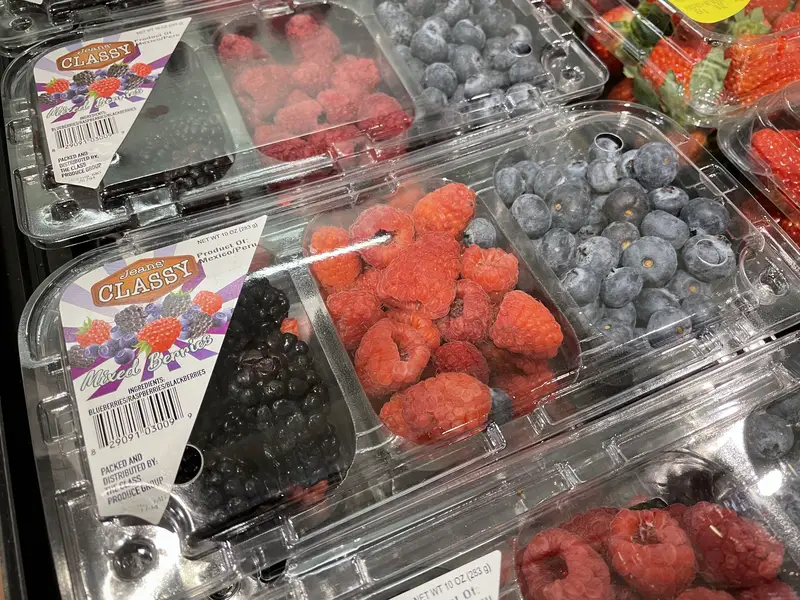
Seven dollars for a carton of blackberries feels reasonable on a Sunday morning, when you have real plans for the week. It feels like a small robbery on Tuesday, when you pop the lid and find gray fuzz creeping across the top layer. Nobody did anything wrong. You refrigerated them the second you got home, you didn’t crush them, and they still rotted faster than a jug of milk left in a hot car.
The fix costs about five minutes at the sink and uses a bottle of white vinegar you probably already have under the counter. Soak the berries in vinegar and water the moment you walk in the door, dry them until they squeak, then stack them in single layers between paper towels in a sealed container. Food-safety guidance normally says wash produce right before you eat it, not before you store it, and that is exactly because damp fruit spoils faster. The drying step is what buys you the right to ignore it. Berries handled that way have come out of side-by-side storage testing still plump and juicy at the two-week mark, while the ones left in their store clamshell were already a lost cause.
The Mold Was In The Carton Before You Bought It
Gray mold has a proper name: Botrytis cinerea. It is a fungus that attacks hundreds of different plants, and University of California, Davis researchers point out that most people have seen it without ever hearing the name. It is the fuzz on the store-bought blueberries and the soft gray spot on the tomato.
Those spores get on the fruit out in the field, not in your kitchen. The fungus lands on berry blossoms in spring and sets up a quiet, latent infection inside the plant tissue, then waits. When the berry ripens and its sugar climbs and its cell walls soften, the fungus wakes up and goes to work. Picking, packing and shipping leave tiny wounds in that thin skin, which only makes it easier.
What those spores need is water. Standing moisture gets them going fastest, though extension pathologists note that days of high humidity alone will eventually do the same job. That is the whole reason the drying-and-paper-towel routine works: no study shows a vinegar bath actually kills the spores, but a dry berry gives them nothing to work with.
The Vinegar Bath, Ratio And Timing
There is no single magic ratio, which is oddly reassuring. One widely used version is one part white vinegar to three parts water, with a five-minute soak. Another calls for 3 cups of water mixed with 2 tablespoons of vinegar, a soak of 5 to 10 minutes, and a gentle stir every couple of minutes so the berries move around in the water.
A longer, weaker version works too. Sara Wells, who co-founded the recipe site Our Best Bites in 2008, uses 1 to 2 tablespoons of apple cider vinegar per bowl, tops it with lukewarm water, and lets the berries stand 20 minutes with a gentle swirl every five.
Plain distilled white vinegar is the cheap workhorse, sharper on the nose than cider vinegar but the easy pick if you are washing two or three cartons at once. Whatever you use, drain the berries in a colander and rinse them well under cold running water afterward. That rinse is not optional.
Throw Out The One Bad Berry First
Before anything touches water, dump the carton out on the counter and look at it. Any berry with a speck of gray fuzz, a mushy dent or a weeping split goes in the trash or the compost. Sort ruthlessly, because one infected berry works like a time bomb for everything packed around it.
This is also the step where you find out what you actually bought. Grocery clamshells are stacked deep, and the berries on the bottom take the weight of everything above them for the whole trip. Spreading them out in one layer shows you the damage the plastic window hid.
Sorting also keeps you honest about what the soak can and cannot do. A vinegar bath slows down spoilage that hasn’t started yet. It cannot walk back decay that is already underway, so berries that came home soft are for smoothies or the freezer, today.
Dry Them Until They Squeak
Wet berries in a sealed container are worse than berries you never washed at all. The fastest way to fix that is a salad spinner lined with a few layers of paper towels, spun until the fruit is completely dry. No spinner, no problem: lay a clean dish towel on the counter, pour the berries out, and blot gently until the towel stops picking up water.
Raspberries and blackberries need a lighter hand than strawberries. Swishing them in a bowl of water instead of blasting them under the faucet keeps them from bruising, and blotting beats rubbing every time.
You will read that a little leftover moisture is fine if you bag the berries right away. Storage tests do not back that up. Every method that held berries past a week kept them bone dry going into the container, and the ones that spoiled first were the wet ones.
Paper Towels Are Doing More Work Than You Think
Line the bottom of the container with a paper towel, add the dry berries in a single layer, then lay another sheet on top before you close it. If you are stacking more than one layer, put a towel between each one. Paper towels are full of tiny holes, and the cellulose in them pulls water molecules out of the container and holds them against gravity through capillary action.
The payoff is not subtle. Left alone, raspberries and blackberries usually stay good for one to two days, strawberries for about five, and blueberries for up to seven. In one kitchen test, berries stored with paper towels held on far longer: 11 days for raspberries, eight for strawberries, and 24 days for blueberries.
Check the towels every few days. Once they feel damp they have stopped absorbing and started donating, so swap in fresh dry ones and put the lid back on.
Stop Using The Crisper Drawer
The crisper drawer is built to trap humidity so lettuce doesn’t shrivel, which makes it the worst possible address for a carton of berries. When seven storage methods were tested side by side, blueberries left in the crisper had a 15% spoilage rate after two weeks, well behind every other option. A middle shelf did better.
Your fridge pulls moisture out of the air as it cools, then the temperature swings every time somebody opens the door to stare at the shelves. Condensation forms on the inside of that plastic clamshell and drips down onto berries packed too tight to dry out. Cold slows the mold. Trapped water feeds it.
Temperature matters too. Storage guides put the sweet spot for strawberries and blueberries at 32°F to 35°F, and the door shelves are the last place you will get that.
No, They Will Not Taste Like Salad Dressing
This is the first question everybody asks, and the answer is no. Standard white vinegar is roughly 5% acetic acid and 95% water, you are diluting it further, and acetic acid is volatile enough that it evaporates fast. Add the cold-water rinse and there is nothing left to taste.
The tasting backs that up. Berries pulled out of a vinegar, salt and water soak two weeks earlier were still plump and sweet-tart, with no trace of vinegar or salt flavor.
If you still don’t want vinegar anywhere near your fruit, about a tablespoon of baking soda in the bowl of water is a workable stand-in. It does not hurt the fruit, though the berries can come out slightly less tender than the vinegar version.
Mistakes That Cancel Out The Whole Thing
Wash and store each kind of berry separately. They spoil at different speeds, and there is no sense letting one failing raspberry take down a pint of blueberries that had another week in them. Keep big and small berries out of the same bowl as well, since the heavy ones squash the little ones during the rinse.
Mix fresh water for each batch. Standing water carries mold and bacteria from one lot of berries to the next, which is the exact thing you are trying to stop, so dump the bowl and refill it between cartons.
Pull the stems and leaves off strawberries before they go in the container, because that greenery holds moisture right against the fruit. Blueberries can keep their little stems. And leave the lid cracked slightly, or use a vented container, so whatever moisture the towels release has somewhere to go.
So Is The Soak Actually Worth It
Honest answer: the drying and the paper towels are doing most of the heavy lifting. In the seven-method blueberry test, a plain rinse followed by complete drying and single layers between paper towels finished first, with 3% of the fruit gone bad at two weeks. Second place, at 4%, went to a vinegar bath with salt in it. A plain vinegar-and-water soak, with no salt, tied for last at 7%. All of them blew the doors off the crisper drawer.
So if you bought firm, pristine berries this morning, you can skip the vinegar and still get two weeks out of them. Rinse, dry, layer, middle shelf, done.
The soak earns its five minutes when the fruit is questionable. Bulk cartons from a warehouse run, berries already a day or two out from the store, anything that looks a little tired on top: that is when killing the spores up front pays for itself. One home cook who has used the method for years to buy berries in bulk says it stretches them to as long as 10 days, which is roughly double what a strawberry manages on its own.
Either way, the berries do not stay in the plastic clamshell. That container is the actual villain in this story, and it is the one thing every method that worked had in common: the fruit came out of it.

