

You paid extra for the good pint. Real vanilla specks, heavy in the hand, the kind you only buy when the week has earned it. Four days later you pry the lid off and the top is frosted white, the spoon crunches instead of glides, and whatever you paid for is gone. The pint didn’t betray you. The shelf did. Ice cream kept in the freezer door is parked in the warmest, least stable spot in the entire appliance, and that single habit wrecks more pints than anything else people do in their kitchens.
The Door Is the Worst Shelf in Your Freezer
Open the freezer and room-temperature air rolls in. The door shelf catches it first, every single time, and the door is also the part of the freezer that physically swings out into your warm kitchen. The International Dairy Foods Association names it outright: keep ice cream off the freezer door, where it catches the most temperature swing because the door is opened and shut all day. That is fine for a bag of frozen peas and terrible for a dessert whose entire texture is built on tiny ice crystals staying tiny.
The front of the main shelf is barely better. If your pint is the first thing you see when the door opens, it is also the first thing that gets hit with warm air six times a night during a Netflix binge.
What a Few Degrees Actually Does to a Pint
Ice cream leaves the factory with ice crystals averaging about 25 micrometers. Your tongue can’t feel anything that small, which is why a fresh scoop reads as creamy instead of sandy. Push past about 50 micrometers and you notice. That’s the line between velvet and grit, and it is narrower than a human hair.
Crossing that line takes months in a freezer that never wavers. A pint riding the door gets warmed and re-chilled over and over, and every cycle lets the small crystals melt a little and refreeze onto the bigger ones. Big crystals eat small ones. That’s the whole ugly mechanism.
Grainy texture doesn’t stay a texture problem, either. A rough surface releases flavor unevenly, so the caramel or the vanilla bean you paid a premium for comes through muted and washed out. The pint tastes cheaper because it physically is coarser.
Commercial Freezers Run Way Colder Than Yours
Heat shock is the industry term for the texture damage that comes from temperature swings, and the commercial answer to it is brute cold. Ice cream is warehoused at around -20°F, a good twenty degrees below anything a kitchen freezer will hold, and it sits there in the dark without a door being opened forty times a week.
Your kitchen freezer is not getting anywhere near that. What you can control is the swing. The International Dairy Foods Association says to set a home freezer between -5°F and 0°F, and warns that ice cream starts to suffer once it climbs past 10°F. Get a cheap freezer thermometer. A freezer that reads 0°F but bounces every time somebody grabs a popsicle is not the same as a freezer that holds 0°F.
Move It to the Back and Stop Blocking the Vents
The fix costs nothing. Push the ice cream to the back of the freezer, or the center, wherever the cold is steadiest and the incoming air hits last. A chest freezer in the garage is better still, because cold air sinks and mostly stays put when you lift the lid.
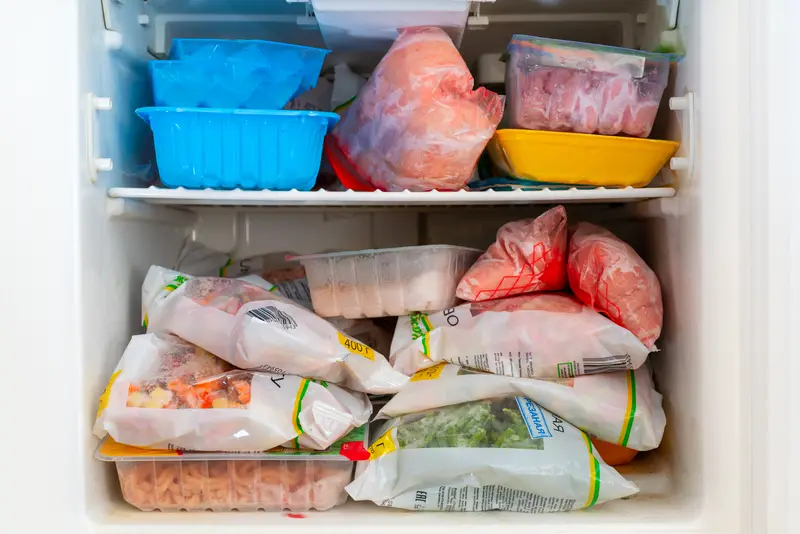
While you’re in there, deal with the rest of it. Bags piled against the vents restrict airflow and create warm pockets, which means one corner of your freezer is not actually as cold as the display claims. Keep them clear. Group your frozen stuff by type so you’re not standing there with the door open, digging. Check the rubber door seal now and then, because a seal that doesn’t close is a slow leak of warm air into everything you own.
Smooth the Top Before the Lid Goes Back On
Freezer burn on ice cream is moisture escaping the surface, turning to vapor, and refreezing as those crunchy crystals across the top. Less exposed surface means less escape. After you scoop, take the rounded back of your spoon and flatten the crater you just dug, then get the container back in the freezer fast.
The lid is the other leak. Cardboard pint lids warp, plastic tub lids get punctured by a rogue spoon, and once air sneaks in it pulls moisture out of the ice cream. Press a piece of plastic wrap, parchment, or wax paper directly onto the surface before you snap the lid down. For a pint you’re planning to nurse for a couple of weeks, the whole container goes in a zip-top freezer bag. It looks fussy. It also works.
Store the Tub Upside Down
This one sounds like a party trick and isn’t. Flip the container over before it goes back in. Any ice cream that softened while you were scooping drips toward the lid instead of pooling on the surface, which is Ben and Jerry’s own reasoning for the trick. The lid has to be genuinely tight and it can still be messy, which is a good reason to press wax paper against the surface first.
Never Take the Whole Pint to the Couch
Depending on the container size and what’s in it, ice cream can start softening in as little as ten minutes in warm air. One episode of anything is longer than ten minutes. If you sit down with the pint and the intention of eating half, you are handing the other half a melt-and-refreeze cycle, and that cycle is the fastest texture destroyer there is.
Scoop into a bowl. Put the container away before you sit down. If you want more, get up.
You can spot a pint that’s already been through it. It goes weirdly dense and hard to scoop, because the melt lets the whipped-in air escape and the small ice crystals refreeze onto larger ones. Add visible ice crystals, a grainy bite, and a flavor that’s gone dull, and that container is a loss. A freezer door left ajar overnight does the same thing to everything on the shelf.
The Damage Starts in Your Car
Plenty of pints are already compromised before they ever reach the freezer. Grab ice cream last, on the way to the register, not first thing while you’re still deciding on produce. On the ride home, use an insulated bag, or stick the containers on the floor by your feet and aim the AC vents straight down at them. Twenty minutes in a hot trunk in July undoes everything you’re about to do at home, because fast freezing makes small crystals and a slow refreeze in your kitchen freezer makes big ones.
Cheap Ice Cream Goes Bad Faster, and That’s Not Snobbery
Ice cream with more water and less fat is the most likely to develop freezer burn. That light, fluffy, scoops-like-a-dream stuff from the bottom shelf is mostly air and water, and it is the water that travels. Low-fat pints sit in the same danger zone. So do flavors heavy on booze and sugar, because both lower the freezing point and keep more of the mix soft and mobile.
The trade sorts products into four tiers: economy, regular, premium, and superpremium. The International Dairy Foods Association treats those as marketing phrases rather than legal grades, and says price, brand positioning, packaging, ingredient quality, milkfat content and overrun all contribute to where a pint lands. The IDFA defines overrun as “the amount of aeration the ice cream undergoes during its manufacture that keeps the mixture from becoming an inedible frozen mass.” Premium and superpremium pints carry less air and more fat, which is why they feel noticeably heavier when you pick them up. Fat and small crystals are what creaminess actually is. Denser pints hold their texture longer in a home freezer, full stop.
Wait Five Minutes, and Finish the Pint
Rock-hard ice cream tempts people into bad decisions, usually involving a microwave. Set the container on the counter and give it a few minutes instead. It softens evenly, your spoon stops bending, and the structure survives intact.
Then stop treating an opened pint like a pantry staple. Write the date on the carton and plan to finish it within a few weeks. Even stored perfectly, at the back, sealed, never melted, the crystals keep creeping upward the entire time it sits there. Time is the one variable you can’t insulate against.
If you only change one thing, change where the pint lives. Get it off the door. Everything else on this list buys you a little quality back; the door is the habit that’s costing you the most, and fixing it takes about four seconds.

