

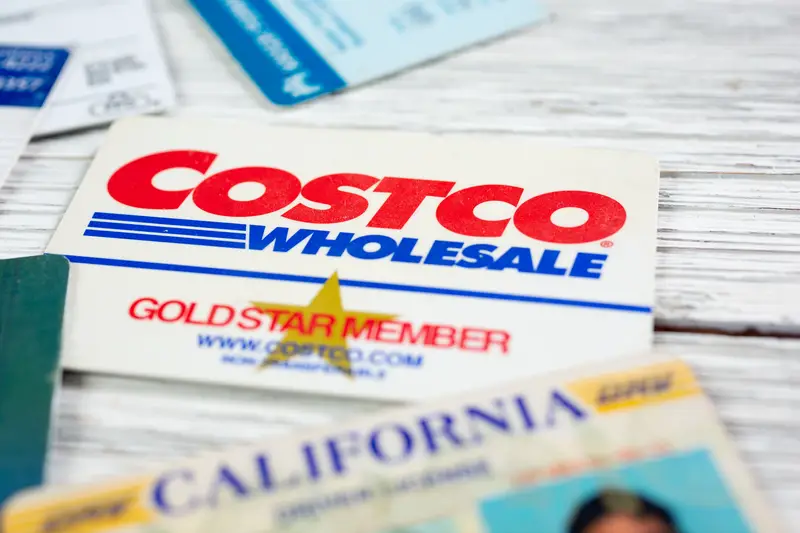
Russel George was not getting much out of his Costco card. He rarely shopped there, and he had started to reconsider whether the annual fee was worth paying at all. In January 2026, before he acted on that thought, his payment card was charged $65 and his Gold Star membership rolled over for another year. He is now the named plaintiff in a proposed class action against Costco Wholesale Corp. filed in California federal court, and the whole case turns on something almost no member reads: the renewal email.
The notice lands 60 days early
George’s complaint claims Costco emails members a renewal notice 60 days before charging their cards, which he argues falls outside the window California’s Automatic Renewal Law sets. The state requires that notice no fewer than 15 days and no more than 45 days before a membership with a term of a year or longer renews.
Timing is only half of it. The filing also alleges the notice leaves out information the law requires: the length and terms of the renewal, the amount that will be charged, and the methods available to cancel. Had he been given timely notice, the complaint says, he would have canceled rather than let the membership roll over.
George claims violations of the Automatic Renewal Law along with California’s False Advertising Law, Consumers Legal Remedies Act and Unfair Competition Law. He demands a jury trial and asks for damages for himself and everyone in the proposed class, plus a court order covering how Costco sends renewal notices. The case is George v. Costco Wholesale Corp., Case No. 3:26-cv-02369, filed on March 18, 2026 in the U.S. District Court for the Northern District of California. He is represented by Matthew Smith of Migliaccio & Rathod LLP. The allegations have not been decided by a court.
Getting out is not one click
Costco’s policy lets members cancel by calling a toll-free number or walking into a warehouse. California’s rules, as the state Attorney General’s Office describes them, say a customer must be able to cancel using the same method of communication used to sign up, or the method the customer generally uses with that business, and that companies have to offer a toll-free number, an email address, or another easy-to-use way to quit. A member who signed up online has to be able to cancel online, without being routed through steps built to slow them down.
No federal rule does that job as of September 2026. The Federal Trade Commission wrote auto-renewal rules in 2024 that would have required canceling to be at least as simple as enrolling. The Eighth Circuit Court of Appeals vacated the rule in July 2025, holding that the agency had skipped a regulatory analysis it was required to run first. The FTC opened a fresh rulemaking on the question in March 2026. A few states have their own versions, and New York’s notice window is nearly word for word California’s. Everywhere else, the calendar in your phone is doing the work.
The fee is not a side business, it is the business
Costco sells groceries at prices that would wreck a normal supermarket because the card covers the gap. Membership fees brought in $5.3 billion in fiscal 2025, about half of Costco’s operating income for the year. That is why the renewal matters more to Costco than any single rotisserie chicken ever will.
Two tiers are on offer. Gold Star runs $65 a year. Executive runs $130 and adds an annual 2% reward on qualified purchases, capped at $1,250. And in at least some cases, auto-renew appears to be the default when you sign up, which means the decision to keep paying gets made by nobody in particular. You do not renew. It renews.
You have to save $65 before you save a dollar
A $65 membership means clearing $65 in savings just to get back to even. For a family of five buying chicken and paper towels twice a month, that happens by February. For a one-person household, or someone who shops there three times a year, it often does not happen at all.
Distance kills the math too. If you cannot realistically get to a warehouse about once a month, the annual savings tend not to cover the fee, and a closer discount grocer does the same job with no cover charge. Costco also does not take manufacturers’ coupons from outside vendors, so drugstore staples like shampoo and toothpaste can land cheaper at a big box store running a sale.
Then there is the part of the fee that works on your brain. Having already paid for access creates quiet pressure to shop there more often, which turns into buying things you would not otherwise buy just to feel like the card earned its keep. That is not saving money. That is spending money to justify spending money.
Bulk outlives the appetite
The per-ounce price at Costco is almost always fair. The question is whether you can finish the package before it spoils, goes stale, or you simply get sick of looking at it. A giant container of berries is a bargain right up until half of it goes in the trash.
Produce is where shoppers complain most consistently, and the complaint repeats: the fruit and vegetables can be hit or miss, and mold sometimes turns up on onions, potatoes or berries within days of getting them home. When you are buying five times what you need in one go, a short shelf life costs more than it would at a corner grocery.
Space is the other tax. Costco-sized packages need Costco-sized storage, and most apartments do not have it. You end up portioning food into smaller containers, freezing half of it, and stacking cases of drinks in whatever corner will take them. Saving 30 cents a roll is less charming when the paper towels live in your hallway for two months.
The cart does the deciding
You go in for rotisserie chicken, coffee and dish detergent. You come out with glass storage containers, a bag of spicy pistachios the size of a throw pillow, kitchen towels and a countertop gadget you had never heard of an hour earlier. Every one of those items is defensible on its own. Stacked on one receipt, a handful of $15, $20 and $30 finds turn an ordinary run into a total that makes you blink at the register.
The rotating inventory sharpens it. When stock changes constantly, anything interesting carries an unspoken deadline, which triggers the buy-it-now-or-lose-it instinct. Retailers lean on presentation tricks that make a price look better in context than it does anywhere else, sometimes described as the decoy effect, and the warehouse format is built for it. Free samples pull in the same direction, especially if you shopped hungry.
The trip is a commitment
A Costco run is rarely a quick errand. Circling a packed parking lot, hiking across the asphalt, steering an oversized cart through crowded aisles and then waiting at the registers can tack an extra 15 to 20 minutes onto the trip before you have loaded anything into the car.
The physical side adds up with cases of drinks, big bags of pet food and bulk pantry goods. One bulky purchase can take over the entire trunk of a compact car, and appliances usually mean arranging delivery. If the crowds are the dealbreaker, a Costco Business Center is open to any member and carries a different mix, with the clothing and books left out.
Look for the asterisk on the price tag
Falling for a Costco product is a risk. Items get pulled to make room for new ones, sometimes with no warning at all, which is why the list of discontinued bakery, freezer and food court favorites keeps growing. Fans call the warning sign the “death star,” an asterisk on the price tag that usually means once the shelf stock is gone, there is no restock coming.
Finding anything in the first place is its own project. There is no cereal aisle sign to follow, so a two-item trip through a warehouse that size can turn into a scavenger hunt for something that may have been moved or rotated out entirely.
Who should let it renew
Here is our call. If you have a household that goes through bulk chicken, coffee and detergent, fills the gas tank there, and gets to a warehouse a couple of times a month, $65 is one of the better deals in American retail and the Executive tier’s 2% reward can cover the difference by itself.
If you are one or two people, you live 40 minutes from the nearest warehouse, or you last went in March, the card is charging you to keep an option you are not using. Check the renewal date, because the charge arrives whether or not you noticed the email. Canceling takes deliberate effort, and it is effort you will never make by accident.

