

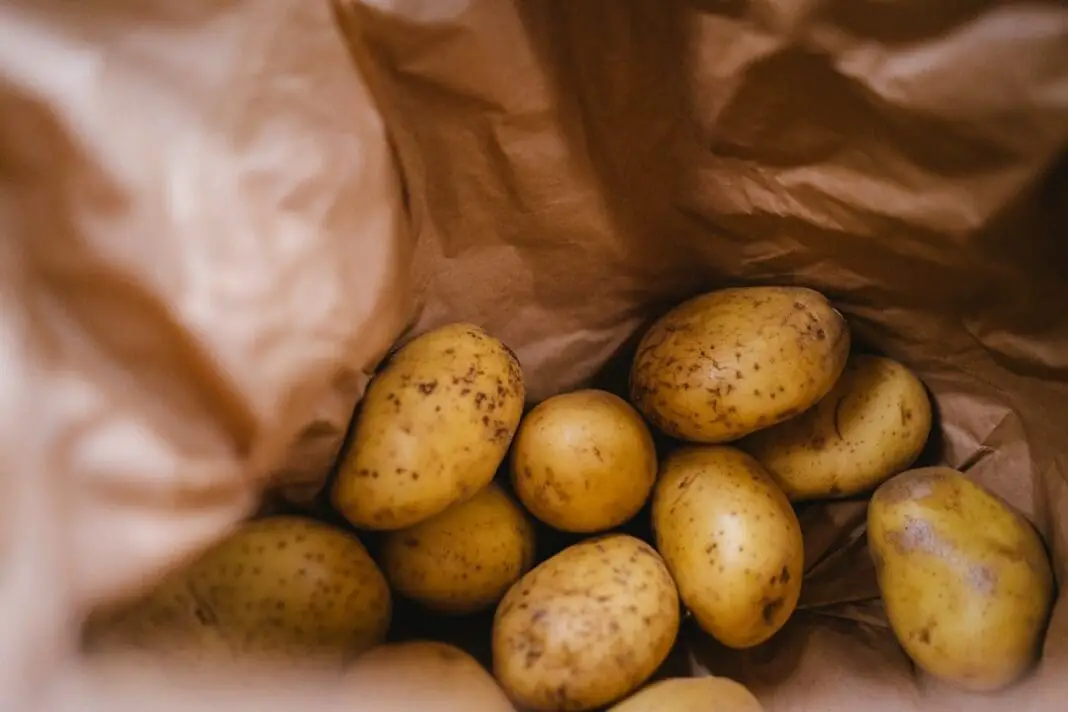
We all keep a bag of potatoes around like they last forever. They mostly do, which is exactly why one always slips to the back of the pantry and gets forgotten for a month. Then you grab it for dinner and something feels wrong. Maybe it’s mushy. Maybe it smells like a science experiment. Maybe it turned a shade of green you definitely don’t remember buying.
Here’s the good news: potatoes give you plenty of warning before they go south. You just have to know what you’re looking at. These are the signs that mean a potato has earned a one-way trip to the trash, plus a few that look scary but are actually no big deal.
A Green Tint Under the Skin
When a potato sits under light, on your counter or under the bright bulbs at the store, it starts making chlorophyll. That’s the same stuff that makes plant leaves green, and it tints the skin and sometimes creeps into the flesh. The color by itself is nothing to panic about. The catch is what tags along with it: solanine, the bitter compound that gives a bad potato that sharp, soapy bite.
A tiny green freckle near the surface? Cut it out, dig deep, and you’re fine. But once more than half the spud has gone green, or the color runs deep when you slice into it, throw the whole thing out. Cooking won’t undo it, so boiling or frying a green potato just leaves you with a bitter green potato. One report noted that light exposure can crank solanine levels way up, so a potato that’s been baking in a sunny window is one to skip.
Eyes and Sprouts Poking Out
This is the one that scares people the most and matters the least, at least early on. Those little knobs and pale shoots growing out of the eyes are the potato trying to start new plants. Store them around 68 degrees, which is basically room temperature, and they think spring has arrived.
A potato with a few short white sprouts is still good to use. Snap them off with your fingers or dig them out with the tip of a knife or peeler, then cook it like normal. The trick is that the potato needs to still feel firm and have tight skin.
So when do you toss it? When the sprouts are long and dark and cover a bunch of eyes, especially if the potato has also gone soft or wrinkly. At that point there’s barely any good potato left to save. And if the sprouted areas have turned green, cut those spots away or just skip the whole thing.
Wrinkly Skin and a Mushy Squeeze
A fresh potato should feel firm and have tight skin, like a baseball with a little dirt on it. Give it a squeeze. If it gives like a stress ball or feels squishy all the way through, it’s done.
Saggy, wrinkled skin that’s folding in on itself means the potato has been losing water for a while. On its own, a little wrinkling isn’t a death sentence. A slightly soft, wrinkly potato can still get mashed or baked if you use it fast. But once it goes full mush, the firmness test gives you your answer. A raw potato that’s soft and mushy has gone bad, plain and simple. The combo to really watch for is wrinkly skin plus dark spots plus a soft feel all at once. Hit all three and there’s zero reason to keep it.
Mold and Dark Patches
Mold is the easy call. Fuzzy spots, whether white, green, or black, anywhere on the skin mean the potato is breaking down from the outside in. You can’t just shave off the moldy part and trust the rest, because the stuff you can’t see may already be spreading through the inside. One thing worth knowing: a moldy potato can spread its funk to the produce sitting next to it, so get it out of there before it takes the whole bin down with it.
Dark, sunken patches are a little different. Some brown or gray spots are lesions where fungus got in through a cut in the skin. Soft brown patches mean decay has already started. If a dark area is small and the rest of the potato is firm, trim it out and move on. If the discoloration is spread all over, don’t waste your time.
Give It a Quick Sniff
Your nose is one of the best tools you’ve got. A good raw potato smells like dirt, plain and earthy. That’s it. Anything past that is a red flag.
A rotting potato can smell sour, musty, or straight-up nasty. Some rots give off a vinegary smell that builds into something closer to rotten fish, and certain ones throw off a sharp chemical scent like ammonia. You’ll know it the second you get a whiff. If a potato smells bad through the skin, you don’t even need to cut it open to confirm anything. Trash it.
And here’s the taste backup. If you cook a potato and it tastes bitter or sour, stop eating it and spit it out. That bitterness is the potato flat-out telling you it’s past its prime. No side dish is worth choking down.
What You Find When You Cut It Open
Sometimes a potato looks perfect on the outside and hides a surprise. Cut into it and you spot an ugly brown or black mark in the middle. Most of the time that’s just a bruise. Potatoes get knocked around in shipping and storage, and the banged-up cells turn dark. That kind of spot is purely cosmetic, so cut it out and use the rest.
A big hollow, brown-edged center is called hollow heart. It happens when the potato grows in fits and starts, fast then slow, and the middle can’t keep up. It’s not a disease and it’s not catching, but if the empty space takes up most of the potato, it isn’t worth saving. A lacy, net-like brown pattern running through the flesh means the potato grew in soil that was too dry. And a fully black, decayed center shows up when potatoes get stored hot with no air. Cut away small bad spots. But if the inside smells musty or meaty after you cut it, that’s your sign to toss the whole thing.
Store Them Right and You’ll Toss Fewer
A lot of this comes down to where you keep them. Potatoes want a cool, dark, dry spot with some air moving around. Think basement, a low cabinet, or a breathable bag in a pantry that doesn’t get hot. Done right, they’ll keep for a couple of months. Left on a warm counter, you’ve got a week or two before they start sprouting.
Two rules people break constantly. First, don’t refrigerate raw potatoes. The cold turns their starch into sugar, which makes them taste oddly sweet and go brown when you cook them. Second, keep potatoes away from onions. Stored together, they nudge each other to spoil faster. A cardboard box or a paper bag in a cool corner beats a sealed plastic bag every time, since trapped moisture is exactly what speeds up rot.
The Short Version
Firm and earthy-smelling is good. Mushy, moldy, deeply green, heavily sprouted, or funky-smelling is trash. When you’re stuck on a potato that’s a little wrinkly or has one small spot, trust your hands and your nose. And if you still can’t decide after all that, the oldest kitchen rule on the books still wins. When in doubt, throw it out. A potato costs about a quarter. Replacing one is a whole lot easier than gambling on dinner.

