

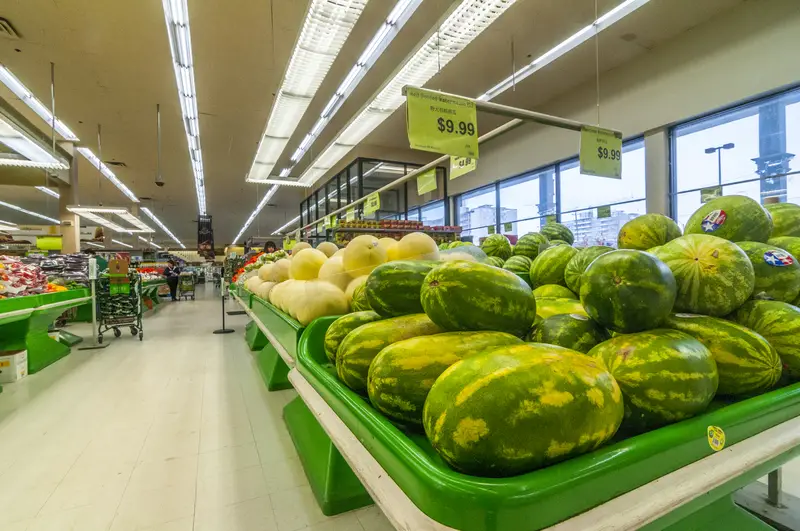
I used to be the guy in the grocery store who knocked on every watermelon like I was a doctor checking for a heartbeat. Thump, thump, thump. I had no idea what I was listening for. I just knew my dad did it, and his dad probably did it too. Then one summer I bought four melons in a row that turned out pink, watery, and about as sweet as a cucumber. That’s when I finally learned the truth: there is one thing on a watermelon that tells you almost everything, and most people walk right past it.
It’s not the sound. It’s not the size. It’s a patch of color sitting on the bottom of the melon, hiding in plain sight. Once you know how to read it, you’ll never grab a dud again.
The Field Spot Is the One Thing
Flip the watermelon over. See that big pale patch on one side? That’s the field spot, sometimes called the belly or the ground spot. It’s the exact place where the melon rested on the dirt while it grew. The whole time it sat on the vine soaking up sun and sugar, that one side stayed pressed against the ground, and it changed color as the fruit got ripe.
Here’s the part nobody tells you. A lot of shoppers see a big yellow spot and assume it’s a flaw, like the melon got bruised or sat too long. So they reach for the cleanest, prettiest one with barely any spot at all. That is exactly backwards. Experts who do this for a living say the field spot is the single most honest sign of a sweet melon. A big, creamy belly means the fruit got plenty of time on the vine. A tiny white spot, or no spot at all, means it got yanked early.
The Color Tells the Whole Story
Now that you’ve found the spot, look at the color, because that’s where the real information lives. Think of it like a stoplight, except yellow is the good one.
If the spot is white or pale green, put it back. That melon was picked too soon. If it’s a light, barely-there yellow, it’s just about ready but not amazing. What you actually want is a deep, creamy, butter-colored yellow. That’s the sign the melon hit peak ripeness on the vine. And if you can find one where the spot is leaning toward gold or even faintly orange, you’ve got the jackpot. One farm writer flat out says the darkest yellow spot in the bin is the one you take home.
There’s a ceiling on this, though. If the spot is way past yellow and looks brown or burnt, or the bottom near the spot feels soft when you press it, that melon may be overripe. Inside it can turn grainy and mealy, kind of like biting into wet sawdust. So the target is creamy yellow to gold. Not white. Not brown.
Why You Can’t Fix a Bad One at Home
This is the detail that changed how I shop. With a lot of fruit, you can buy it a little green and let it catch up on your counter. Hard avocado softens overnight. Green bananas turn yellow. Sour peaches sweeten up in the fruit bowl. Watermelon does none of that.
Watermelon is what scientists call a non-climacteric fruit. In plain English, the second it gets cut off the vine, it stops making sugar. Done. There’s no ripening on the windowsill, no leaving it in a paper bag, no waiting it out. According to the folks who break down the ripening science, the melon you see at the store is the exact melon you’ll be eating three days later. So if it’s pink and bland in the bin, hoping won’t help. Pick a ripe one or go home disappointed.
That’s the whole reason the field spot matters so much. It’s your one shot to judge a melon you can’t taste before buying.
The Thump Test Is Mostly a Lie
Let’s talk about the knocking, since it’s the most famous trick of all and the one your relatives swear by. People tap the melon and listen for a deep, hollow sound, like a drum. The idea isn’t totally crazy. A ripe melon does ring a little deeper than a green one.
The problem is it’s just not very reliable. When sources rank ripeness signs by accuracy, the thump test lands dead last. Half the time you can’t even tell the difference between a hollow ring and a dead thud unless you’re standing in a quiet room. And here’s the kicker: what tapping actually tells you isn’t ripeness at all. A dull, uneven sound usually means the melon got bruised, because the liquid inside shifted after the flesh took a hit. So go ahead and knock if it makes you feel like a pro. Just don’t let it be your deciding vote.
Webbing and the Brown Stem Are Bonus Clues
Once you’ve checked the belly, two smaller signs can help you choose between two good-looking melons. First is the webbing. Those rough, brown, web-like scars on the skin look like scratches, but they’re a great sign. They form where bees pollinated the flower, and more pollination usually means a sweeter melon. Don’t avoid the scarred-up ones. Reach for them.
Second is the stem, if there’s still one attached. A dry, brown, shriveled stem means the melon hung on the vine until it was ready to let go on its own. A green, fresh-looking stem means somebody cut it loose early. The ripeness chart backs this up at every stage: green stem, not ready; dry brown stem, good to go.
Heavy, Dull, and a Little Rough
Three more things you can check in about five seconds. Pick up a couple of melons that are the same size and choose the heaviest one. Watermelon is mostly water, and a heavy melon is a juicy melon. A light one for its size is a warning sign.
Next, look at the shine. A bright, glossy, almost waxy rind means the melon was picked before it was done. You want a dull, matte finish. Shiny is young. Dull is ripe. The skin should also feel a little rough and coarse to the touch rather than slick and smooth. And while shape can vary by type, round and uniform melons tend to ripen more evenly than long, stretched-out ones, where the sweetness can spread thin and watery.
Watch Out for Mini Melons and Oddball Types
A quick heads up so you don’t get tricked. Not every melon plays by the same rules, and some of the field spot advice bends a little depending on the variety. A few types are bred to make a bright yellow belly on purpose, so a vivid spot on those isn’t the same flag it is on a standard melon.
The bigger gotcha is the little personal-size melons, the ones under about nine pounds. Plant breeders point out that mini watermelons often don’t show the normal ripeness signs even when they’re perfectly ready inside. So if you’re buying a small one and the belly looks a bit shy, don’t panic. For those, the best move is to shop where someone can actually answer questions. The experts at the extension office say a lot of the old grocery store tricks are really just guessing at the variety, not the ripeness. At a farm stand or farmers market, you can ask when the melon was picked, which tells you way more than any thump ever could.
What Sweet Actually Means
If you want to sound smart at the cookout, here’s a fun number. Sweetness in watermelon gets measured on something called the Brix scale, which is basically a sugar reading. A melon needs to hit at least 10 percent sugar to taste the way you want, and the really good ones land around 11 or 12. Some varieties can push all the way up to 14 percent.
Growers in Texas reported their melons consistently hitting 11 Brix in a recent strong season, which is the kind of fruit you remember. You won’t have a sugar meter at the store, of course. But every one of those points lives or dies on how long the melon stayed on the vine, and the field spot is the closest thing you’ve got to a report card for that.
The Bottom Belly Rule
So here’s your cheat sheet for the next time you’re standing over a giant bin of melons. Flip it over and find the spot. Skip the white and pale ones. Grab the creamy, butter-yellow, almost-gold ones. Then double-check with the easy stuff: heavy for its size, dull skin, brown webbing, a dry stem if it has one. Tap it if you want, but trust your eyes over your ears.
I haven’t brought home a sad pink melon since I learned this. The yellow belly does the work for you, and the best part is it costs nothing and takes two seconds. One quick flip, and you’ll be the person at the picnic everyone asks to pick the watermelon. Trust me, it’s a good title to hold.

