

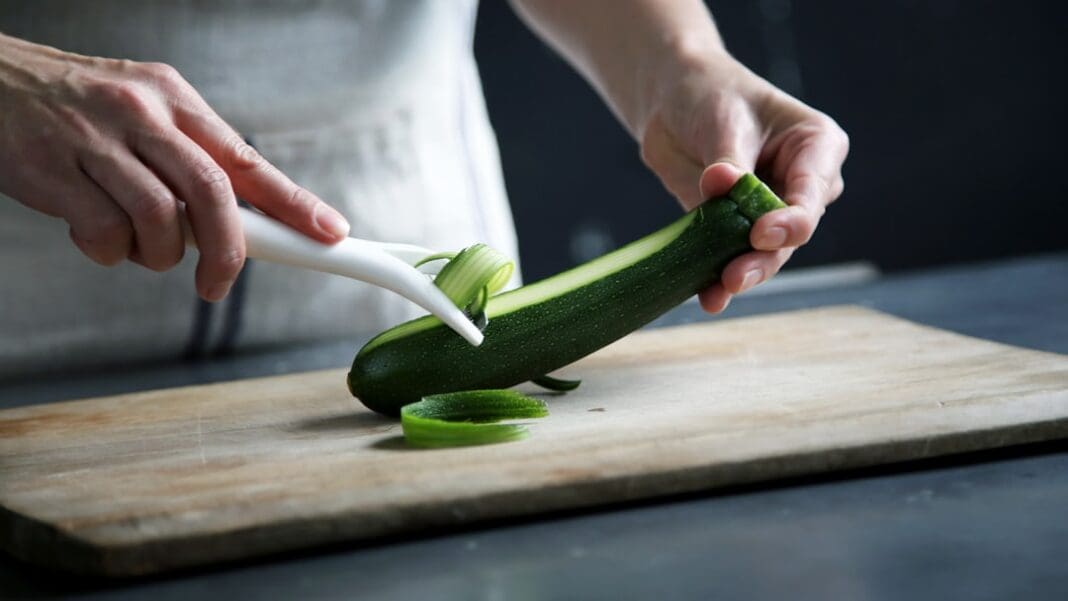
I grew up watching my mom drag a peeler down every cucumber that came into the house. Long green ribbons piling up in the sink, the cucumber going from dark and glossy to pale and naked. I did it too for years and never once asked why. It’s one of those kitchen habits you inherit without thinking, like rinsing your pasta after you drain it or shoving tomatoes in the fridge. And honestly? Most of the time, peeling a cucumber is a waste of effort and a waste of the cucumber.
I’m not telling you to do anything weird. I’m telling you to skip a step you’ve been doing on autopilot. Once I stopped, my salads got better, my prep got faster, and I stopped staring at a sink full of green peels wondering why I bothered. Here’s the case for putting the peeler down.
You’re Throwing Away The Best Part
Think about what a cucumber actually is once you strip the skin off. It’s a soft, watery, slightly bland cylinder. The skin is where the snap lives. That satisfying crunch when you bite into a cucumber slice comes from the firm outer layer, not the squishy middle full of seeds. Peel it and you’ve turned a crisp snack into something closer to a wet noodle.
The color matters too. That deep green skin is what makes a cucumber salad look fresh and appetizing instead of pale and sad. Cucumber skin is loaded with the same pigment that gives the fruit its rich color, and that color is doing a lot of work on your plate. A bowl of peeled cucumber slices looks like something you’d serve in a hospital. A bowl with the skin on looks like food you actually want to eat.
Nearly Half Of What You Paid For Ends Up In The Sink
Here’s the number that got me to quit. Cucumber peels hold around 40 percent of the fiber and certain plant compounds found in the whole thing. So when you peel one, you’re tossing close to half of some of the good stuff straight into the trash before you even take a bite.
Look at it like money. You paid for the entire cucumber at the register. Peeling it is like buying a steak and trimming off a third of it because that’s what your mom always did. The fiber alone is reason enough to keep the skin. A whole unpeeled cucumber gives you a couple grams of it, and the skin is carrying a big chunk of that load. Peel it and you’ve basically bought a fancy water balloon.
And cucumbers are mostly water anyway, about 96 percent of one. That’s part of why they’re so easy to eat and so refreshing in summer. But it also means the thin skin is where a lot of what makes a cucumber worth eating actually sits. Strip it and you’ve kept the boring part and thrown out the interesting one.
The Wax Is The Real Reason People Peel
Let’s be real about why most people peel. It’s not some deep belief. It’s that slick, sometimes sticky film on standard grocery store cucumbers. That’s food-grade wax, and there’s a reason it’s there. A lot of the cucumbers in American stores are imported, mostly from Mexico, and they travel a long way. The natural waxy coating cucumbers grow with often gets scrubbed off during processing, so producers spray on a replacement to keep them from shriveling and going limp before they hit the shelf.
On conventional cucumbers that coating can be shellac, mineral oil, or a petroleum-based wax. Organic ones usually get a plant-based wax made from carnauba, which comes from palm tree leaves in Brazil. The FDA considers these coatings generally recognized as safe, so this isn’t a panic situation. But I get it. Nobody wants to bite into a waxy film, and that texture is exactly what sends people reaching for the peeler. The good news is you have better options than scalping the whole thing.
Buy The Right Cucumber And The Problem Disappears
The easiest fix is to stop buying the waxed ones in the first place. Not all cucumbers are the same, and a few common types are basically built to be eaten skin and all.
Persian cucumbers, the little 4 to 6 inch ones often sold in a bag, have thin, tender skin that’s less bitter than other types and doesn’t need peeling at all. English cucumbers, those long skinny ones wrapped in plastic, are the same deal. The plastic wrap is actually a tell. It means they skipped the wax, because the wrap is doing the job of keeping them fresh. The skin is clean, thin, and ready to eat.
Lemon cucumbers, the small round yellow ones you sometimes spot at a farmers market, also have skin you can leave on. All of these stand apart from the standard slicing cucumber, which tends to be the waxed, thicker-skinned, sometimes bitter one that started this whole peeling habit. So if you’ve been fighting with tough, slick skins, the answer might just be grabbing a different cucumber next time you shop.
How To Wash A Cucumber So You Can Actually Eat The Skin
Say you’ve already got a regular waxed cucumber sitting on your counter. You still don’t have to peel it. A good wash does the trick, and it takes less time than you’d think.
The simplest method is just running water. Hold the cucumber under the tap for at least a full minute and rub the surface with your hands. A dietitian who speaks for the Academy of Nutrition and Dietetics says if that’s all you have time for, your cucumber is ready to eat. For a deeper clean, grab a soft vegetable brush and scrub the skin, paying extra attention to the ends where dirt likes to collect. The brush helps lift the waxy coating that plain water leaves behind.
Want to go all out? Fill a bowl with water and stir in about a teaspoon of baking soda for every cup, then let the cucumber soak for 10 to 15 minutes. Give it a final rinse and you’re done. That’s the whole process. Compare that to standing there peeling, and washing wins on effort alone.
When Peeling Actually Makes Sense
I’m not a peeling absolutist. There are times it’s the right call, and I’ll be honest about them. If you’ve got a big standard slicer with thick, waxy skin you can’t scrub off, peel away. Some of those older, larger cucumbers have genuinely bitter skin, and one bad bite can throw off a whole salad.
There are also recipes where you want that pale, clean look. Think a smooth, light-colored cucumber dip or a delicate tea sandwich where flecks of dark green skin would look out of place. In those cases, peeling is a style choice, not a default. The skin still carries the fiber and the crunch, so just know what you’re giving up when you remove it. A nice middle ground is striping the cucumber, where you peel off lengthwise strips and leave green stripes behind. You get a softer texture, less bitter skin, and you still keep some of the good part and the color.
The Habit Worth Breaking
Most of the cucumbers Americans eat get peeled out of pure reflex. We’re talking about a fruit (yes, it’s technically a fruit) that the average person here eats almost 8.5 pounds of every year. That’s a lot of skin going in the trash for no good reason.
The move is simple. Buy a Persian or English cucumber when you can, since those skins are thin and ready to go. If you end up with a waxed slicer, give it a one-minute scrub under the tap. Save the peeler for the occasional bitter monster or the recipe that genuinely needs a bare cucumber. Otherwise, leave the skin on. You’ll get more crunch, more flavor, better-looking food, and you’ll actually use the whole thing you paid for. Not bad for the price of doing nothing.

