

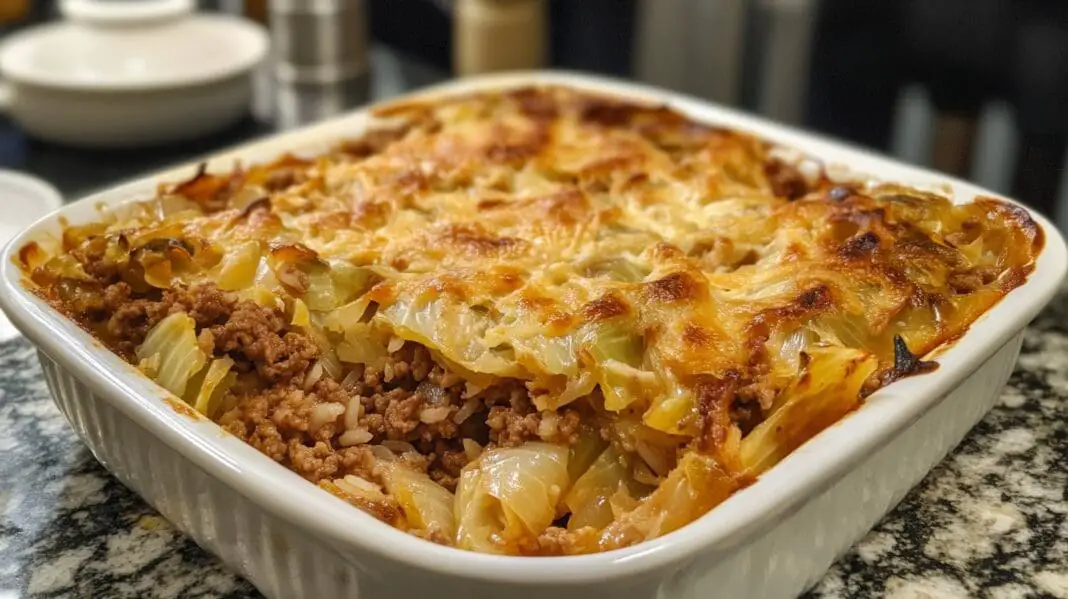
The dish that keeps landing me repeat invitations isn’t anything fancy. It’s a cabbage roll casserole, and it vanishes off the buffet table faster than almost anything else people bring. Set it down, walk away for ten minutes, and come back to a nearly empty pan and three people asking who made it.
Traditional cabbage rolls are a whole production. You blanch the leaves, spoon in filling, roll each one by hand, and tuck them into a pot like little presents. Nobody at a Saturday potluck knows or cares how many hours that took. The casserole version gives you every bit of that savory beef, soft rice, and sweet stewed cabbage with none of the rolling. You brown, you layer, you bake. It’s the same big, homey tray that disappears way faster than you’d expect, and it hits the two things that make a party dish stick in people’s memories: it feeds a crowd, and it tastes like something somebody’s grandmother made.
Why a Big Tray of Comfort Food Wins Every Room
Sharing food does something to people. Researchers who study why we gather found that people who eat together more often report more trust and stronger ties to their community, so much so that shared meals now show up as a worldwide marker of well-being. A good tray of food isn’t just dinner on a table. It’s a reason to sit down and stick around.
Comfort food does this better than anything trendy. A cabbage roll casserole looks homemade in the best way. It steams when you lift the foil. It smells like a real kitchen. Guests tie a dish like this to warmth and good times, and those feelings attach themselves to whoever carried it in the door. That’s the quiet loop behind getting asked back again and again: bring the thing people love, people ask about it, and the host files you away as the one who brought that amazing tray.
What Goes Into the Casserole
The grocery list is short and cheap, which is half the appeal. You need one medium head of green cabbage, about two pounds, cored and chopped into bite-size pieces. Grab a pound and a half of ground beef. An 80/20 blend gives you the most flavor, though 85/15 works if you’d rather drain less grease.
Rice is the backbone. One cup of long-grain white rice, uncooked, soaks up the tomato and beef juices as everything bakes. A yellow onion and three cloves of garlic build the base. For the sauce, reach for a 15-ounce can of tomato sauce, a 14.5-ounce can of diced tomatoes, two tablespoons of tomato paste, and about a cup and a half of beef broth to keep things moist while the rice cooks. Season with salt, black pepper, and a good teaspoon of paprika. If your family puts cheese on everything, like mine does, keep a cup and a half of shredded cheddar or mozzarella nearby for the top. This is exactly the sort of crowd-favorite that costs about ten bucks to make and feeds a dozen people.
How to Layer It So It Actually Holds Together
Start by browning the beef with the onion and garlic in a big skillet, then drain the grease and season it. While that cooks, stir the tomato sauce, diced tomatoes, tomato paste, and beef broth together in a bowl. That mixture is what cooks your rice, so taste it and add a little salt if it seems flat.
Now build it in a 9×13 dish. Spread a thin layer of sauce on the bottom, then half the cabbage, half the beef, and half the uncooked rice pressed gently into the sauce. Repeat the layers, then pour the rest of the sauce over the top and make sure the whole surface is wet so the rice cooks evenly. Cover tightly with foil and bake at 350 degrees for about 70 to 75 minutes. The foil traps the steam that softens the cabbage and cooks the rice, which is part of why an open-oven, one-dish bake creates that sense of togetherness when you finally pull it out and set it on the table.
The Mistakes That Turn It Watery or Bland
The number one problem people run into is a watery pan. It usually comes from skipping the drain step on the beef or from packing wet cabbage in tight. Drain your meat well, and give the finished casserole the full ten-minute rest before you scoop. That rest lets the rice finish drinking up the liquid and the whole thing firms into clean squares instead of soup.
Bland is the other trap. Cabbage and rice are quiet on their own, so don’t be shy with salt, pepper, and paprika, and taste the sauce before it goes in the dish. One more thing that has nothing to do with cooking: text the host before you show up. A quick check keeps you from bringing a big beef bake to a night that was already planned around a theme. Good guests don’t step on the menu.
Ways to Change It Up
The base recipe takes a swap well. Ground turkey keeps it lighter, and a half-beef, half-pork blend tastes closer to old-school cabbage rolls. For the classic sweet-and-sour tang, stir a tablespoon or two of brown sugar and a splash of apple cider vinegar into the tomato mixture. Some people add a can of drained sauerkraut between the layers for extra bite.
You can also read the room. If you know someone at the table skips beef or eats lighter, a turkey version quietly covers them without making it a thing, and paying that kind of attention to what people can eat is part of what makes a dish feel welcoming to everyone. Want it fancier looking? Finish the last ten minutes with cheese on top and a sprinkle of fresh parsley so it photographs as good as it tastes.
Making It Ahead and Getting It There in One Piece
This is where a casserole earns its keep as a party dish. You can assemble the whole thing the day before, cover it, and stash it in the fridge unbaked. Pull it out, add ten to fifteen minutes to the covered bake time, and it’s ready. It also bakes in its own transport vessel, which is exactly why casseroles are the gold standard for dishes that travel well. No fussing with the host’s oven or counter space when you arrive.
To keep it hot on the drive over, cover the baked dish with foil, wrap the whole pan in a kitchen towel, and set it inside a cooler or an insulated carrier. It’ll hold heat for a couple of hours easy. Bring a serving spoon so you’re not hunting through someone’s drawers, and you’ll be the guest who showed up organized with a tray that emptied. That reputation is how you keep the invitations coming.
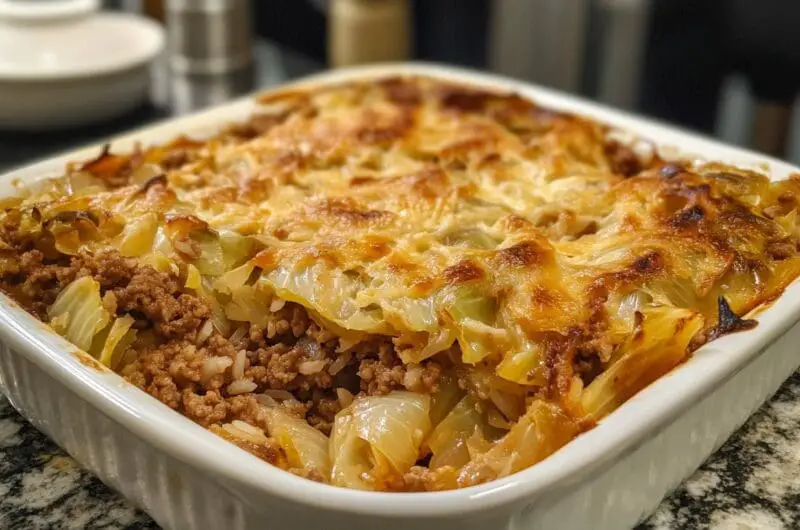
Cabbage Roll Casserole
Course: MainCuisine: American8
servings25
minutes1
hour15
minutes380
kcalThe lazy cabbage roll bake that disappears off every potluck table and earns you a standing invitation.
Ingredients
1 medium head green cabbage (about 2 lbs), cored and chopped
1½ pounds ground beef (80/20)
1 cup long-grain white rice, uncooked
1 large yellow onion, diced
3 cloves garlic, minced
1 (15 oz) can tomato sauce
1 (14.5 oz) can diced tomatoes
2 tablespoons tomato paste and 1½ cups beef broth
1 teaspoon paprika, salt and pepper to taste, plus 1½ cups shredded cheddar or mozzarella (optional)
Directions
- Preheat the oven to 350 degrees and grease a 9×13 baking dish. Warm a large skillet over medium-high heat and add the ground beef, breaking it apart as it cooks.
- When the beef is halfway browned, stir in the onion and garlic. Cook until the beef is no longer pink and the onion softens, about 6 to 8 minutes. Drain the grease, then season with paprika, salt, and pepper.
- In a bowl, stir together the tomato sauce, diced tomatoes, tomato paste, and beef broth. Taste it and add a pinch more salt if it seems flat. This mixture is the liquid that cooks your rice.
- Spread about a third of the tomato mixture across the bottom of the dish. Scatter half the chopped cabbage over it in an even layer, pressing it down lightly.
- Spoon half the beef over the cabbage, then sprinkle half the uncooked rice evenly across the top. Press gently so the rice settles down into the sauce.
- Repeat the layers with the remaining cabbage, beef, and rice. Pour the rest of the tomato mixture over everything and make sure the whole top is moistened so the rice cooks through.
- Cover the dish tightly with foil and bake for 70 to 75 minutes, until the rice is tender and the cabbage is soft. Check a corner with a fork to be sure the rice is fully cooked.
- If using cheese, remove the foil, scatter it over the top, and bake uncovered for another 10 minutes until melted. Let the casserole rest 10 minutes before serving so it sets up for clean scoops.
Notes
- Make it a day ahead: assemble everything, cover, and refrigerate unbaked. Add 10 to 15 minutes to the covered bake time when it goes in cold from the fridge.
- Swap ground turkey or a beef-and-pork blend for the ground beef. Both work well, and turkey keeps it lighter.
- For the classic sweet-and-sour flavor, stir 1 to 2 tablespoons of brown sugar and a splash of apple cider vinegar into the tomato mixture.
Frequently Asked Questions
Q: Can I use a bag of coleslaw mix instead of chopping a whole cabbage?
A: Yes. About 14 ounces of shredded coleslaw mix, no dressing, stands in for the head of cabbage. The shreds cook a little faster and softer, so check the rice around the 65-minute mark.
Q: Do I really have to use uncooked rice?
A: Uncooked is the way to go, since it drinks up the tomato juices and beef flavor as it bakes. If you only have cooked rice on hand, cut the broth to half a cup and reduce the baking time to about 40 minutes, because you’re just heating it through.
Q: Why did my casserole turn out watery?
A: Usually one of two things: too much added liquid, or cabbage that let off a lot of water. Let the dish rest the full 10 minutes after baking, and next time drain the beef well and don’t pack the cabbage in soaking wet.
Q: How do I keep it warm for a potluck?
A: Bake it, cover with foil, wrap the whole dish in a kitchen towel, and slide it into a cooler or insulated carrier. It holds heat for a couple of hours. If it cools too much, warm it back up in a 300-degree oven.

