
If you’ve been buying Lundberg Family Farms rice lately, you need to check your pantry. The California-based company issued a voluntary recall of its Regenerative Organic Certified White Jasmine Rice after discovering that some bags may contain unidentified foreign material. About 4,500 cases of the stuff were pulled, and those bags were sitting on shelves at some of the biggest grocery stores in the country. Here’s everything you need to know.
What Exactly Got Recalled
The recall specifically covers 2-pound bags of Lundberg Organic Jasmine White Rice, the Regenerative Organic Certified variety. Not the brown rice, not the basmati, not any of their other products. Just this one. If you’ve got a 2-pound pouch of their white jasmine rice in your kitchen, flip it over and look for the lot codes and best-by dates. The two affected lots are:
Best By February 1, 2027, lot code 260201. And Best By February 2, 2027, lot code 260202. The UPC code on the affected bags is 073416-040281. If your bag doesn’t match those lot codes and best-by dates, you’re fine. If it does match, stop using it immediately.
Where It Was Sold
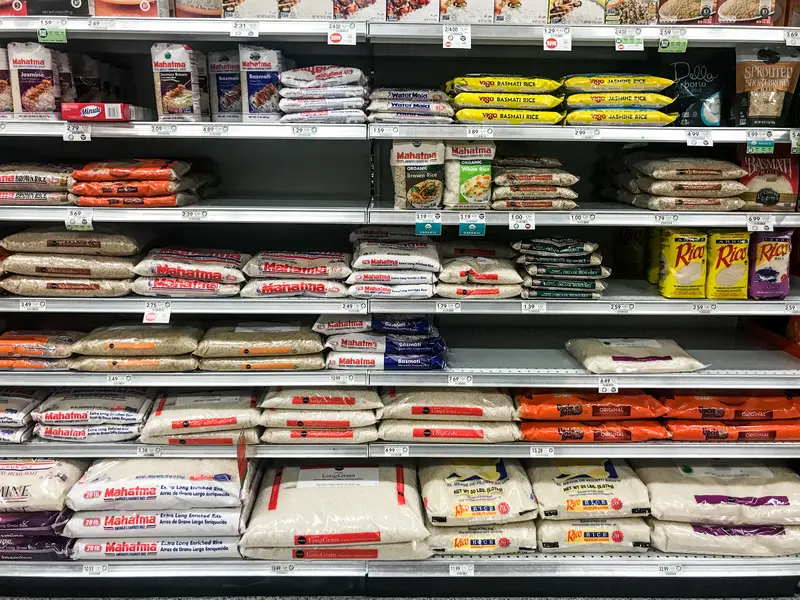
This is where things get wide. Lundberg rice isn’t some niche product you can only find at a tiny health food store. It was sold at Wegmans, Target, Walmart, and Whole Foods, among other retailers. That means millions of shoppers could have grabbed a bag without a second thought.
Wegmans was actually the first major chain to put out its own public notice about the recall, which went up on April 4, 2026. Wegmans operates about 110 stores across Delaware, Maryland, Massachusetts, New Jersey, New York, North Carolina, Pennsylvania, Virginia, and Washington, D.C. That’s nine states plus the District right there. But because the rice was also stocked at national chains like Walmart and Target, the actual reach goes well beyond the East Coast.
It Reached the Midwest Too
People sometimes assume recalls like this only hit the coasts, but that’s not the case here. Seward Community Co-op in Minnesota confirmed that the recalled rice was sold at its stores between February 19, 2026, and April 3, 2026. That’s over six weeks of potential sales before the recall notice went out. If you shop at co-ops or independent grocery stores in the Midwest, it’s worth checking whether your store carried this product during that window.
The fact that the rice showed up at a Minnesota co-op, alongside big box retailers on the East Coast and across the country, tells you how broadly Lundberg distributes. This wasn’t contained to one region. It was everywhere.
What “Foreign Material” Means (and What They Haven’t Told Us)
So here’s the part that’s a little frustrating. Lundberg and the retailers involved have all described the problem as the “possible presence of foreign material.” That’s it. Nobody has specified what the foreign material actually is. Not Lundberg, not Wegmans, not any of the official recall notices. The company has said the issue was limited to one production run and that it’s under investigation, but that’s about all the detail anyone’s gotten.
It’s a vague description and consumers are left guessing. Could be plastic, could be metal fragments, could be something else entirely. Lundberg hasn’t clarified, and the FDA hadn’t posted its own public notice at the time the recall was first reported. The lack of specifics is annoying, especially when you’re trying to figure out whether to be concerned about a bag of rice sitting in your cupboard.
The FDA Classification
The recall has been classified as a Class II recall by the FDA. What that means in plain language: the FDA considers the risk to be real but not severe. A Class II recall is one step below the most serious classification, Class I. Lundberg has stated that no injuries or illnesses have been reported so far, and the company said it issued the recall “out of an abundance of caution.”
For context, a Class I recall is reserved for situations where there’s a reasonable chance of serious consequences. Class II means the situation is less dire, but not something to just ignore. The affected product should still be tossed or returned.
How Many Bags Are We Talking About
According to Lundberg’s statement, approximately 4,500 cases were involved in the recall. Each case contains multiple 2-pound bags. So the number of individual bags floating around out there is significantly higher than 4,500. These bags were shipped to stores across the country starting in February 2026, and many of them were likely purchased and brought home before anyone knew there was a problem.
The best-by dates on the recalled bags are in February 2027, which means some people may have bought this rice and stashed it in the pantry for months without using it. If you tend to stock up on rice, now’s the time to go dig through the back of the shelf.
What You Should Do Right Now
First, check the bag. Look for the UPC code 073416-040281 and the best-by dates of February 1, 2027 (lot 260201) or February 2, 2027 (lot 260202). If your bag matches, do not cook it. Do not eat it.
You have two options. You can throw it away. Or you can return it to the store where you bought it for a full refund. Wegmans has confirmed that customers can bring the product back to any Wegmans location for a full refund. Other retailers have not put out individual announcements, but most major chains will accept recalled products back. Bring your receipt if you have it, though many stores will process the return without one if you have the product in hand.
Lundberg’s Response
Lundberg Family Farms put out a statement saying, “We follow strict sourcing and quality guidelines to ensure the safety of our products. We are working closely with our retail partners to remove the affected lots from shelves as quickly as possible.” The company also told media outlets that the issue was limited to a single production run, which is a good sign in terms of scope. It means they’ve identified the specific batch and don’t believe other Lundberg products are affected.
The company is based in Richvale, California, and has built its brand around organic and regenerative farming practices. They’ve been around for decades and are one of the more recognizable names in the organic rice space. This recall doesn’t mean the entire brand is compromised, but it does mean this particular batch needs to stay out of your kitchen.
The Timeline of the Recall
The affected rice was sold at stores like Seward Co-op starting as early as February 19, 2026. Wegmans posted its recall notice on April 4, 2026. Additional media coverage followed around April 10. And the formal, broader nationwide recall from Lundberg was announced on April 13, 2026. So there was a gap of several weeks between when the product was first sold and when the public was notified. That’s not unusual for recalls, but it does mean a lot of bags had already been purchased by the time the word got out.
If you bought Lundberg white jasmine rice any time between mid-February and early April 2026, you should absolutely be checking those lot codes.
How to Stay Updated
Lundberg has directed consumers to monitor the FDA’s official Recalls, Market Withdrawals, and Safety Alerts page for the latest information. That’s the most reliable source for updates if the scope of the recall changes or more details emerge about what the foreign material actually is. You can also check with your local store’s customer service department to see if the product has been pulled from their shelves.
The bottom of it is pretty simple: if you’ve got a bag of Lundberg Organic Jasmine White Rice with those lot codes, get rid of it or take it back. Keep the refund, buy a different bag, and move on. No illnesses have been reported, which is good news. But there’s no reason to take a chance on a bag of rice when you can swap it out for free.

