

If you grabbed a Crunchwrap or a couple of tacos in the last few weeks and your stomach has been staging a full-on riot ever since, this one’s for you. Health officials have tied a nasty parasite outbreak to shredded iceberg lettuce served at some Taco Bell locations, and the numbers are climbing fast. We’re not talking about a handful of upset stomachs. Thousands of people have gotten sick, and the illness behind it is one most folks have never even heard of. Here’s the whole story, plain and simple.
What Actually Happened Here
Investigators pointed to shredded iceberg lettuce supplied to Taco Bell by Taylor Farms as a likely source of the outbreak, according to people familiar with the investigation. The lettuce came out of a Taylor Farms operation in Salinas, California, which is one of the biggest salad and fresh-produce operations around. The signal that tipped everyone off was pretty basic detective work. A high number of people who got sick had eaten at Taco Bell, and when investigators asked what those folks had in common on their orders, lettuce kept coming up again and again.
Taco Bell moved quickly. The company said it voluntarily pulled the suspected lettuce from its supply chain nationwide and started swapping it out in the affected states. Some locations in the Detroit area even taped up signs telling customers they couldn’t sell lettuce, cilantro onion, pico de gallo, and guacamole for the time being. If you’ve walked into one recently and wondered why your order looked a little bare, now you know.
The Numbers Are Bigger Than You Think
This isn’t a minor blip. Nationally, close to 7,000 people may have been sickened since May 1, with around 1,645 confirmed cases and more than 5,100 still under investigation. That’s more than six times higher than the same stretch of time last year. At least 141 people have been hospitalized, though no deaths have been reported.
The outbreak tied to the lettuce is centered in the Midwest, hitting five states: Indiana, Kentucky, Michigan, Ohio, and West Virginia. Michigan got slammed the hardest by a mile. State health officials there reported 4,312 cases and more than 100 hospitalizations. Michigan interviewed over 1,000 people who tested positive and flagged lettuce and salad greens as a suspect early on. If the whole thing gets confirmed as one connected event, it would be the largest outbreak of this parasite in U.S. history. Cases have popped up in 34 states overall, and officials expect the count to keep rising through the end of August.
So What Is This Parasite, Exactly?
The bug behind all this is called Cyclospora, and the illness it causes is cyclosporiasis. It’s a microscopic parasite that sets up shop in your intestines. Here’s the creepy part: you cannot see it, smell it, or taste it. According to infectious disease experts, it’s so tiny it can only be spotted under a microscope. Your lettuce could look crisp, green, and totally normal while carrying it.
Here’s some good news, though. It doesn’t spread from person to person like a stomach flu. You get it by eating food or drinking water that’s contaminated. So you can’t catch it from a coworker or a family member sneezing near you. The parasite actually needs time out in the environment before it can infect someone new, which is where the “cyclo” in the name comes from. Fresh produce gets involved a lot because the parasite can ride in on contaminated irrigation water or during handling while crops are grown and harvested.
The Symptoms Nobody Wants to Talk About
Let’s be blunt about this. The main symptom is watery diarrhea, and people who’ve had it describe it as sudden, frequent, and hard to control. Some folks straight up call it explosive. Along with that, you might deal with fatigue, loss of appetite, bloating, nausea, weight loss, and sometimes a low fever or vomiting.
The tricky thing is the timing. Symptoms usually show up about a week after you’re exposed, but that window can run anywhere from two days to two weeks or more. So if you ate a taco 10 days ago and feel awful now, you might not connect the dots. And this thing doesn’t always play fair. The illness can drag on for weeks, sometimes seeming to get better before roaring back. That tired, dragged-out feeling can hang around even after the bathroom trips settle down. One of the reasons the source took so long to pin down is exactly this delay. By the time people got sick, the meal was a distant memory.
Why You Can’t Just Rinse It Off
This is the part that surprises most people. You’d think a good rinse under the faucet would take care of it. Nope. Cyclospora shrugs off some routine cleaning methods, and rinsing produce alone probably won’t get rid of it. That includes bagged lettuce that says “prewashed” and “triple washed” right on the front. As officials put it, prewashed does not mean it’s clean of this parasite, and rewashing a bag of shredded greens at home is unlikely to fix the problem.
What actually kills it is heat. Cooking produce to 158 degrees Fahrenheit or higher wipes it out. Peeling works too, since the parasite sits on the outer surface of food. That’s why raspberries are such a headache in these outbreaks. Their bumpy little surface gives the parasite a thousand crevices to hide in, and you can’t exactly peel a raspberry. Past outbreaks of this same bug have been tied to raspberries, basil, cilantro, snow peas, and salad mixes, so lettuce isn’t the only usual suspect.
What to Do at the Grocery Store
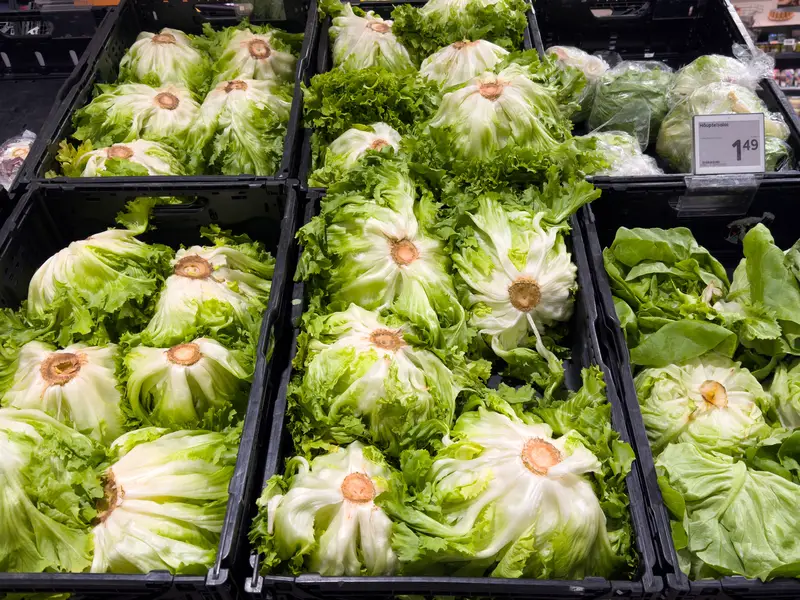
If you’re shopping for greens this summer, a few small habits make a big difference. Experts suggest skipping the precut and bagged stuff and reaching for whole heads of lettuce instead, because whole produce goes through less handling before it lands in your cart. When you get home, toss the outer two or three layers of leaves and wash the inner ones under running water.
A few more tips worth remembering: cook leafy greens when you can, peel produce that has removable skin, and scrub firm items like melons and cucumbers with a clean brush. Wash your hands with soap and water before and after handling fresh produce, and cut away any bruised or damaged spots. The recommendation to buy whole heads over bagged greens comes up over and over from health officials, so if you take one thing away from all this, make it that.
Getting Tested and Treated
Here’s a detail that could save you a lot of frustration. A standard stool test for diarrhea won’t catch this parasite. Your doctor has to specifically ask for a Cyclospora test, and even then it can miss the parasite if the sample is small or taken at the wrong moment in its life cycle. Sometimes you have to send in more than one sample. So if you’re sick and the first test comes back clean, that doesn’t mean you’re in the clear.
The good news is that it’s treatable. The go-to medicine is an antibiotic called trimethoprim-sulfamethoxazole, which you might know as Bactrim or Septra, usually taken for about seven to 10 days. Yes, it’s an antibiotic being used on a parasite, and yes, it works. Some mild cases clear up on their own, but doctors generally recommend treatment for confirmed cases. If your diarrhea is severe and you feel dizzy standing up or your heart is racing, that’s a sign to get to urgent care.
The Bottom Line
The short version: do not eat shredded iceberg lettuce served at Taco Bell in Indiana, Kentucky, Michigan, Ohio, and West Virginia while this gets sorted out. Investigators are still working with the supplier to see if the same lettuce ended up anywhere else. If you develop watery diarrhea that lingers or keeps coming back a week or two after eating fresh produce, see a doctor and ask directly for a cyclospora test. And when you’re stocking up on greens this summer, grab the whole head instead of the bag. It’s a tiny change that beats a month of misery. Stay alert to updates and trust your gut, literally.

