

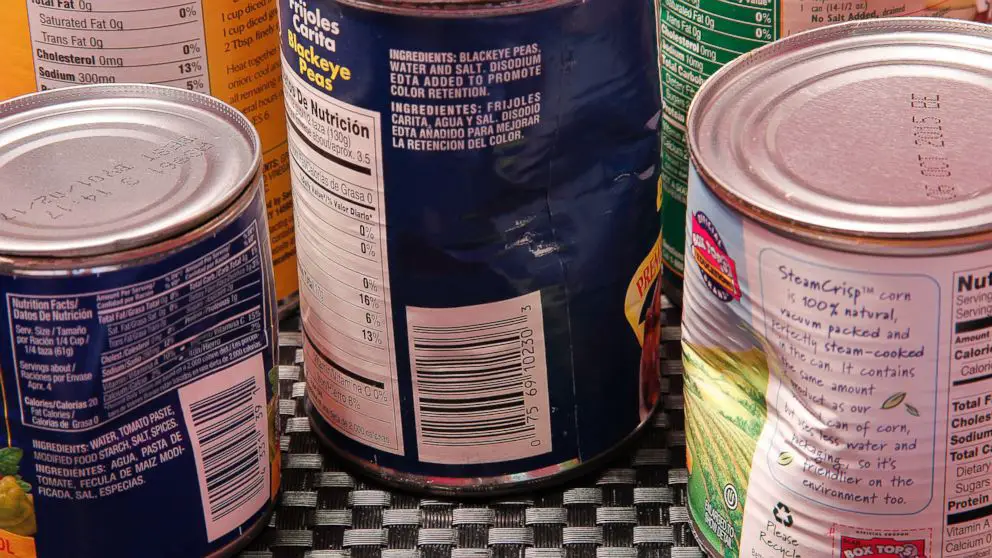
Here’s something almost nobody does right at the grocery store. We grab a can, spot a little ding in the metal, and toss it in the cart without a second thought. Or we put the dented one back, pick a clean can, and feel pretty smart about it. Both moves kind of miss the point. The size of the dent barely matters. What matters is where the dent landed. A can can look beat to heck and still be perfectly good, while a can with one tiny dent in exactly the wrong spot is the one you walk away from. That wrong spot is the seam. Once you know how to find it, you’ll never look at the canned aisle the same way.
The Dent’s Location Beats Its Size Every Time
A small, smooth dent on the flat body of a can, away from any seam, is usually nothing. The metal took a hit, but the seal that locks the food inside never moved. Trouble starts when a dent lands on a seam, the spot where two pieces of metal are crimped together to hold everything shut. Cans have two kinds. The end seams run around the top and bottom. The side seam runs straight up the body. A deep dent on a seam can crack that crimp open just enough to let air sneak in. So a big smooth dent on the side might mean nothing, while a small crease right on a seam means it goes back on the shelf.
That Side Seam Hides Right Under The Label
Here’s the sneaky part. The side seam, that vertical line running up the can, is almost always hidden under the paper label. You could be holding a can with a nasty dent on the worst possible spot and never see it. If a dent looks suspicious, peel the label back or twist it around and check the metal underneath. A dent across the vertical side seam is the one shoppers overlook the most, and it’s exactly the kind that can break the seal. It takes five seconds. You might feel a little ridiculous doing it in the store, but it beats opening a sketchy can at home and wondering.
The Finger Test Settles The Argument
There’s a dead-simple way to judge a dent, and you already have the tool. Run your fingertip along the groove. If it sinks in like it found a little valley, that’s a deep dent, the kind defined as one you can lay a finger into. Deep dents usually have sharp points where the metal folded hard, and those points are the real troublemakers because they can puncture or strain the seam. A shallow, rounded ding you can barely feel is the dropped-on-the-floor kind, and it’s almost always fine. The finger test costs nothing and gives you a clear answer right there in the aisle, no guessing required.
Press The Top And Listen
This one works on cans you already own. Push down on the top or bottom. A good can stays firm and quiet. If it gives way, flexes, or makes a popping sound like one of those push-button safety lids on a jar of pasta sauce, the seal has probably been broken and air got in. That’s your cue to throw it out. And if you buy a clean can and drop it on the kitchen floor, you can still cook with it pretty soon after. What you don’t want to do is shove that dropped can to the back of the pantry and forget about it for eight months. A hairline seal problem you can’t see could turn into a real one over time.
A Bulging Can Is The One To Never Touch
If a dent on a seam is a yellow light, a bulging can is a hard stop. When the top or bottom of a can puffs out or swells, something inside is making gas. That’s the single biggest red flag there is. Don’t open it to take a peek. Don’t smell it. Don’t try to rescue the food just because you paid good money for it. The same goes for cans that leak, crack, or spurt liquid when you crack them open, or anything that foams up weird once it’s open. None of that is normal, and no amount of “it’s probably fine” is worth it. Toss it and don’t look back.
Beans And Corn Deserve More Side-Eye Than Tomatoes
Not every canned food carries the same risk, and it comes down to acid. Low-acid foods like beans, corn, peas, meat, poultry, and fish make a comfortable home for bacteria. High-acid foods like tomatoes, citrus, and pickled stuff fight bacteria off naturally because the acid keeps them from settling in. So if you’re staring at two dented cans and trying to decide, a dinged can of green beans deserves more caution than a dinged can of crushed tomatoes. That said, a bad seam dent is a bad seam dent. A dented can of tomatoes isn’t automatically in the clear just because it’s acidic. The acid helps. It doesn’t bulletproof the can.
Why A Dent Even Matters In The First Place
A dent on its own doesn’t create anything bad. The risk shows up when the seal breaks and the food sits in a low-oxygen pocket that no longer has the protection of commercial processing behind it. Store-bought cans are made under tight controls, which is why problems are rare. A damaged seam changes the math because the can stops being a sealed system. During canning, food gets heated long enough and hot enough to handle the spores that would otherwise cause trouble. The issue starts when a defective or leaky seam lets bacteria get pulled in as the can cools back down. That’s the whole reason a cracked seam is a bigger deal than a cosmetic ding.
Why The Discount Bin Isn’t Always The Win It Looks Like
A bin of marked-down dented cans looks like a steal. Slashed prices on canned goods, who doesn’t love that. But there’s a reason those cans got pulled, and it’s worth a second of thought. Badly dented cans from rough handling can let bacteria grow, and the food inside can look and smell completely normal even when it’s not right. A bin full of beat-up cans also says something about the store. If nobody’s pulling damaged stock off the shelf, what else are they letting slide back there? Food banks won’t even accept deeply dented cans for this exact reason. Grab the clean cans on sale and walk past the wrecked ones.
How To Toss A Suspect Can The Right Way
If you decide a can has to go, don’t just chuck it loose into the kitchen trash. The smart move is to double bag it in plastic, tie it off tight, and put it in a bin outside the house. You don’t want a curious dog, a kid, or a raccoon digging into it later. For a can that really looks off, some people pour a little diluted bleach into it before sealing the bag, then wash their hands well after. It feels like overkill for a can of corn, but it’s two minutes of effort and then you never have to think about it again. Done.
None of this means you have to inspect every can like a detective with a magnifying glass. Most cans are fine, and a small ding on the body is nothing to lose sleep over. The routine is simple. Check the seams, the top, the bottom, and that hidden line under the label. Skip anything that bulges, leaks, or pops when you press it. And once they’re home, keep your cans somewhere cool and dry instead of above the stove, under the sink, or down in a damp basement, where heat and moisture wear the metal down faster. Do that, and the dented can in your cart goes from a coin flip to an easy call.

