

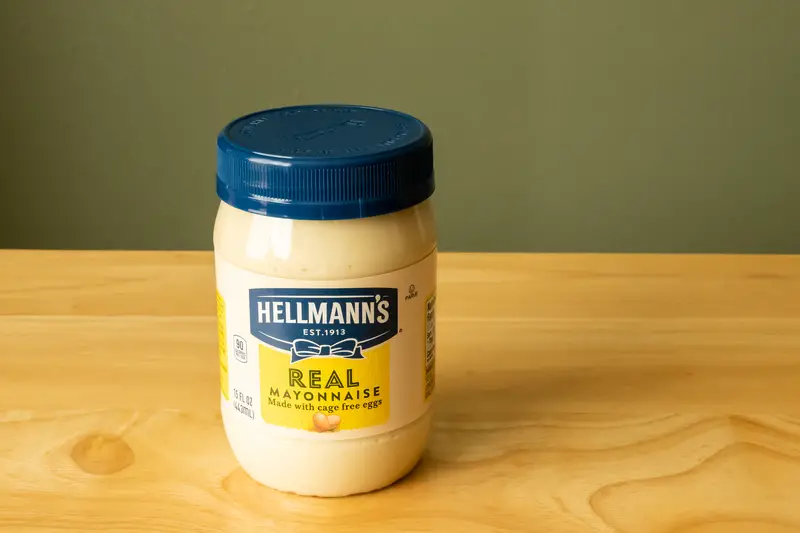
Mayonnaise gets two hours on the counter, and not a minute past that. What most people get wrong is why, and the wrong reason has them watching the jar while the real problem sits in the bowl right next to it.
This isn’t just something your grandmother nagged about. The USDA’s guidance is blunt. Any perishable food that hangs around at room temperature for more than two hours belongs in the trash. When it’s hotter than 90 degrees, that window shrinks to a single hour. An opened jar says refrigerate after opening right on the label, so it lives on that clock too.
Two Hours, One Hour When It’s Hot
The number comes from a temperature range the USDA calls the danger zone, 40 to 140 degrees. Inside that band, bacteria can double in as little as 20 minutes. Start with a small amount, leave it on a warm table for a couple hours, and you’ve grown a crowd.
The clock counts total time out of the fridge, not time since the food started looking sketchy. That means the mayo on your back porch in July is on the one-hour plan, not the two-hour one. Heat speeds everything up.
Mayo Isn’t The Villain. What You Mix It Into Is.
Mayonnaise is basically oil, egg yolks, and a splash of vinegar or lemon juice whipped into an emulsion. To be sold as mayonnaise in the US it has to be at least 65 percent oil, and the acid pulls it down below a pH of 4.1. That is hostile ground, not a comfortable home. The FDA’s own guidance says Salmonella and Listeria are inactivated in acid dressings at that pH.
So the picnic story most of us grew up with has it backwards. Store-bought mayo does not grow Salmonella, it slowly kills it, and it does that faster warm than cold. What changes the math is the bowl. Stir mayo into potatoes, pasta, chicken, tuna, or hard-boiled eggs and those low-acid ingredients cancel out the acid that was doing the work. That mixture is the comfortable home the plain jar never was.
The Jar Is Fine Until You Open It
Here’s the part that confuses everyone. A sealed jar of store-bought mayo is shelf-stable, and there are no antimicrobial preservatives doing that work. The federal standard for mayonnaise does not even allow them. It is the acid and the oil, which is exactly why the jar lives on a dry grocery aisle instead of a refrigerated case.
Crack the seal and the rules change. Air, a spoon, and stray sandwich crumbs get in, the label switches to refrigerate after opening, and quality starts sliding. So the jar goes back in the fridge between uses, and anything you have mixed it into goes on the two-hour clock every single time it comes out.
The Timer Doesn’t Reset
The mistake that trips people up is treating each trip out of the fridge like a fresh start. You pull the jar for breakfast, grab it again at lunch, then set it out at dinner, figuring the clock rolls back to zero every time. It doesn’t. Ten minutes in the morning, half an hour midday, an hour at night, and those minutes add up. Sticking it back in the cold does not erase the time it already spent warm.
This gets sneaky with dishes where the mayo is hidden. Potato salad, tuna salad, coleslaw, chicken salad, deviled eggs. The total time out includes the drive to the party, the setup while people mingle, and the whole stretch it sits on the table. Add all of that together, and a bowl that felt like it was out for an hour has often been out for three.
A Potato Salad That Sent Nine People Home Sick
This isn’t a hypothetical. After a catered reception in Connecticut in 2009, nine guests came down with cramps, diarrhea, and fever, most of them around 13 hours later. Potato salad was the dish that tracked with getting sick, and five of the nine had stool tests come back positive for Salmonella. What the CDC investigation actually found, though, was not a bowl left too long in the sun. Kitchen staff were handling ready-to-eat food bare-handed without washing up properly, and one worker with no symptoms was carrying the same two strains.
The unsettling part is that the food looked completely normal the whole time. Salmonella usually doesn’t change the taste, the smell, or the appearance of what it’s living in. The only clue was who ate the salad and who didn’t.
Condiments You Can Actually Leave Out
Not everything on the picnic table needs babysitting. Ketchup and mustard are fine at room temperature for long stretches. Tomatoes and vinegar keep ketchup at a low pH, and mustard is naturally sour, so bacteria have a rough time getting a foothold. Relish falls in the same easygoing group. Most of us stash them in the fridge out of habit, which helps the flavor but isn’t a safety must.
The creamy crowd splits into two camps. Bottled ranch and blue cheese off the dry aisle are acidified the same way mayo is, and they hold up at room temperature just as well. The tubs from the refrigerated case are the ones to watch, along with any Caesar or aioli a kitchen whisked up from raw egg that morning. Those get the same treatment as a bowl of potato salad, not the same treatment as the jar.
How To Keep It Out Longer At A Cookout
You don’t have to stand guard over the jar all afternoon. Scoop what you need into a small bowl, then set that bowl inside a bigger one packed with ice. Refill from a cold container in the fridge instead of dumping the whole batch out at once. Each serving stays chilled while guests help themselves.
Packing for a picnic changes the math. Keep the mayo in the cooler and build sandwiches on-site rather than hours ahead of time. A grocery bag baking in a hot trunk is not a substitute for a fridge. Ice packs, a spot in the shade, and a cooler you’re not constantly reopening will keep things in the safe range far longer than wishful thinking.
How Long An Opened Jar Really Lasts
Once you open a store-bought jar and keep it refrigerated the whole time, the USDA gives it two months and Hellmann’s says two to three. Hellmann’s also puts it in the fridge door rather than the back, since the coldest spots can make mayo freeze and split. Freezing wrecks it. The emulsion breaks and you’re left with a watery, grainy mess that never comes back together.
Homemade mayo plays by much stricter rules. It’s built on raw or barely cooked egg and it isn’t acidified to a controlled pH the way a commercial jar is, so it gets none of that protection. Clemson’s extension service puts raw-egg recipes on a 24-hour clock in the fridge, not a week. If you make your own, use pasteurized eggs or a cooked base, and keep the time on the table short.
One small habit stretches the life of any jar: use a clean spoon every time and skip the double-dip. Dragging a used sandwich knife back through the mayo drops in crumbs and bacteria that speed up spoilage. Tighten the lid after each use, too.
Don’t Trust Your Nose
Old mayo does give off some warnings. A darkened yellow or brown tint, a rancid or sour smell, separation, or any spot of mold are all real signs to throw it out. Fresh mayo runs from pale ivory to a faint yellow, thick, and mildly tangy. Anything that drifts far from that is done.
The trap is that bacteria can climb to a bad level before any of those clues appear. So skip the taste test. Sampling a spoonful to see if it’s still okay tells you nothing useful and just puts it in your mouth. If mayo or a mayo-based dish has been sitting out past its window, dump it. A new jar runs a few bucks. A weekend spent hugging the bathroom floor costs a lot more.
The rule is easy enough to keep in your head. Two hours on the table, one hour when it’s hot, and that timer never rolls back to zero. Keep the jar cold, scoop with a clean spoon, and save the real worry for the bowl you stirred it into.

