

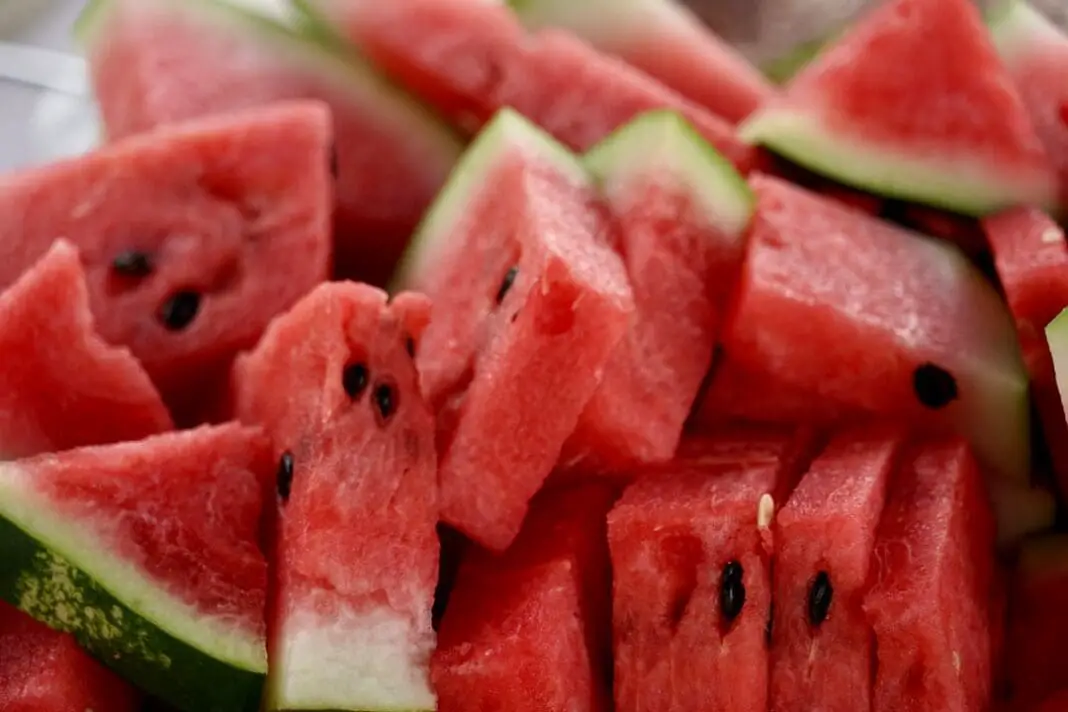
Swallow a watermelon seed and nothing dramatic happens. No vine sprouts in your belly, whatever your grandmother swore would grow in there. If you never chewed it, the seed rides straight through your gut and comes out the far end in one piece. The hard shell does not break down when you gulp it whole, so it just moves along like a tiny pebble. That is the entire scary story, and it was never scary.
What matters is what those seeds actually are, and what you have been sweeping off your porch every summer. Roasted and salted, they turn into a real snack. People buy them by the bag in a lot of the world while Americans spit them into the grass and move on.
People Around The World Snack On These
Across the Middle East and much of Asia, roasted watermelon seeds sit next to sunflower seeds and pistachios at the corner store. In China they are a standard thing to crack open and nibble during Lunar New Year, a whole social habit of shelling them with your teeth while you talk. You can roast them the same way you would pumpkin seeds, and they come out nutty and crunchy instead of the slick little pips you flick off a slice.
The flavor lands closest to a sunflower seed, a bit earthier. Once you salt them, the fact that they came out of a watermelon barely registers. What they are not is a light snack. A 30 gram handful of kernels carries about 165 calories, near enough what the same weight of almonds gives you, so treat the bowl during a game the way you would treat a bowl of nuts.
A Protein Hit You Would Not Expect
Shelled watermelon seed kernels carry about 28 grams of protein per 100 grams. That number holds up next to serious protein foods, and it flat out beats most of the trail mix you overpay for at the airport. Nobody eats 100 grams in one sitting, so do not picture a steak. The point is the density. A small handful pulls more weight than it looks like it should.
It also comes packaged with fiber and fat still attached instead of stripped out into a powder, which is part of why people who skip meat keep a jar around. You get the protein and the rest of the seed at the same time, no shaker bottle required.
One Of The Best Magnesium Sources You Can Eat
Per 100 grams, watermelon seeds hold around 515 milligrams of magnesium, more than a full day’s worth. Nobody eats 100 grams in a sitting, but a 30 gram handful still covers about a third of what a man needs in a day and closer to half for a woman. Lab data puts them third among edible seeds for magnesium, behind hulled hemp and pumpkin kernels but ahead of flax, sesame and sunflower. Magnesium is what your muscles and nerves run on, the quiet thing behind a body that does not knot up on you at 2 a.m.
They run high in iron and zinc too. An ounce of the kernels covers roughly a quarter of your zinc for the day. There is a catch with the raw ones, though. They hide part of that mineral haul behind compounds called phytates, which clamp on and keep your body from grabbing all of it. Sprouting and soaking loosen the grip. Roasting helps as well, but far less than either. So the roasted bag tastes better without doing much about the phytates.
Black Seeds Are The Ones You Want
Split open a watermelon and you find two kinds of seeds. The hard black ones are mature and carry the nutrients. The soft white ones are immature, mostly empty coats, and while nothing is wrong with eating them, they bring almost nothing. The mature black seeds are the ones worth saving and roasting. Eat the white ones as you slice if you want, but do not bother collecting them.
Seedless watermelons still have those little white ones inside, which is exactly why you can bite into a “seedless” slice without picking anything out. The seeds are there. They just never grew up.
How To Roast Them So They Taste Good
Rinse the seeds, dry them off, and spread them on a baking sheet. Set the oven to 325 degrees, drizzle a little olive oil, hit them with sea salt, and give them about 15 minutes. You want them crisp and slightly darkened, not scorched. Watch them near the end, because they go from toasty to burnt in about a minute.
The stovetop works too. Toss them dry in a skillet over medium heat and shake the pan until they turn a shade darker and start to smell toasty. Salt them while they are hot so it sticks. If you have a sweet tooth, some people coat them in a thin sugar syrup and press them into little bars, but plain and salty is the easy win and the one you will actually make twice.
Turn Them Into Butter, A Topping, Or Trail Mix
Ground down, black watermelon seeds make a seed butter you can spread the way you would use tahini or peanut butter. The oil pressed from them ends up in beauty products, but in the kitchen the whole seed is what you want. Blitz roasted kernels with a pinch of salt and a little oil until they go smooth.
Whole roasted seeds also work as a lazy salad topper, a swap for croutons that adds crunch without the bread. Throw a handful into a jar of nuts and dried fruit and you have trail mix that did not cost eight dollars a bag. They fold into granola. They go on top of yogurt. They are not fussy about where they land.
The Citrulline Is In The Slice, Not The Seed
Watermelon is where scientists first found the amino acid citrulline, which is literally named after the fruit. Athletes take it before workouts on the theory that it opens up blood flow, and half the pre-workout powders on the shelf are built around it.
This one is not a seed story, though. A 2025 review in the journal Nutrients, which pulled together 124 references on the fruit, puts the citrulline in the rind and the flesh and records the seeds as none detected. Eat the slice for that. Eat the seeds for the minerals.
How Many You Should Actually Eat
A tablespoon or two a day is the sane amount. Watermelon seeds are calorie dense, close to 600 calories in a full cup of dry ones, so a bowl in front of the TV disappears faster than you would guess. Treat them like nuts. A scoop is a snack. The whole bag is a dinner you did not mean to eat. Keep the whole seeds away from small children, though. Under about four they do not have the molars to grind them down, and the choking advice on nuts applies here too.
Next time you cut into a watermelon, stop before you scrape the seeds into the trash. Rinse the black ones, roast them, salt them, and you have turned the part everyone throws away into the best crunch in the kitchen. Your grandmother was wrong about the vine growing in your stomach. She was also wrong about the seeds being garbage.

