

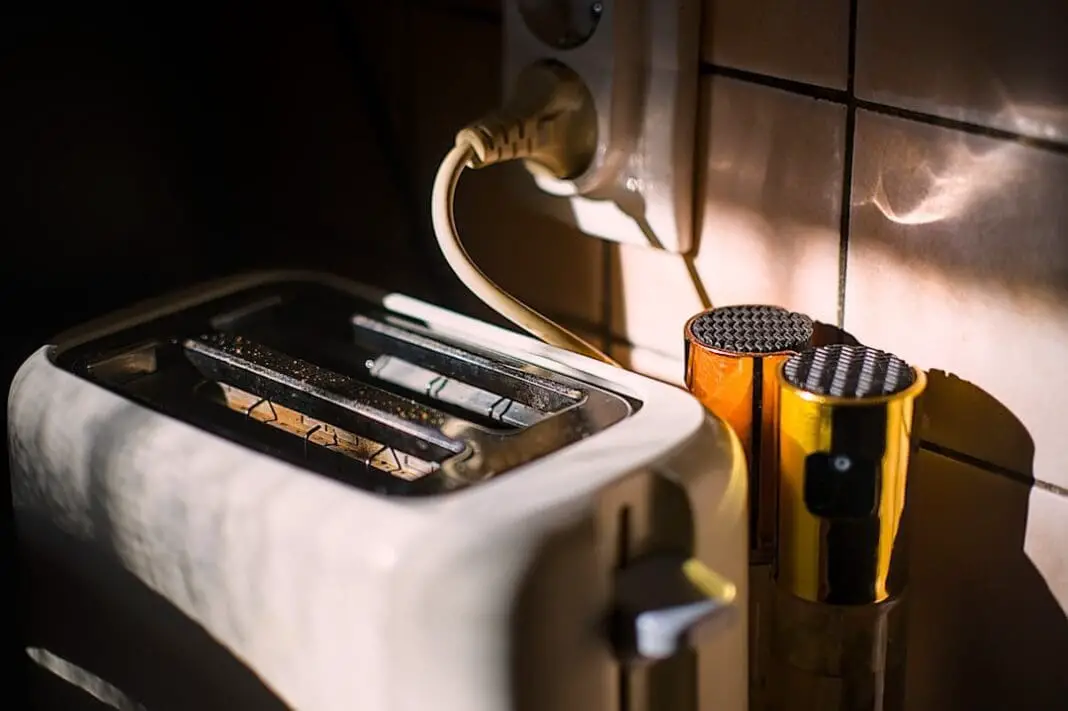
You use your toaster almost every day. Maybe twice a day. It sits on your counter like a boring little appliance that doesn’t deserve a second thought. Pop bread in, push the lever, wait for it to jump. Simple, right?
Except there’s a good chance you’re doing at least two or three things with your toaster that are either wrecking the appliance, creating a fire risk, or just giving you terrible toast. And the worst part? Most of these mistakes feel totally normal. You’ve probably been doing them for years without thinking twice.
Let’s go through the big ones.
Sticking a Fork or Knife in There to Fish Out Stuck Bread
This is the big one, and I know you’ve done it. A piece of bread gets stuck, you grab a butter knife, and you start poking around in the slots to pry it loose. It works, so you keep doing it.
Here’s the thing. Toasters run on anywhere from 800 to 1,500 watts of electricity. Those glowing red wires inside? Those are resistors that stay energized even when the toaster isn’t actively running a cycle, as long as it’s plugged in. Metal conducts electricity. Your fork is metal. You’re holding the fork. You can see where this is going.
About 7 people per year die from sticking metal objects into toasters. It’s not some urban legend your mom made up. The shock itself can cause burns even if it doesn’t kill you. And at a minimum, you’re going to damage the internal heating elements and shorten the life of the appliance.
If bread gets stuck, unplug the toaster, let it cool, and use a wooden utensil or a long paintbrush with a wooden handle to nudge it out. Wood doesn’t conduct electricity. That’s the whole trick.
Shaking It Upside Down to “Clean” It
Hamilton Beach actually did consumer research on this, and what they found is kind of funny. The majority of people flip their toasters upside down and shake them over the trash can to get rid of crumbs. It feels satisfying. Crumbs fall out. Job done.
Except shaking the toaster around like a maraca can land crumbs directly onto the heating elements or jam them into the lifter mechanism. Over time, this makes your toaster work harder, toast unevenly, and increases the chance of something catching fire the next time you use it.
The kicker? Most people don’t even know their toaster has a crumb tray. Almost every toaster sold in the U.S. has a small removable tray at the bottom. It slides right out. You dump the crumbs, slide it back in, and you’re done in about 10 seconds. If you use your toaster daily, empty that tray once a week.
Ignoring the Crumb Tray Entirely
Since we’re on the subject, let’s talk about what happens when you never clean that crumb tray. Or when you don’t even know it exists.
Between 2007 and 2011, toasters and toaster ovens caused roughly 3,000 documented fires in the United States, adding up to over $27 million in property damage. One of the primary causes? Accumulated crumbs igniting when they come in contact with the heating elements. Dried bread crumbs are basically tiny pieces of kindling sitting right next to a heat source. It doesn’t take much.
The fix is embarrassingly simple. Every 5 to 6 uses, slide out the crumb tray, toss the crumbs, and put it back. Every few months, unplug the toaster and do a deeper clean with a soft brush and a dry cloth. Never submerge it in water, never run it under the faucet, never put any part of it in the dishwasher. Just dry cleaning. That’s it.
Turning Your Toaster on Its Side
This one has gone viral more times than I can count. Someone posts a “hack” where you lay the toaster on its side so you can make grilled cheese, melt cheese on bread, or reheat pizza. Even Jamie Oliver has talked about this trick. It looks clever. It feels like you’ve outsmarted the kitchen.
It’s a terrible idea. Toasters are not designed to operate on their side. The heating pattern changes completely, the bread or cheese doesn’t cook evenly, and melted cheese or grease can drip directly onto the heating elements. That’s how you start a fire in your kitchen over a $3 piece of bread.
If you want grilled cheese, use a skillet. If you want to reheat pizza, use a toaster oven or your regular oven. The pop-up toaster was designed for one specific shape of food, and it does that job well. Stop trying to make it do other things.
Toasting Buttered Bread, Cheese, or Fatty Foods
This is related to the sideways hack, but people do this even with the toaster upright. They’ll butter the bread before putting it in the toaster, or toss in a piece of leftover garlic bread, or try to warm up a slice of cold pizza by shoving it into the slot.
Butter, cheese, oil, and any kind of fat will melt and drip down into the toaster’s interior. Best case, you’ve got a greasy mess that’s almost impossible to clean out. Worst case, that grease hits the heating element and you’ve got smoke, flames, or both.
Bacon is another one. I get the appeal. You want crispy bacon and you don’t want to dirty a pan. But the oil from bacon pops and splatters, and when that bacon launches itself out of the toaster at the end of the cycle, it can bring hot grease with it. That’s a burn waiting to happen.
The rule is simple: only put dry bread, bagels, waffles, or similar dry items into a pop-up toaster. Everything else goes in the oven, toaster oven, skillet, or microwave.
Leaving It Plugged In All Day
Your toaster is probably plugged in right now. It’s been plugged in since you moved into your apartment. You don’t think about it because it just sits there doing nothing until you need it.
But a plugged-in toaster is a live electrical appliance, even when it’s not actively toasting. Internal components remain under voltage. If there’s a short circuit from built-up crumbs, a frayed cord, or an internal fault, a plugged-in toaster can overheat on its own. Some toasters have been documented staying on even when the lifter is in the up position, meaning the cycle never actually ends.
Unplugging it after every use takes two seconds. It costs you nothing. And it removes the single easiest way your toaster could cause a problem when you’re not looking.
Not Adjusting the Setting for Round Two
This one isn’t dangerous, but it’s the reason your second batch of toast always comes out darker than the first. And it’s so easy to fix that it’s almost annoying nobody talks about it.
Your first round of toast starts with a cold toaster. By the time you pop in the second batch, the heating elements are already hot, and the toaster body itself is radiating retained warmth. So at the same setting, your second batch cooks faster and more aggressively.
The fix: dial your shade setting down a notch or two for the second (and third) batch. Appliance experts at Hamilton Beach specifically recommend this. It’s one of those things that, once you start doing it, you’ll wonder why your toast used to be so inconsistent.
Loading Bagels the Wrong Way
If you toast bagels, you’ve probably just been dropping the halves in without thinking about which direction they face. But the orientation actually matters.
The heating wires in a toaster get hottest in the center of the slot. So the cut side of your bagel should face inward, toward the middle of the toaster, where it gets the most direct heat. This gives you a nicely browned, slightly crispy cut surface while keeping the outside of the bagel chewy and soft. If you load them backwards, you end up with a burnt crust and a pale, doughy interior. Not what you want.
Shoving In Bread That Doesn’t Fit
Thick bagels, oversized sourdough slices, big hunks of artisan bread. If you have to force it into the slot, it doesn’t belong there. Overstuffing the slots means the bread presses directly against the heating wires, which burns one side while leaving the rest barely warm. It also generates way more crumbs than normal, which end up falling onto the heating elements instead of into the crumb tray.
If your bread is too thick, slice it thinner before toasting. If it’s too wide, trim it down or use a toaster oven instead. Forcing bread into a slot it doesn’t fit is a fast way to ruin both the toast and the toaster.
Putting It in the Wrong Spot on the Counter
Where your toaster sits matters more than you think. A lot of people tuck it right under their kitchen cabinets, against the wall, maybe next to the sink. All of these are bad spots.
Placing a toaster directly under a hanging cabinet creates a heat trap. The rising heat has nowhere to go, which can damage the cabinet over time or, in a worse scenario, ignite it. Keeping it near the sink or on a damp surface introduces water to the equation, which is never good around electricity.
You want at least 8 to 12 inches of clear space above and around your toaster. Put it on a stable, flat, dry surface away from curtains, paper towels, dish towels, and anything plastic. And don’t store things on top of it. People pile mail, napkins, dish rags on top of their toaster all the time. When you forget and hit the lever, that stuff can get hot enough to cause real problems.
Yanking the Cord Instead of the Plug
Quick one, but it matters. When you unplug your toaster (and you should be unplugging it), grab the plug itself and pull it straight out of the outlet. Don’t tug on the cord from a distance. Don’t wrap the cord around the toaster and yank.
Pulling on the cord strips the internal wiring over time, leading to frayed cables, exposed wire, and eventually a short circuit. If you notice burn marks on the plug or cord, or if the cord feels loose in the outlet, it’s time for a new toaster. Don’t keep using one with visible wear on the power cable.
Your toaster is one of the simplest appliances in your kitchen. But simple doesn’t mean foolproof. Most of these mistakes take zero effort to fix once you know about them. Clean the crumb tray, unplug it when you’re done, stop putting butter and cheese in there, and for the love of everything, put the fork down.

