
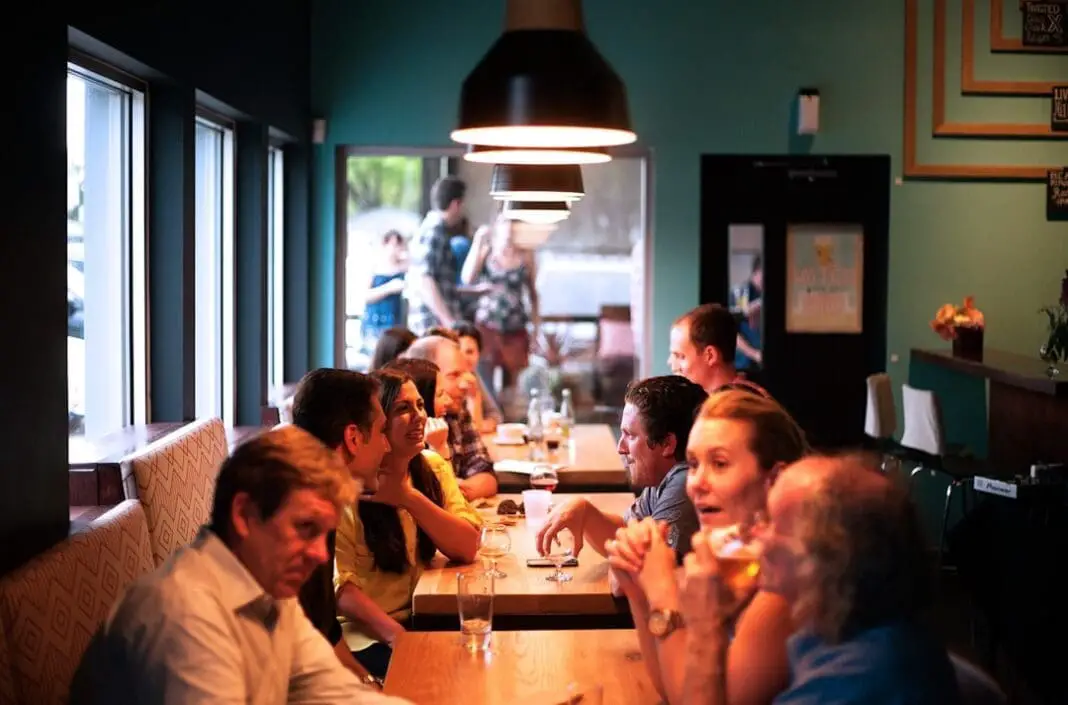
You can dress however you want. You can have the latest iPhone. You can even pretend to know what “cheugy” means. But the second you open your mouth at a restaurant, the jig is up. There are certain phrases and habits that act like a generational GPS pin, and if you were born between 1946 and 1964, you’re probably dropping them without even realizing it.
I’m not saying these things are all bad. Some of them are genuinely charming. Some of them make servers want to clock out early. But all of them will immediately tell everyone within earshot that you remember when gas was 30 cents a gallon. Let’s get into it.
“What Are The Specials Today?”
This one comes out like clockwork, even when the specials board is literally two feet away. For boomers, asking about the specials isn’t really about saving money (though that’s part of it). It’s about the ritual. They want the server to walk over, make eye contact, and describe the roast of the day like it’s a short dramatic performance. It’s a generational habit rooted in the idea that a meal begins with conversation, not just selection.
Younger diners? They’ve already pulled up the menu on their phone, checked the restaurant’s Instagram for food pics, and decided what they’re ordering before they sat down. The idea of waiting for a server to verbally walk you through the options feels like waiting for dial-up internet to connect.
“$22 For A Burger?!”
Look, inflation is real. Everyone knows it. But when a boomer says this out loud, usually loud enough for the tables on either side to hear, it puts the server in an impossible spot. They didn’t set the prices. They can’t defend the restaurant’s business model while also managing six other tables. A study by Vox Media Insights and Research of 2,000 U.S. diners found that boomers considered fair and reasonable prices among their top deciding factors when choosing a restaurant.
Gen Z sees dining out as an optional experience. If the price is too steep, they pick another spot or split a plate. Complaining about the cost to the person bringing your water just poisons the vibe for everyone.
“Sauce On The Side, Please”
This is one of the more innocent tells, but it’s still a tell. Boomers want control over their plate. They don’t want their salad drowned in dressing or their steak smothered in something they didn’t sign up for. It’s a value-driven mindset that comes from decades of dining experience. They know what they like, and they want to decide how much sauce arrives with each bite.
Younger generations might see this as being high-maintenance. Boomers see it as common sense they earned through years of disappointing Caesar salads.
“Do You Have A Paper Menu?”
This is the one that really draws a line in the sand. Post-COVID, a lot of restaurants switched entirely to QR codes. Younger diners barely blink when pulling out their phones to scan one. According to a Datassential 2024 FoodBytes survey, 68% of Gen Z happily scan QR codes at restaurants, compared with just 22% of boomers.
Some boomers don’t just politely ask for a paper menu, though. Some launch into a full editorial about how restaurants are ruining everything with technology nobody asked for. One hospitality writer noted that when the complaint gets framed as a personal attack on modernity, the server essentially becomes a representative of everything changing too fast. That’s an exhausting role nobody applied for.
“I Know The Owner”
This is the phrase that makes restaurant workers’ eyes glaze over the fastest. It usually shows up when someone wants better treatment, quicker service, or special favors. One former restaurant worker called it the culinary equivalent of cutting in line. It implies the customer is a VIP who deserves drinks on the house, expedited orders, or a table that isn’t available.
Gen Z and millennials tend to find this kind of name-dropping deeply cringey. They value authenticity and fairness, and invoking authority rarely builds goodwill. It usually erodes it. If you actually know the owner that well, they’d probably comp your dessert without you having to announce it to the hostess.
“Can I Speak To The Manager?” (But In A Good Way)
Here’s one that catches people off guard. A culinary professional named Adam Kelton, who spent over a decade in luxury hospitality, wrote about how a boomer table would have a wonderful experience and then ask to speak to the manager. The server’s face would go pale every time, thinking they’d messed something up. Plot twist: they just wanted to say how wonderful everything was.
Boomers believe in the chain of command. They think telling the manager directly will benefit the server more than just leaving a good tip. They want credit given officially, on the record. Younger diners? They’ll leave a Yelp review or tag the restaurant on Instagram. Same energy, completely different delivery.
“Make It Like My Mom Used To Make”
Sweet sentiment. Impossible instruction. Unless your mom moonlighted in that specific kitchen, the chef is just guessing. And when the result doesn’t taste like Thanksgiving 1978, everyone ends up disappointed. A much better approach, as one restaurant writer pointed out: describe the outcome you actually want. Something like “I love a crispy-edge pancake that’s not too sweet” gives the kitchen something to work with. “Like my mom’s” gives them nothing but anxiety.
“They Don’t Make It Like They Used To”
This one usually arrives mid-bite, sometimes with a small sigh. For boomers, it’s not necessarily criticism. It’s nostalgia. They grew up with scratch-made family recipes and classic comfort foods that didn’t change from week to week. When you’ve spent 60 years eating meatloaf the same way, even a slightly different version can feel like a personal betrayal.
The problem is that saying this within earshot of the kitchen staff is a pretty effective way to make sure nobody behind that door is rooting for your table anymore.
Calling The Server “Sweetheart” Or “Young Man”
Many boomers still use friendly terms like “darlin’,” “sweetheart,” or “young fella” with restaurant staff. They genuinely mean it as warm and polite. But younger workers, trained to read power dynamics in language, often interpret these as patronizing or outdated. Especially in urban or progressive areas, these comments can land as tone-deaf. Where boomers see charm, millennials and Gen Z see condescension. It’s a clash of etiquette systems where nobody intended harm but somebody still feels smaller.
“That’s Plenty For A Tip”
Out come the reading glasses. Then the careful examination of the bill. Maybe the phone calculator, maybe long division on the back of the receipt. “Let’s see, the bill is $67.43, so 15% would be…” For boomers, tipping isn’t a moving target. It’s a set formula they learned decades ago when 10% was standard and 20% meant you were really going above and beyond.
The numbers back this up. A nationwide 2025 poll of 2,005 Americans found boomers tipping an average of 16.4%, the lowest of any generation. Gen Z leaves 19.3% on average, nudged higher by tablet preset prompts and general awareness of what service workers actually earn. When a boomer declares “that’s plenty” after leaving 15% on the nose, they mean it sincerely. They just happen to be working from a playbook that hasn’t been updated since Reagan was in office.
“Are You Going To Finish That?”
This one startles younger diners every time. But for boomers, it comes from a no-waste mentality that was drilled into them from childhood. Although they didn’t live through the Great Depression themselves, their parents often did, and that attitude carried forward. Food was precious. Nothing edible got thrown away. When a boomer eyes your leftover fries and asks if you’re done, they’re not being rude. They’re honoring a code that’s older than they are.
The Verdict
None of these phrases make someone a bad person. Most of them come from genuinely good intentions, values like thriftiness, friendliness, and respect for tradition. The issue is that restaurants have changed. The people working in them have changed. And what felt perfectly normal in 1985 can read very differently in 2025.
The boomers who ask about specials, show up on time for reservations, and leave before closing time are genuinely appreciated by restaurant staff. The ones who complain about burger prices to the server and linger two hours past the check? Less so. The phrases aren’t the problem. It’s whether you’re aware of how they land in 2025, not just how they sounded in 1975.

