

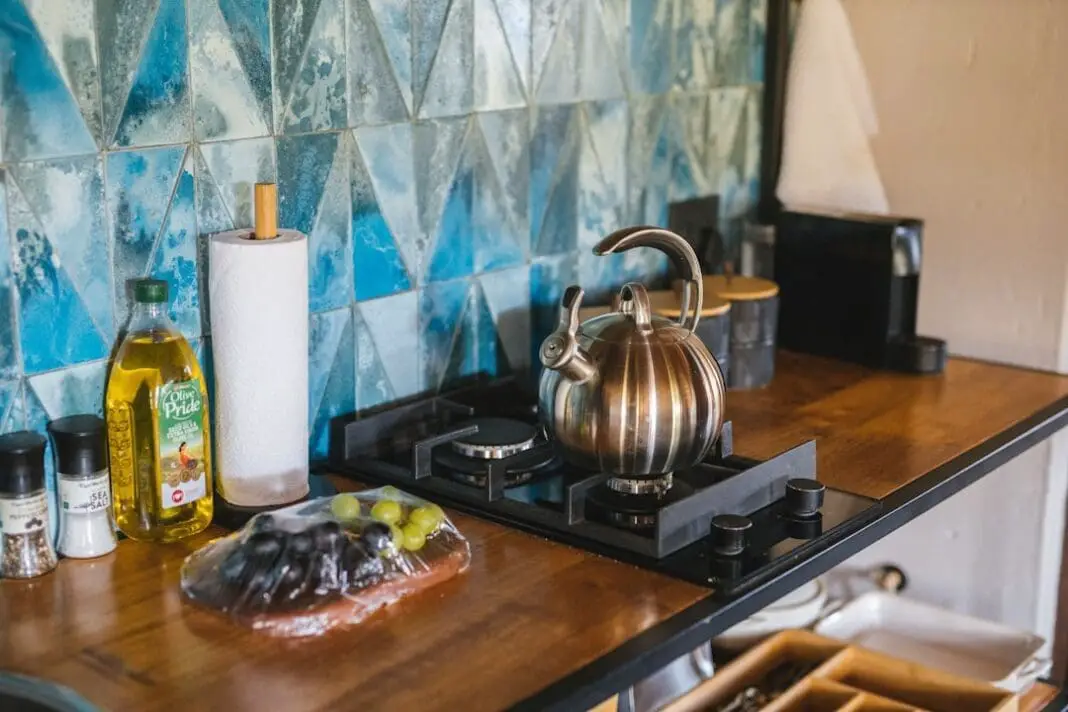
I want you to go look at your kitchen right now. Specifically, look at where your cooking oil is sitting. If it’s on the counter next to your stove, on a shelf directly above your burners, or tucked into that little gap between the range and the fridge where heat collects like a sauna, we need to talk. You’re quietly ruining your oil, and it’s probably been happening for months.
Almost everyone does this. It makes total sense from a convenience standpoint. You’re cooking, you need oil, you reach over six inches and grab the bottle. Every cooking show on TV has a beautiful bottle of olive oil sitting right next to the burners. It looks great on camera. It also happens to be one of the worst places in your entire kitchen to keep it.
The Stove Is Slowly Cooking Your Oil Before You Even Use It
Every time you turn on a burner, heat doesn’t just stay on the pan. It spreads into the surrounding air and warms up everything nearby. That oil bottle sitting a few inches from the flame? It’s getting a low, slow bath of warmth every single time you cook. And here’s the thing that matters: for every 18°F increase in storage temperature, the rate of oxidation roughly doubles. That’s not some dramatic exaggeration. That’s basic chemistry.
Oxidation is what happens when oxygen, heat, and light gang up on the fatty acid molecules in your oil and start breaking them apart. The result is a chain reaction that produces off flavors, weird smells, and a general decline in everything that made the oil worth buying in the first place. Your oil doesn’t have to be sitting on a lit burner to suffer. It just needs consistent, repeated exposure to warmth. And a stovetop area delivers exactly that, meal after meal, day after day.
A Bottle That Should Last a Year Can Go Bad in Three Months
This is the part that actually stings. A bottle of vegetable or canola oil stored properly should last 12 to 18 months unopened, and 6 to 12 months once you crack the seal. Extra virgin olive oil? About 18 to 24 months unopened, 6 to 12 months after opening. Those are pretty generous windows. But if you’re storing that bottle in the heat zone near your stove, you can slash those timelines by more than half. We’re talking oil going rancid in as little as three months.
One long-term study found that when several cooking oils were kept at around 98.6°F (which is honestly not even that hot, it’s body temperature), they went rancid within 6 to 8 months. When those same oils were stored at 59°F, there was barely any rancidity present even after three full years. That’s the difference between a cool pantry and a warm stovetop area. Three years versus six months. Same oil, completely different outcome.
What Rancid Oil Actually Smells and Tastes Like
Here’s the tricky part. Oil doesn’t go bad the way milk or chicken goes bad. There’s no mold, no dramatic color change, no obvious “throw this away” moment. Instead, it creeps. The smell test is your best friend here. Rancid oil smells like old paint, nail polish remover, or waxy crayons. If you’ve ever opened a bottle and caught a whiff of something that reminded you of an art supply closet, that oil was done.
The taste is just as telling. Rancid oil has a sharp, bitter, almost sour quality that ruins food in a way that’s hard to pinpoint if you don’t know what you’re looking for. You might just think a dish turned out “off” or blame a spice that didn’t taste right. But the oil was the culprit the whole time. You can also look for visual clues: a sticky or gummy texture around the bottle opening, murkiness, sediment, or a color that’s gone noticeably darker than when you first bought it.
Not All Oils Go Bad at the Same Speed
If you want to understand why some oils hold up better than others, it comes down to their fat composition. Oils high in polyunsaturated fats are the most vulnerable to oxidation. Think canola, sunflower, corn, soybean, flaxseed, and walnut oil. These have more carbon-carbon double bonds in their molecular structure, which basically means more weak spots for oxygen to attack.
Oils with mostly monounsaturated fats, like olive oil and avocado oil, are more stable. They still degrade with heat and light, but they put up more of a fight. And then you’ve got the tanks of the oil world: saturated fats like coconut oil and ghee. These are the most resistant to oxidation and can sit in a pantry for two to three years unopened without much trouble. That said, even the toughest oils shouldn’t be parked right next to a hot stove.
Flaxseed and walnut oil deserve special mention because they’re absurdly fragile. Once opened, they can go rancid within weeks if left at room temperature. These should always live in the fridge, period. No exceptions. No “I’ll use it up fast enough.” Just put them in the fridge.
Extra Virgin Olive Oil Gets Hit the Hardest
EVOO is basically a fresh fruit juice, not a processed industrial product. It contains delicate phenols and antioxidants that start to break apart with heat exposure. Elena Rostova, an olive oil sommelier and importer based in Brooklyn, has said that the hardest part of her job isn’t sourcing oil from small estates in Tuscany or California. It’s watching American consumers systematically destroy it in their own kitchens.
And she’s right. Good extra virgin olive oil is not cheap. A quality bottle can run $15 to $25 or more. The North American Olive Oil Association identifies four enemies of olive oil: heat, oxygen, light, and age. Storing your bottle next to the stove means you’re exposing it to at least two of those enemies constantly. You’re basically paying premium prices for oil and then fast-tracking it toward tasting like nothing.
Unfiltered or early-harvest extra virgin oils are even more at risk. They have more particulate matter, which decays faster when exposed to warmth. If you spent extra for a fancy bottle with a harvest date on it, treat it accordingly.
Light Is the Other Villain Nobody Talks About
Heat gets all the attention, but light is just as destructive. There’s a process called photo-oxidation that can actually degrade oil faster than regular oxidation. It involves a highly reactive form of oxygen that rapidly attacks unsaturated fatty acids, creating off flavors and breaking down the good stuff in the oil. This is exactly why high-quality oils come in dark or tinted bottles.
If your oil is in a clear glass bottle and sitting on a counter where sunlight hits it through the window, you’re doubling down on destruction. Even harsh kitchen lighting (those bright fluorescents over the sink) can contribute to the problem over time. The easy fix is simple: keep oil in a cabinet. If you bought a beautiful clear bottle you want to display, at least store the bulk of it somewhere dark and only pour small amounts into the display bottle.
The Smart Way to Store Oil (Without Making Cooking Annoying)
Nobody wants to walk across the kitchen to grab oil every time they’re cooking dinner. I get it. Here’s the practical workaround that actually works: keep your main bottle stored in a cool, dark cabinet or pantry. Then pour a small amount into a smaller dispenser bottle that you keep closer to the stove. The key word is “small.” You want enough oil to last a week or two, not three months. By the time heat starts doing damage, you’ve already used it up and refilled from the stash in the cabinet.
A few more tips that take zero effort. Always keep the cap or lid tight. Air exposure accelerates oxidation, and a bottle left open or loosely closed is aging faster than it needs to. If you use a pour spout, get one with a flap closure so air isn’t constantly cycling in and out. Write the date you opened the bottle on a piece of tape and stick it on there. You will not remember when you opened it. Nobody does.
And never, ever pour fresh oil into a bottle that still has old oil in it. Old oil residue acts like a catalyst, accelerating the breakdown of the fresh oil you just added. It’s tempting to top off the bottle. Don’t do it. Use up what’s in there, clean the bottle, then refill.
The Ideal Temperature and Container Situation
The sweet spot for storing most cooking oils is between 57°F and 70°F. That’s cooler than most kitchens, especially in the summer, but a dark cabinet away from the stove and oven will generally stay within range. If your kitchen runs warm, the fridge is always an option for most oils. They’ll cloud up and look weird, but that’s just the molecules slowing down. Bring the bottle back to room temperature and the cloudiness disappears completely.
One exception: olive oil doesn’t love the fridge. Cold can cause it to solidify, and repeated cycles of chilling and warming create condensation inside the bottle, which introduces moisture. Moisture is another one of oil’s enemies. A consistently cool cabinet is better for olive oil than a fridge you’re pulling it in and out of.
As for containers, dark green glass, opaque ceramic, and metal tins are the gold standard. Clear glass is fine only if you keep it in a dark spot. Cheap plastic bottles (the kind a lot of budget canola and vegetable oils come in) aren’t fully airtight. Over time, tiny gaps form in the plastic and let air seep through. If you buy oil in plastic and plan to keep it for a while, transfer it to a glass bottle with a good seal.
It’s a Money Thing, Not Just a Taste Thing
Here’s what it really comes down to. You’re spending money on cooking oil. If it’s decent olive oil, you might be spending real money. Storing it in the worst possible spot in your kitchen means you’re replacing bottles more often, cooking with oil that tastes flat or off, and wondering why your food doesn’t taste as good as it used to. The fix is free. It’s just moving a bottle from one spot to another. Do it today and you’ll taste the difference within a couple of weeks when your “new” bottle actually stays fresh.

