

Look, nobody’s here to tell you that you can never eat fast food again. You’re a grown adult. You’ve earned the right to eat whatever you want. But if you’re over 60 and still hitting the same drive-throughs you did in your 30s, you might want to know which ones are giving you the worst bang for your buck. And I’m not just talking about price. I’m talking about filler ingredients, reused cooking oil, shrinking menus, and food that somehow got worse while getting more expensive.
I went through the data on a bunch of the biggest chains in America and ranked them from the absolute worst offenders to the ones that are at least halfway reasonable. Some of these might surprise you. Others, probably not.
7. Sonic (Dead Last)
Sonic is the chain I’d tell anyone over 60 to avoid completely. Almost every main menu item exceeds 1,000 mg of sodium, and many of their combos push past 2,000 mg in a single sitting. That’s an entire day’s worth before you’ve even thought about dinner. Their Medium Vanilla Shake scores a 55 on an unhealthiness scale that rates fast food items based on fat, sugar, sodium, and calories. A medium Sonic Blast packs over 70 grams of sugar. For context, that’s about two and a half Snickers bars’ worth of sugar in a cup.
On top of all that, Sonic ranked near the bottom of the 2023 American Customer Satisfaction Index. So it’s not even like people are enjoying the experience. You’re paying premium prices at a drive-in for food that nobody seems thrilled about. If you’re on a fixed income (and many retirees are), there are much better ways to spend that money.
6. Jack in the Box
Jack in the Box doesn’t get talked about enough when people discuss the worst fast food in America, and it should. Their five-piece chicken strip meal contains 2,940 mg of sodium. That number is already bad. But then there’s the six-piece chicken strip basket with Parmesan garlic sauce, which hits 4,290 mg of sodium. Let me say that again: four thousand, two hundred and ninety milligrams. In one meal. The American Heart Association’s ideal daily limit is 1,500 mg. This single basket contains nearly three days’ worth.
And if you’re thinking of just getting a shake instead, their large Oreo Cookie Shake has 128 grams of sugar. That’s more than three cans of Coca-Cola. Jack in the Box is the kind of place where even trying to order “light” still puts you in a bad spot. The menu is almost designed to overload you.
5. Smashburger
Smashburger positions itself as a step above your standard fast food burger joint, and they charge accordingly. But their numbers tell a different story. The Double Bacon Stack Smash contains 1,110 calories, 77 grams of total fat, 33 grams of saturated fat (roughly 163% of the daily recommended allowance), and 2,690 mg of sodium. That’s one burger.
Even their “healthiest” option, the Classic Smash, still packs 630 calories, 37 grams of fat, and 1,630 mg of sodium. So there’s really no safe port in this storm. They also recently switched (or plan to switch) to cooking with beef tallow, which might sound like a throwback to the good old days, but the American College of Cardiology has stated that evidence does not support promoting butter or beef tallow as a cooking fat. For older adults watching what they eat, Smashburger isn’t the upgrade it pretends to be.
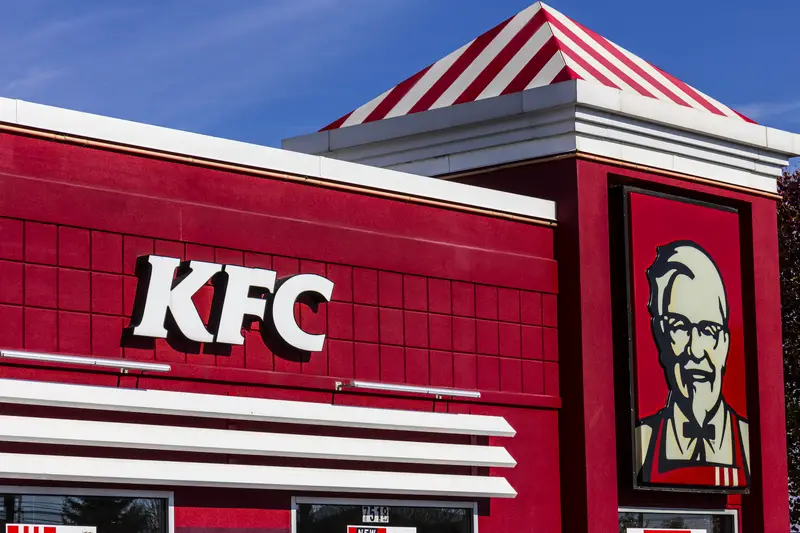
4. KFC
KFC is almost entirely fried food. That’s the brand. That’s the whole thing. But here’s what a lot of people don’t realize: those fryers are using oil that gets reused multiple times. When oil gets heated over and over, it breaks down and creates trans fats. That’s not some fringe theory; it’s basic food science.
People sometimes think they’re making a smarter choice by ordering the grilled chicken at KFC. But one grilled chicken breast still contains about 730 mg of sodium. And those mashed potatoes everyone loves? They contain artificial flavors, artificial colors, and enough sodium between the potatoes and the gravy to make your eyes water. For anyone over 60, KFC’s menu is basically a minefield where even the “better” choices aren’t particularly good.
3. Popeyes
Popeyes makes great-tasting fried chicken. I’ll give them that. But the numbers behind the food are genuinely rough. Their Chicken Sandwich Classic scored a 39 on that same unhealthiness index, making it the least healthy chicken sandwich in the entire study of 24 chains. Their nuggets scored 30 points, with saturated fat levels roughly double what you’d find at other chains.
And here’s the other thing: Popeyes uses beef tallow for all of its fried foods in the U.S. That’s everything. The chicken, the fries, the sides. According to the AHA, high-fat animal products like beef tallow are linked to increased cardiovascular risk. Whatever they’re doing with the seasoning is working from a flavor standpoint, but Popeyes is one of the hardest chains for an older adult to order from without getting hammered by fat and sodium.
2. Taco Bell
Taco Bell is an interesting one because it’s not always the worst on paper. But in practice, it’s a real problem for people over 60. The food is heavily spiced, which a lot of older adults find increasingly hard to deal with because digestive systems naturally get more sensitive with age. The combination of spicy ingredients, high fat, and fried components can create a perfect storm for acid reflux and heartburn.
Many of their menu items contain over 1,000 mg of sodium per serving. And because Taco Bell’s menu encourages people to add extras, customize combos, and stack items, it’s really easy to rack up a sodium count that’s way beyond what you’d expect from “just a taco.” There’s also very little on the menu that qualifies as minimally processed. Almost everything is ultra-processed, from the shells to the meat to the cheese sauce.
1. Five Guys (Still Bad, But the “Best” of the Worst)
Wait, Five Guys at the top? Hear me out. Five Guys actually has the single unhealthiest cheeseburger in the country, with a 50-point unhealthiness score, and their fries scored 28, the worst in their category. So why are they ranked “best” on this list? Because unlike the other chains, Five Guys at least uses fresh ingredients. No freezers, no heat lamps, no mystery meat.
The portions are absurdly large, and that’s really the main issue. If you order a Little Hamburger instead of a regular, skip the fries (their small is really a medium anywhere else), and don’t add cheese, you can actually get something resembling a reasonable meal. You can’t really do that at Sonic or Jack in the Box, where even the small options are loaded. Five Guys is still a bad choice for regular dining, but at least you have some control over what you’re getting.
The Chains That Aren’t Getting Better
One thing that stood out in the research is that fast food chains aren’t trending in a good direction. McDonald’s, for example, has actually cut several of its lighter menu options since the pandemic, saying they needed to streamline operations. The Egg White Delight McMuffin and some salads are gone. So even the chains that used to offer a few reasonable items are pulling them.
Meanwhile, a bunch of chains are switching to beef tallow for frying because it sounds “traditional” and plays well on social media. Steak ‘n Shake fully transitioned to 100% beef tallow by March 2025. Buffalo Wild Wings uses beef shortening for its wings. This trend looks like it’s gaining steam, and the actual science does not support it as a positive change for anyone watching their saturated fat intake.
Why This Matters More After 60
The 2025-2030 Dietary Guidelines for Americans specifically address older adults as a separate group with unique needs. Women over 60 need between 1,600 and 2,200 calories a day. Men need 2,000 to 2,600. That’s a tight window, and a single fast food combo can eat up more than half of it in one shot while providing almost nothing your body actually needs.
Your body processes food differently as you age. Your metabolism slows. Your kidneys and liver don’t clear out excess sodium as efficiently. Your liver processes fats less efficiently too, which means the same greasy burger you ate at 35 hits different at 65. It’s not about being paranoid. It’s about knowing that a meal you used to shake off without thinking might now be working against you in ways you don’t immediately feel.
The Financial Angle Nobody Talks About
Here’s the part that really gets me. Food insecurity among older adults has been climbing for 20 years. According to USDA data, 9.3% of U.S. households with an adult aged 65 or older experienced food insecurity in 2023. That financial pressure pushes people toward fast food because it feels cheap. But is it? A combo meal at most of these chains runs $10 to $14 now. That’s not cheap anymore.
For that same money, you could buy a rotisserie chicken at the grocery store, a bag of frozen vegetables, and a box of rice. That’s three meals instead of one. The idea that fast food is a budget-friendly option for seniors on fixed incomes just doesn’t hold up when you actually do the math. You’re paying more per meal for food that’s giving you less of what you need.
None of this means you can never grab a burger again. But if you’re making it a regular habit, especially at the chains on this list, it might be worth rethinking that routine. The food isn’t what it used to be, and honestly, neither are our bodies. That’s not a sad thing. It’s just a real one.

