

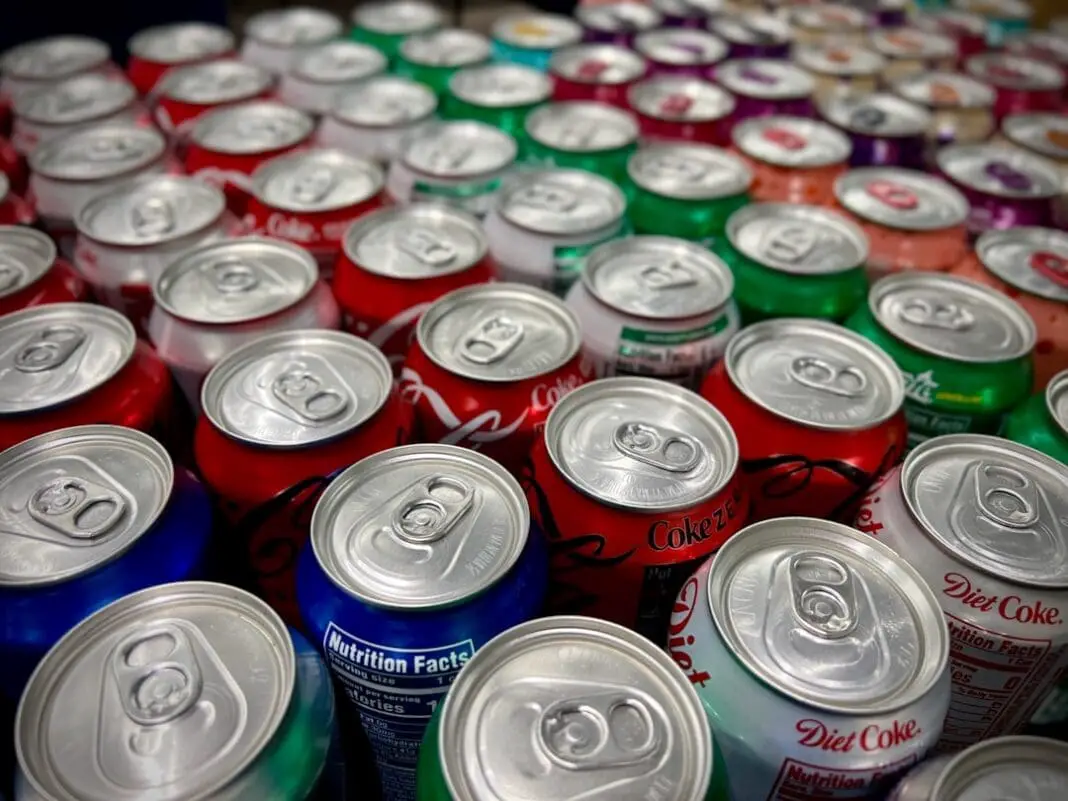
You crack open a can of soda and expect fizz, sweetness, maybe a little caffeine buzz. What you don’t expect is metal shards, ammonia, rodent droppings, or a mysterious chemical smell that sends dozens of schoolchildren to the hospital. But all of those things have actually happened. The history of soda recalls is stranger and more disturbing than most people realize, and some of these incidents affected tens of millions of products at a time. Here are the biggest ones that ever went down.
The 1972 Coca-Cola Recall That Pulled 3.2 Million Cans
This is one of the earliest massive soda recalls in American history, and it happened because of a busted oven. Back in 1972, a Reynolds Metals plant in New Jersey was supplying can lids to Coca-Cola. Those lids were coated with a vinyl epoxy resin that was carried by a solvent. Under normal conditions, the solvent was supposed to evaporate during baking. But the automatic oven at the plant malfunctioned, which meant the solvent never fully burned off. The result? 3.2 million cans of Coca-Cola, Sprite, and Fanta hit store shelves with lids that reeked of petroleum. Consumers who popped one open were greeted by a smell that had no business being anywhere near a beverage. This recall remains one of the largest Coca-Cola has ever faced in the United States, and it happened more than 50 years ago. The fact that a temperature glitch at a supplier’s factory could taint millions of cans shows just how fragile the supply chain can be.
Belgium 1999: 30 Million Cans and an Entire Country’s Ban
If you want to talk about the single biggest Coca-Cola recall in history, you have to talk about Belgium in the summer of 1999. It started on June 8 when 33 children between the ages of 11 and 13 at a school in Bornem, Brussels, started complaining of headaches, dizziness, and nausea. The common thread? They had all been drinking Coke right before they got sick. Within days, kids at six different schools across Belgium were reporting similar symptoms, and many were hospitalized. Most described an unusual smell and an off taste in the soda.
On June 13, Coca-Cola recalled over 15 million containers after the Belgian Health Ministry outright banned the sale of all Coca-Cola products. That number eventually ballooned to approximately 30 million cans and bottles, making it the largest product recall in Coca-Cola’s then 113-year history. For the first time ever, every single Coca-Cola product in an entire country was pulled from shelves. France, the Netherlands, and Luxembourg followed with their own bans the same week. More than 240 people in Belgium and France got sick, mostly schoolchildren. Investigations later revealed two separate problems. Products from the Antwerp plant had a strange odor caused by fungicide that accidentally ended up on the outside of the cans. Meanwhile, cans from the Dunkirk plant were contaminated with a wood preservative during shipping. Sub-standard carbonation gas also contributed to the off taste. Coca-Cola took a $60 million financial hit, and their European reputation was in shambles for years. There were even allegations the company had prior information about the illnesses but failed to disclose it.
The 2006 Japan Recall That Snowballed Into 2.4 Million Bottles
Japan got its own version of a Coke disaster in 2006. It started small, relatively speaking, with about 500,000 bottles from six brands (including Fanta, Coca-Cola, and Qoo) being pulled after they were found to be contaminated with large amounts of iron powder. The source was a faulty piece of equipment in the manufacturing process that was injecting iron particles into the drinks. That’s already bad enough. But a few days later, the scope of the problem turned out to be way bigger than anyone initially thought. The recall expanded to 2.4 million bottles across 27 different drink products in 13 regions. What started as a seemingly contained issue turned into a full-blown crisis because the contaminated equipment had been running for long enough to affect a huge range of products across a wide area.
Austria 2024: 28 Million Bottles Pulled Across Two Countries
October 2024 saw one of the largest soda recalls in recent European history. Coca-Cola HBC announced it was pulling approximately 28 million sodas from Austrian stores. All of the affected products were in half-liter plastic bottles, and they included Coke, Fanta, Sprite, and MezzoMix in every flavor variation under those brands (yes, even Fanta Lemon Zero and Coca-Cola Zero Sugar Zero Caffeine). The problem? A faulty factory sieve that may have allowed metal fragments to get into some of the drinks during production. Coca-Cola acknowledged that the actual number of contaminated products was probably very small, but because they couldn’t rule out which specific batches were affected, they recalled everything that could possibly be compromised. The recall then expanded to Germany since some of those batches may have crossed the border. Consumers were told to return products for a refund, even without a receipt.
The 1998 Indianapolis Ammonia Scare
In 1998, thousands of caffeine-free Coke Classic cans distributed across Indianapolis had to be recalled because of potential ammonia contamination. This one is particularly unsettling because of how the contamination happened. Ammonia is actually used during the carbonation process in soda manufacturing because of its efficiency and ability to withstand degradation. The refrigeration equipment that gives the drinks their fizz had malfunctioned, and that malfunction allowed ammonia to leak into the carbonation lines, which meant it could have made its way into entire batches. The idea that a routine piece of equipment failing could contaminate an entire production run is the kind of thing that makes you pause before your next sip.
The 1986 Pepsi Cyanide Threat
This one sounds like it came out of a thriller novel. In 1986, an anonymous man called 911 and told police he had contaminated Pepsi bottles with cyanide. He even gave a specific lot number. The problem was that his description of “Pepsi bottles” was vague, so authorities had to match the lot number to figure out exactly which products might be at risk. The closest match implicated 66,000 bottles of Lemon Lime Slice, a now-discontinued PepsiCo product. Of the 11,500 cases involved in the recall, about 7,500 hadn’t been distributed yet. But roughly 4,000 cases had already made it to stores across the New York City area. Since a couple of weeks had already passed, the company figured most of those bottles had probably been consumed. PepsiCo was pretty confident no actual tampering had occurred, but with lives potentially at stake, they had no choice but to pull everything. Charles Thomas, then VP of Pepsi-Cola, told the New York Times that “about 7,000 of the 11,000 cases are under lock and key.”
Pepsi’s Labeling Mix-Ups: Sugar Where There Shouldn’t Be Sugar
Not every soda recall involves foreign objects or mystery chemicals. Sometimes the problem is simpler but still serious. PepsiCo has had a recurring issue with mislabeled products. In one incident, Jacksonville-based Pepsi Beverages Company shipped full-sugar soda in cans that were labeled as zero sugar. That same kind of error happened again in July 2024, when 2,801 twelve-packs of Mug Root Beer had to be pulled from retailers in Texas, Louisiana, Oklahoma, Mississippi, New Mexico, and other states because zero-sugar labeled cans actually contained full-sugar soda. And barely two weeks before that, over 200 cases of Schweppes Zero Sugar Ginger Ale had been pulled from shelves because they were found to contain full sugar instead. Getting the label wrong on a soda sounds minor compared to metal shards, but for people managing blood sugar levels, that kind of error is a real problem.
Trader Joe’s Exploding Ginger Brew in 2015
In 2015, Trader Joe’s had to recall its Triple Ginger Brew soda because customers were finding that the bottles were literally exploding. And these weren’t plastic bottles. They were glass. Over-carbonation had caused tremendous pressure to build up inside the bottles, turning them into little glass grenades sitting on kitchen counters and in refrigerators. Customers reported bottles blowing their caps or shattering entirely, which is about as far from a pleasant soda experience as you can get.
The Gold Star Distribution Warehouse Disaster, December 2025
This one is fresh and it is deeply gross. On December 26, 2025, the FDA announced a large-scale recall involving hundreds of grocery items from major brands including Coke, Pepsi, Hershey’s, and many others. The cause? A storage facility run by Gold Star Distribution, Inc. in Minneapolis, Minnesota was found to be operating under seriously unsanitary conditions. We’re talking rodent droppings, rodent urine, and bird droppings in areas where food and beverages were being stored. More than 10 major soda brands were caught up in the recall, including select products from Pepsi, Coke, Diet Coke, Sprite, Canada Dry, A&W, 7Up, Mountain Dew, Dr Pepper, Sunkist, and Sun Drop. The recall covered products distributed between August 1 and November 24, 2025, and many of them were sold through convenience stores. Nearly 2,000 total products were recalled across the facility. The FDA classified it as Class II.
The October 2025 Texas Coca-Cola Recall
Rounding out recent events, Coca-Cola Southwest Beverages initiated a recall on October 3, 2025, pulling over 70,000 products after metal fragments were discovered in canned beverages. The affected products were Coca-Cola, Coca-Cola Zero Sugar, and Sprite, all in 12-ounce cans. The recall was limited to the McAllen/Rio Grande Valley and San Antonio areas of Texas. The FDA elevated the recall to Class II classification on October 20. Coca-Cola Southwest Beverages is actually the company’s largest US bottler, and reports suggested the recall could potentially extend beyond Texas as the investigation continued. By October 10, all affected products had been removed from store shelves. Customers who purchased them can return them for an exchange or refund, or contact Coca-Cola’s Consumer Interaction Center at (800) 438-2653.
The soda industry moves billions of cans and bottles every year, and when something goes wrong in that process, it goes wrong at a staggering scale. Metal fragments, ammonia leaks, exploding bottles, cyanide threats, fungicide on can exteriors, rodent infested warehouses. These recalls span decades and continents, and they show that even the most trusted brands are only one equipment malfunction or one dirty warehouse away from a crisis. The next time you hear about a soda recall, it’s probably worth checking your fridge.

