

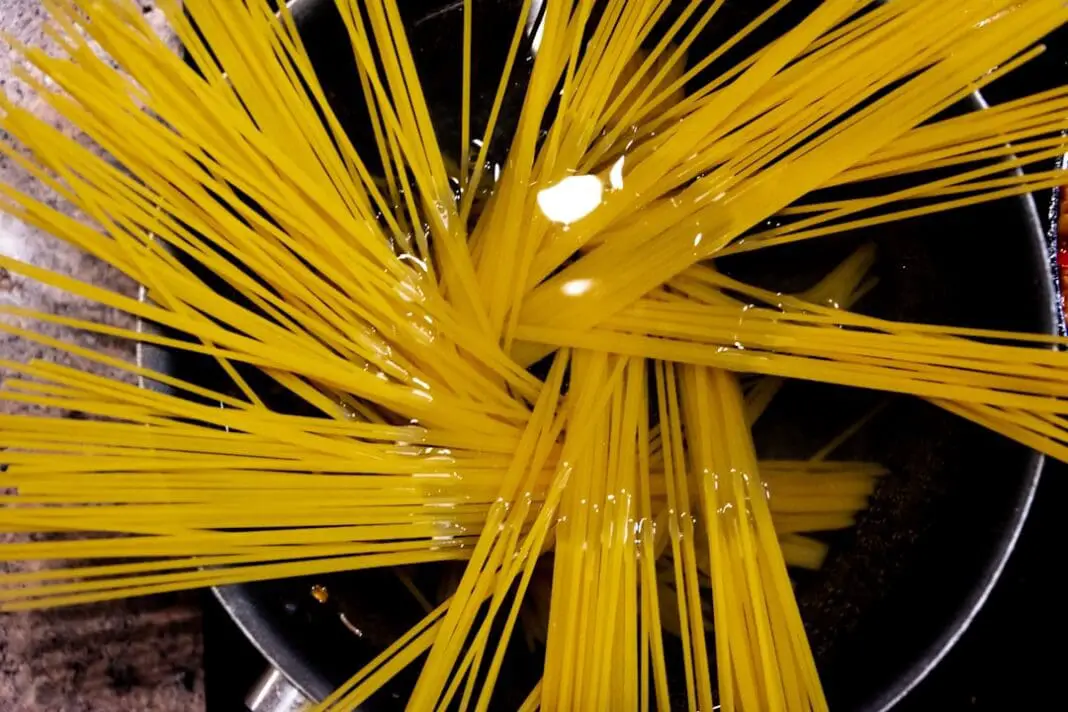
Stir your pasta the second it hits the boiling water. That is the one thing, the fix nobody wants to believe is that easy. Grab a spoon or a pair of tongs and keep the noodles moving for the first minute or two, and the clumping problem you have fought for years mostly disappears.
Dry pasta releases starch the moment it touches hot water. That sticky starch is what glues one noodle to another, and if two pieces are pressed together while it happens, they cook into a fused lump you cannot pull apart later. Moving the pasta around keeps every piece separate until the surface firms up.
Danny Palumbo, a food writer who spent years cooking in Italian American red sauce joints, calls stirring the number-one line of defense against sticky pasta. Get the stirring right and the other stuff you worry about, water amount, brand, salt, boiling versus not quite boiling, matters a lot less than you think.
Why the First Two Minutes Decide Everything
The critical window is short. Cooking experts point to the first one to two minutes as the make-or-break moment right after the pasta goes in. That is when the surface of each noodle turns tacky and the strands want to weld together. Miss that window and you have already lost.
Once the starch on the surface dissolves into the water, the stickiness settles down on its own. You do not have to stand there stirring like a maniac for the full cook time. After those first couple of minutes, a gentle stir every two or three minutes is plenty to keep things loose.
Skip the Oil No Matter Who Told You To Add It
Pouring olive oil into the pot is the biggest waste in home cooking, and plenty of famous TV cooks have pushed it for years. Barilla America’s executive chef, Lorenzo Boni, disagrees flat out. He told Mashed in 2022 that oily pasta has a harder time gripping the sauce, and most of the oil gets drained away anyway.
Oil floats on top of the water. Most of it goes down the drain, and what is left reaches the noodles as you pour the pot into the colander, coating them in a slick film. The result is shiny pasta that repels sauce, so your marinara slides right off and pools at the bottom of the bowl while the noodles sit there naked. You want sauce and pasta to practically become one thing, and oil fights that.
The only time oil in the water makes any sense is if you are not saucing the pasta at all. For basically every dinner you actually make, leave the bottle on the counter.
Salt the Water Before the Pasta Goes In
Salt is about flavor, and that is reason enough. It seasons the noodle itself instead of sitting on top the way salt from the shaker does. Barilla puts the ratio at one tablespoon plus one teaspoon of salt per gallon of water. The water should taste clearly seasoned.
Add the salt once the water is at a rolling boil, right before the pasta goes in. Salt and stirring do the heavy lifting here.
A Big Pot Helps But Technique Wins
More water gives the pasta room to move and keeps the starch from piling up into a gummy layer. The usual advice is 4 to 6 quarts of water per pound of pasta. Cram a pound of spaghetti into a small saucepan and the concentrated starch will coat every strand in glue no matter how careful you are.
That said, water volume is not the boss here. A smaller pot works fine if you stir often, and it actually gives you more concentrated cooking water for later. Palumbo puts it plainly: sticking is a technique problem, not an ingredient problem. Use the biggest pot you own if you have it, but do not skip stirring because you think a giant pot saved you.
For long noodles like spaghetti or linguine, resist snapping them in half to fit. Set one end in the water and use tongs or a spoon to press the rest down as it softens, then start your circular stir once they are fully in.
Never Let Cooked Pasta Sit and Wait
The stove is only half the battle. Pasta that clumped after it was perfect in the pot got ruined in the colander. Drained noodles cool fast, the surface water evaporates, and the leftover starch hardens into a film that welds the strands together. It does not take long.
The fix is to marry the pasta to the sauce right away. Have your sauce hot and ready in a skillet before the pasta finishes, then move the drained noodles straight into it. That means timing the sauce first. Boni says it should be the other way around from how most people do it: sauce ready, then pasta cooked, so they combine the second the noodles leave the water.
Do not rinse hot pasta either. Running cold water over it washes off the very starch that helps sauce cling. Save the rinse for cold pasta salad and nothing else.
Save a Cup of That Cloudy Water
Before you drain, scoop out about a cup of the starchy cooking water. This stuff is worth keeping. Splashed into your sauce a tablespoon at a time, it thickens and emulsifies everything so the sauce turns glossy and grabs onto the noodles instead of sliding off.
It is also your insurance policy. If the pasta looks tacky while you toss it, a splash of the hot salty water loosens the surface instantly and brings it back. Keep the mug next to the stove until the dish is plated.
Frequently Asked Questions
Q: Do I really need to stir the whole time the pasta cooks?
A: No. The first one to two minutes are what matter most, because that is when the wet starch makes the noodles want to stick together. After that, a stir every couple of minutes keeps things loose. Constant stirring the whole time can actually break up delicate noodles.
Q: Will adding oil to the water stop the sticking?
A: Not in a way that helps you. Oil floats on top, so most of it goes down the drain and what is left coats the pasta as you drain it, leaving a slick film that keeps sauce from clinging. You get shiny noodles and sauce that slides to the bottom of the bowl. Stir instead.
Q: My pasta always clumps in the colander before I sauce it. What am I doing wrong?
A: You are letting it sit. Have your sauce hot and ready before the pasta finishes, then move the drained noodles straight into the pan. If they do wait even briefly, a splash of reserved pasta water brings them back.
Q: How much salt should I add to the water?
A: Barilla puts it at one tablespoon plus one teaspoon of salt per gallon of water. The water should taste clearly seasoned. Add it once the water is at a rolling boil, right before the pasta goes in.
No-Stick Garlic Butter Parmesan Spaghetti
Course: DinnerCuisine: Italian4
servings10
minutes20
minutes470
kcalA fast weeknight spaghetti that stays loose and silky because you stir it right and finish it in the pan.
Ingredients
1 pound spaghetti
1 tablespoon coarse salt, for the water
6 tablespoons unsalted butter
6 cloves garlic, minced
1/2 teaspoon red pepper flakes
1 cup finely grated Parmesan
1 cup reserved pasta cooking water
1/4 cup fresh parsley, chopped
Freshly ground black pepper, to taste
Directions
- Fill your largest pot with 4 to 6 quarts of water and bring it to a hard rolling boil. Add the coarse salt and let the water return to a full boil before the pasta goes in. The water should taste clearly seasoned.
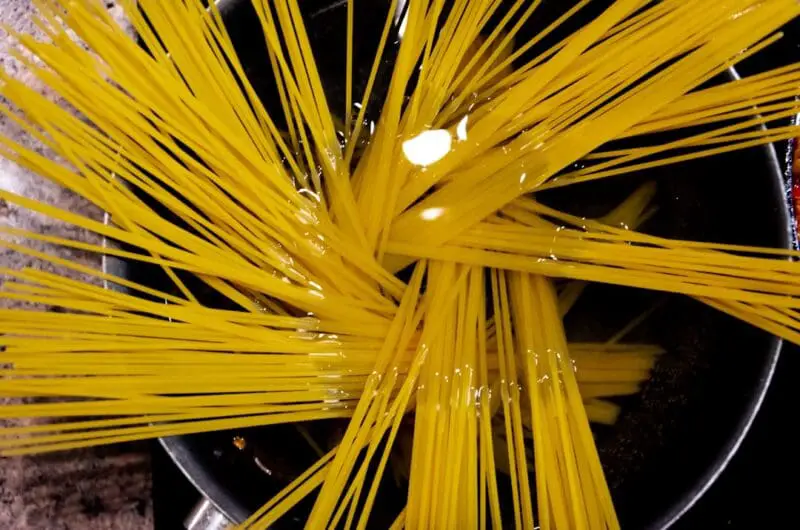
- Add the spaghetti and immediately start stirring with tongs in a slow circular motion. Keep the strands moving constantly for the first one to two minutes, which is the window when the pasta wants to fuse together. This single habit is what stops the clumping.
- Cook the spaghetti to one or two minutes short of the package al dente time, giving it a gentle stir every couple of minutes. It should still have a firm bite because it will finish cooking in the sauce. Do not walk away for ten minutes.
- While the pasta cooks, melt the butter in a large skillet over medium heat. Add the minced garlic and red pepper flakes and cook gently for about two minutes, until fragrant and just barely golden. Keep the heat low enough that the garlic does not brown too fast.
- Right before draining, scoop out one full cup of the starchy pasta water and set it beside the stove. This cloudy water is what makes the sauce cling and rescues the pasta if it ever looks tacky. Do not skip this step.
- Drain the spaghetti and move it straight into the skillet with the garlic butter. Do not let it sit in the colander, since even thirty seconds of waiting lets the surface starch harden and glue the strands. Work fast here.
- Pour in a splash of the reserved pasta water and toss the noodles with tongs. Add the Parmesan a handful at a time, tossing constantly, and add more pasta water a tablespoon at a time until the sauce turns glossy and coats every strand. This should take about a minute over medium heat.
- Kill the heat and toss in the chopped parsley and a few grinds of black pepper. Taste and adjust, then serve right away in warm bowls. Pasta this loose and silky waits for no one, so get it to the table fast.
Notes
- If the pasta looks tacky at any point while tossing, add a splash of the hot reserved water and it will loosen right up.
- Grate the Parmesan yourself from a block. The pre-shredded bags are coated to keep them from clumping and they melt into a grainy mess.
- No skillet big enough? Use your pasta pot after draining. Just do not let the noodles sit bare while you find one.

