

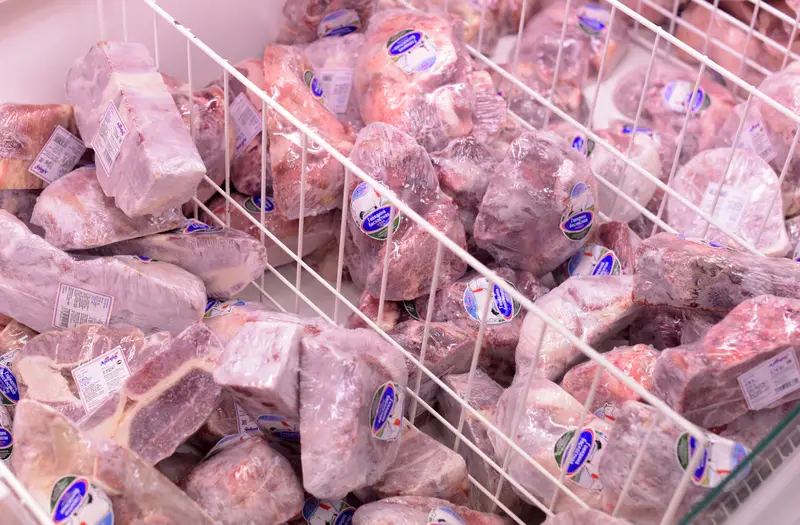
That mystery brick of ground beef shoved in the back of your freezer, the one frosted over and dated sometime last spring, is probably fine. Not just fine in a “eat it and hope” way. Fine in a way the federal government will back you up on. Most of us treat freezer dates like ticking bombs, tossing perfectly good meat because a chart said so. So let me clear up what those numbers actually mean, because the real answer surprised me too.
The Freezer Basically Stops the Clock
A steak stored at a steady 0 degrees Fahrenheit will be safe to eat next year, five years from now, or a decade later. That isn’t a loophole or an old kitchen myth. The USDA states plainly that food kept constantly at 0 degrees is always safe. Bacteria like salmonella and E. coli don’t die in the cold, but they go completely dormant. They can’t grow, spread, or make you sick while they’re frozen solid. They only wake back up once the meat thaws. As long as your freezer holds that temperature, the meat inside is locked in a kind of suspended animation. The clock that runs on your fridge shelf, the one that gives raw chicken about three days, simply stops.
Safe and Tasty Are Two Very Different Things
Here’s where almost everybody gets tripped up. Those storage charts you see, the ones saying ground beef lasts four months and a whole chicken lasts a year, have nothing to do with safety. They’re about quality. Taste, texture, juiciness. The Old Farmer’s Almanac puts it bluntly: frozen food technically lasts forever at 0 degrees, and the only issue is how good it tastes. So when a package says “use within four months,” read that as “this will taste its best if you eat it within four months,” not “this becomes dangerous after four months.” The USDA’s Meat and Poultry Hotline gets thousands of calls a year from people confused about this exact thing. You’re not alone if the dates have always stressed you out.
How Long Each Cut Actually Holds Up
If you want your meat to taste like it did going in, these are the windows worth remembering. Uncooked steaks, chops, and roasts hold their quality for four to twelve months, and that covers beef, veal, lamb and pork alike. A whole raw chicken can go a full year. Fresh ground pork should get used within three to four months, and ground beef starts sliding after three to four. Fish is the shortest fuse of the bunch, with fatty types like salmon fading after just two or three months and leaner fish lasting six to eight. Bacon is the diva here at about a month, with sausage and lunch meats close behind at one to two. None of it turns dangerous past those marks. It just stops tasting like something you’d want to serve on purpose.
Why Old Frozen Meat Tastes Worse
Two things slowly wreck a frozen steak, and neither has anything to do with germs. First, water expands when it freezes. Those ice crystals push against the muscle fibers and bust up the meat’s ability to hold moisture. The longer it sits, the more a thawed steak loses its juiciness. Second, and this is the sneaky one, fat goes rancid over time. The culprit is air. Oxygen slowly oxidizes the fat, which is exactly what turning rancid means, and it is why a badly wrapped package goes off long before a well wrapped one. That’s exactly why fatty stuff like ground beef and sausage taste off faster than a lean whole cut. More fat means more surface for that slow breakdown to attack.
Freezer Burn Isn’t the Monster You Think
Those grayish, dried out, whitish patches on your frozen meat make people panic and reach for the trash. Slow down. Freezer burn is a quality problem, not a safety one. It happens when air reaches the meat’s surface and pulls moisture out, leaving dry, leathery, dull spots. Meat that’s been kept at 0 degrees with only cosmetic freezer burn is fine to cook and eat. Trim the worst patches, and the rest can still make a solid meal. Real spoilage looks and smells completely different, and it only shows up after thawing. A sour or rancid smell, a sticky or slimy feel, or mold means you toss it. The rainbow sheen you sometimes see on sliced beef is not on that list. That is just light bouncing off the cut muscle fibers, and the USDA says it has nothing to do with quality or safety. Dry gray edges with no funky odor? That’s just freezer burn doing its cosmetic thing.
Wrap It Right or Pay for It Later
The single biggest thing standing between you and freezer burn is how you wrap your meat. That flimsy plastic tray and thin film from the store? It lets air right through, which is why quality slips even before the chart says it should. Vacuum sealing is the gold standard because it sucks out nearly all the air. A properly vacuum sealed steak holds its quality far longer than one left in store film, though the year-plus numbers you see quoted come from equipment makers rather than from USDA. No vacuum sealer? Double wrap it. Tight plastic wrap, then a freezer bag or freezer paper. The one official number worth remembering is the FDA’s: overwrap anything you plan to keep longer than two months. Pat the meat dry first, squeeze out every bit of air, and label it with the cut and the full date, not just the year. Then eat the oldest stuff first.
The Thawing Rule People Break Constantly
You did everything right up to now, then you undo it all by thawing meat on the counter. Don’t. Once meat sits at room temperature for more than two hours (or just one hour when it’s above 90 degrees), those dormant bacteria wake up and start multiplying on the warm outer layer while the center is still a frozen rock. There are three safe ways to thaw, and the USDA backs all three. In the fridge, which is slowest but works for anything. In cold water, changing the water often, which is faster. Or in the microwave, which is fastest but means you have to cook it right away. You can also skip thawing and cook straight from frozen. It takes about half again as long, you’ll want a thermometer to be sure it’s done through, and never do it in a slow cooker, which warms up too slowly to be safe. The counter is the one method to skip every single time.
Can You Refreeze It? Yes, With a Catch
Thawed too much and can’t cook it all tonight? Good news, you don’t have to throw it out. If meat thawed in the refrigerator and stayed cold, you can safely refreeze it raw without cooking it first. The catch is quality. Every thaw and refreeze cycle loses a little moisture, so a steak you’ve frozen twice will be a bit drier than one you froze once. It’s still perfectly safe to eat, it just won’t be quite as juicy. The rule only applies to meat thawed in the fridge, though. If you thawed it in cold water or the microwave, cook it first and freeze the cooked meat instead. And if it sat out on the counter for more than two hours, or more than one hour on a day above 90 degrees, throw it out. Cooking does not rescue that one, because some bacteria leave behind toxins that survive the heat.
What Happens When the Power Goes Out
A storm knocks out the power and your first thought is the freezer full of steaks. Relax, and above all, keep that door shut. A full freezer holds its temperature for about 48 hours during an outage, and a half-full one for about 24. Every time you open the door to peek, you let cold air escape and warm air rush in, which burns through your buffer fast. A packed freezer actually helps you here, since all that frozen mass works like a giant ice pack. If the power comes back and the meat still has ice crystals or feels refrigerator-cold, it’s fine to keep or refreeze. Anything that has been above 40 degrees for more than two hours goes in the bin, even if it looks and smells fine.
So What Should You Actually Do?
Stop tossing meat just because a date passed. If it’s been frozen solid at 0 degrees this whole time, it’s safe, full stop. Use the storage windows as taste targets, not expiration deadlines. Wrap things tight, label them with real dates, eat the oldest first, and thaw in the fridge or cold water. Trust your nose and eyes after thawing, since sour smells and slimy surfaces are the real warning signs. Freezing is one of the best tricks a budget shopper has for stocking up on sales and wasting nothing. Now you can actually use it without second-guessing every frosty package in the back.

