

Go dig through your fridge and pantry right now. I bet you’ll find at least three things you would toss without a second thought, just because the little date stamped on the side already came and went. Most of us treat that date like a hard line. Eat it before, you’re good. Eat it after, you’re rolling the dice. Turns out that whole idea is mostly made up. Americans throw out an absurd amount of food over these dates, and one 2025 survey found that 88% of people chuck food near the printed date at least once in a while. The average shopper tosses about $1,300 worth of groceries a year. A big chunk of that food was perfectly fine.
There’s No Rulebook Behind Those Dates
Here’s the part that catches people off guard. There is no federal law that says food has to carry an expiration date at all. The one exception is infant formula. Everything else? The company that made it picks the date, using its own methods, on its own schedule. There are around 50 different date phrases floating around on packages in this country, and not one of them is regulated by the feds. Stores aren’t even required to pull expired stuff off the shelf in most states. The whole system started back in the 1970s so grocery workers could keep track of what to rotate. It was never really built for you.
Sell By, Best By, and Use By Are All Different Things
People use these three phrases like they mean the same thing. They don’t. “Sell by” is a note for the store, telling the manager when to take a product off the shelf. It has nothing to do with whether you can eat it. “Best by” is the maker’s guess at when the food hits its best quality. “Use by” is the last day they suggest for the best taste and texture, and even that only signals safety on infant formula. Nearly half of American adults mix these up. That confusion is exactly how a fridge full of good food ends up in the garbage.
Honey Might Outlive You
This one is genuinely wild. Honey does not really go bad. Archaeologists have pulled pots of honey out of ancient Egyptian tombs, thousands of years old, and the stuff was still edible. Between its low moisture and its natural chemistry, there’s basically nothing inside for bacteria to grab onto. If your honey turns dark or gets thick and grainy over time, that’s normal. Set the jar in a bowl of warm water and it loosens right back up. The date on that bottle is close to meaningless.
Vinegar Doesn’t Quit Either
Same deal with vinegar. Balsamic, apple cider, plain white, it doesn’t matter. Vinegar is so acidic that it holds up more or less forever. Over the years it might get a little cloudy, drop some sediment to the bottom, or taste a touch milder than it used to. None of that means it turned. Those are just cosmetic changes. That crusty bottle hiding in the back of your cabinet with the faded label is fine, and the printed date is one of the more misleading numbers in your kitchen.
White Rice and Dry Pasta Last Basically Forever
Dry pantry staples are champions. White rice, jasmine, basmati, wild rice, they can all sit for years past the date, and some varieties keep for decades if you store them somewhere cool and dry. Dry pasta is the same. There’s almost no moisture in the box, so there’s nothing to spoil. The one to watch is brown rice, since the oils in it can go stale faster than the white stuff. Beyond that, most pantry staples are safe long after that stamp if they’ve stayed dry and sealed.
Canned Goods Can Sit for Years
The canning process seals food off from the outside world, which is why a can of beans, corn, or soup can be good for up to five years or more. High-acid stuff like canned tomatoes, fruit, and pickles is the shorter-lived group, and the USDA suggests using those within about 18 months because the acid slowly reacts with the metal and changes the texture and taste. There are a few clear signs to skip a can, though. Deep dents, heavy rust, or any bulging or swelling means leave it alone. If it sprays or smells foul when you crack it open, that’s your answer too.
Hard Cheese? Just Cut the Mold Off
People throw away good cheese all the time, and it drives me a little crazy. Hard block cheeses like cheddar, parmesan, and gouda hold up long past the date. See a little blue, green, gray, or white mold on a hard block? You don’t have to trash the whole thing. Cut off at least an inch around and below the spot and the rest is good to go. The exceptions are soft cheeses and anything unpasteurized, which you should toss if you spot mold, and anything showing red, black, or pink mold. But your block of parm from three weeks ago is not a lost cause.
Eggs and Milk Outlast Their Dates Too
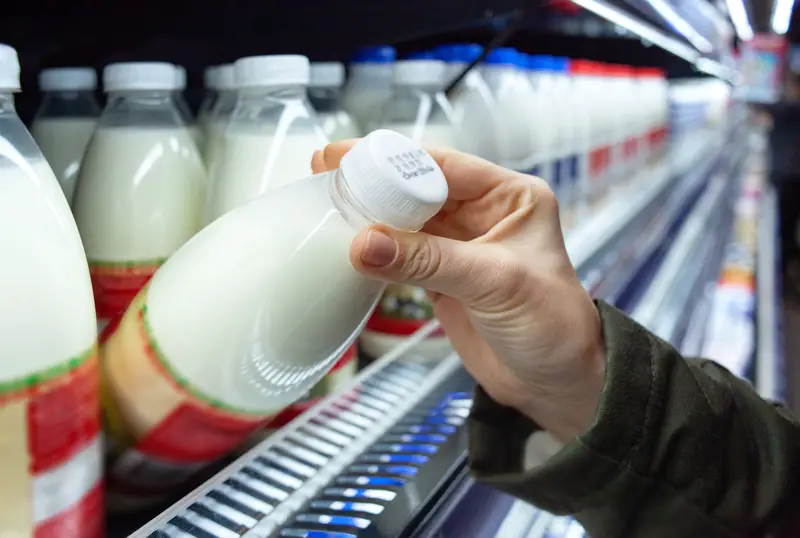
Two of the most-tossed items in any fridge, and two of the most misunderstood. Eggs can be good for three to five weeks after you buy them, well past whatever “sell by” date is printed on the carton. Store them in the coldest part of the fridge, not the door, since opening the door constantly warms that spot up. Milk is the same story. Kept at or below 40 degrees, pasteurized milk usually lasts several days past its sell-by date, and an unopened jug can have up to ten more days in it. Give it a sniff and a look. If you see curds when you pour, then it’s done. The smell test is your best friend here.
Nut Butters, Jam, and Condiments
Anything loaded with sugar, acid, or oil has built-in staying power. Jam and jelly are basically sugar bombs, which is why they last for months past the date. Mayo holds up longer than people think thanks to how it’s made. Peanut butter, almond butter, and the rest have natural oils and very little moisture, so they can go a long time past the stamp. The worst that usually happens is they taste a little stale or the oil gets a bit off. A quick smell and taste tells you everything you need to know, and most of these are still perfectly good.
This Mix-Up Costs You Real Money
Add it all up and the numbers get ridiculous. More than 90% of Americans throw out food early because they read the label as a safety warning when it isn’t one. Date confusion alone accounts for billions of pounds of wasted food every year, and for a family of four it can mean well over a thousand dollars gone. Lawmakers have finally noticed. California passed a law in 2024 (kicking in July 2026) that forces makers to use clear wording and drops “sell by” completely. There’s also a bipartisan Food Date Labeling Act of 2025 trying to shrink all that jargon down to just two phrases nationwide. Until then, the labels stay a mess.
How to Actually Tell If Something’s Bad
So if the date isn’t the answer, what is? Your own senses. As one clinical dietitian put it, you have to pay attention to your food and use your best judgment. Open the package. If it smells funky, looks slimy, or the texture is just wrong, don’t eat it, even if the date hasn’t passed yet. If it looks fine, smells fine, and tastes fine, it’s almost always fine. The one group worth extra caution with is fresh meat, poultry, seafood, and packaged deli items, so treat those dates with more respect. For the honey, the rice, the canned beans, and the cheese in your fridge, that little stamp is closer to a suggestion than a rule. Stop trashing good food over it.

