

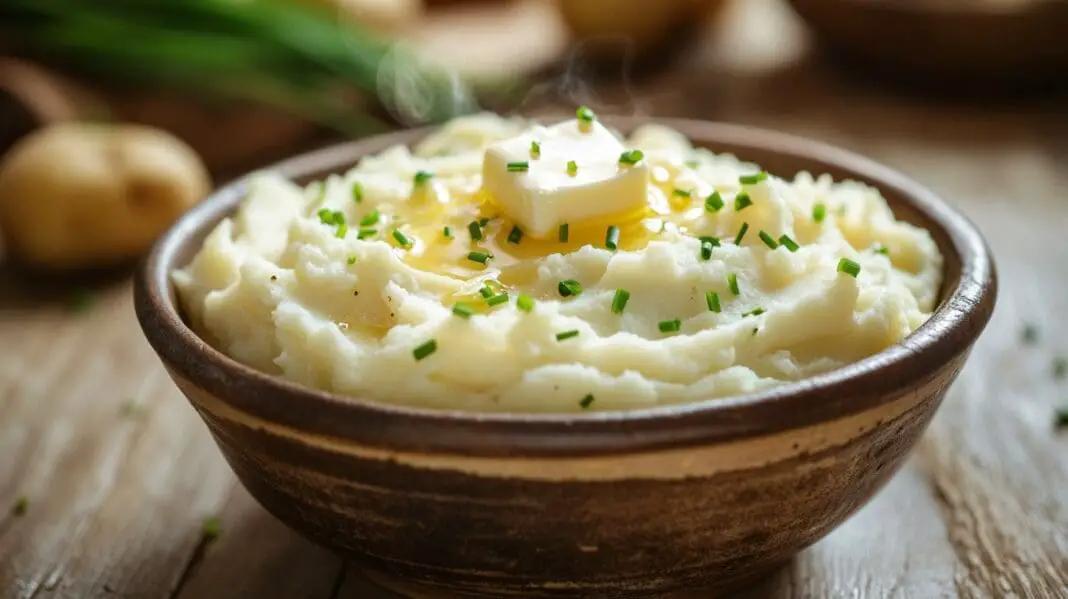
Cold butter and cream, pulled straight from the fridge and stirred into a hot pot of potatoes, is the quickest way to turn a good batch into a sad, stiff one. It feels harmless. You melt a stick of butter into the mash, splash in some cream, and wonder why the result tastes flat and pasty. The dairy is the reason, and more specifically, the temperature of that dairy.
Warm your butter and cream before they ever touch the potatoes and you fix most of the problems people blame on everything else. That single habit does more for the final bowl than any fancy tool or secret ingredient. Everything below builds around it.
Why Cold Butter And Cream Wreck The Whole Batch
Hot potatoes take on fat and liquid readily. Drop in cold butter and cold cream and the whole pot cools fast, which stiffens the mash and leaves the dairy sitting on the surface rather than working through it. You end up stirring and stirring to force it, which brings its own trouble.
Cooks who make mashed potatoes every day rate this among the biggest mistakes home kitchens make. Lindsay Mattison, a former restaurant chef writing for Taste of Home, puts it simply: cold dairy cools the mixture and stops the potato starch taking up all that creamy richness. So the flavor sits on top instead of soaking in, and the texture goes tight and gluey.
Cold butter causes a second issue. Instead of melting cleanly into the mash, it breaks into little clumps and spreads unevenly. You get a bite of plain potato, then a bite that is all butter. That is not seasoning, that is bad luck on a fork.
Warm The Dairy First, Every Time
You do not need a special setup for this. Pour your cream or milk into a small saucepan with the butter and set it over low heat until the butter melts and the cream just starts to steam. Do not let it boil. You want it warm and loose, not scalding.
The microwave works fine too if you are short on burners. Fifteen to thirty seconds is usually plenty to take the chill off milk and butter. Check it, stir it, and give it a few more seconds only if the butter still has solid chunks.
Whole milk or heavy cream beats low-fat milk here without contest. The extra fat is what makes the mash rich and smooth, while thin milk has more water in it and tends to slide off the potatoes instead of blending in. If you only keep skim in the fridge, this is the one dish where it pays to grab the full-fat carton.
Butter Goes In Before The Cream
Order matters more than people expect. Fat should hit the potatoes before any extra liquid does. Melted butter coats the starch and forms a barrier, so the cream that follows blends in smoothly instead of turning the mash sticky.
Kieron Hales, head chef at Zingerman’s Cornman Farms in Michigan, put it plainly to The Takeout: add the fat, then the liquid. Fat loosens up those starch networks and keeps them from grabbing onto water and going gummy. If your potatoes come out a little gluey, the fix is the same idea in reverse. Fold in one more tablespoon of warm melted butter per pound and it usually smooths out.
So the sequence is simple. Mash the drained potatoes on their own for a moment, work in the warm butter, then stream in the warm cream a little at a time until it looks right.
Start With The Right Potato
Even perfect dairy cannot save the wrong spud. Waxy potatoes, the red-skinned and fingerling types, hold their shape and refuse to break down. They do not drink up butter and cream, so the mash turns dense and gummy no matter what you do.
Reach for starchy potatoes instead. Russets give you a light, fluffy mash, and Yukon Golds land a little richer and more buttery on their own. Both soak up dairy the way you want. A lot of cooks split the difference and use half of each, which is a good move.
Peeling is your call. Leaving the skins on changes the texture, since the peel does not soften like the inside and leaves noticeable flecks throughout. For a smooth classic mash, peel them. For a rustic bowl, leave them and own it.
Put Down The Electric Mixer
Warm butter and the right potato still will not save you if you beat the daylights out of the mash. Every time you work the potatoes, they release more starch. Push too far and that starch turns the bowl into wallpaper paste, and there is no coming back from it.
A stand mixer, food processor, or blender does this damage in seconds. Henry Johnson, chef de cuisine at Palladino’s in Dallas, told The Takeout that over-mashing bursts the starches and takes the potatoes to a point of no return. Adding more cream to gummy potatoes just gives you gummy potatoes sitting in a puddle.
Use a hand masher and go easy, or better yet a ricer or food mill, which press the potatoes through gently without overworking them. If you like a lump or two, a masher is your friend. If you want smooth and almost pudding-like, a ricer plus a light hand with a whisk gets you there.
Do Not Drown Them In Liquid
Warm dairy is the goal, but too much of it is its own disaster. Pour in all the cream at once and you can flood the potatoes past the point of return. A third to a half cup of dairy per pound of potatoes is a solid starting point, and you can always add more.
Leftover cooking water is a sneaky source of extra liquid too. Drain the potatoes hard, then set the pot back on low heat and shake it around for a minute so the last of the moisture steams off. A drier potato has room to take in your warm butter and cream, which is exactly the velvety mouthfeel you are after.
Add the cream slowly and stop when the texture looks right to you. Every batch of potatoes is a little different, and one pot might take less than the last. If you do overshoot, grated cheese will firm it up, and a few spoons of dry potato flakes will soak up the excess. Skip sour cream here, since it is mostly water and will only loosen things further.
Salt The Water And Cut Them Right
Season the cooking water like you would for pasta. Potatoes drink up the water they cook in, so salted water flavors them all the way through. Wait until the end to salt and the outside tastes fine while the middle stays bland.
Cut them into even pieces of about an inch to an inch and a half, or boil them whole. Very small chunks cook fast but they also soak up water and turn waterlogged, which loops you right back to gluey mash. Start them in cold water an inch above the potatoes, bring it to a boil, then drop to a simmer so they cook evenly from edge to center.
Timing follows the cut. Chunks want about fifteen to twenty-five minutes; whole potatoes need far longer, closer to forty or fifty. Go by feel rather than the clock: a fork or thin knife should slide through with no fight. Cook them just to that point, no further, and you have set yourself up for the best bowl of the year.
Frequently Asked Questions
Q: Can I use milk instead of heavy cream?
A: You can, and warm whole milk works fine. Heavy cream has more fat, so it gives you a richer, smoother mash that holds together better. Milk carries more water and tends to separate slightly from the potatoes, so if you go that route, use full-fat whole milk and warm it first.
Q: What potatoes make the best mash?
A: Starchy potatoes win. Russets give you light and fluffy, Yukon Golds land richer and more buttery, and a mix of the two is a great middle ground. Skip waxy red-skinned or fingerling potatoes, since they stay dense and refuse to absorb the dairy.
Q: How do I fix mashed potatoes that turned gummy?
A: More fat is the answer. For every pound of potatoes, drizzle in a tablespoon of warm melted butter and fold it in gently. The fat coats the loose starch and smooths things out. If they went truly paste-like from overmixing, the texture usually cannot be rescued, and a fresh batch is your best bet.
Q: Can I make mashed potatoes ahead of time?
A: They are best fresh, since they dry out and lose their fluff as they sit. If you must make them early, hold them warm in a slow cooker or in a covered heatproof bowl set over a pot of simmering water, and stir in a splash of warm cream right before serving.
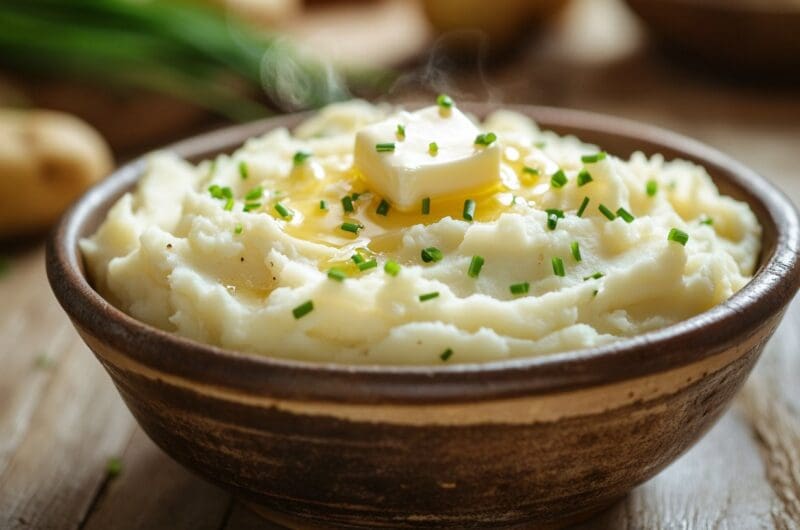
Creamy Mashed Potatoes With Warm Butter And Cream
Course: Side DishCuisine: American6
servings20
minutes25
minutes320
kcalThe rich, fluffy mashed potatoes that fix the one mistake almost everyone makes.
Ingredients
3 pounds Russet or Yukon Gold potatoes (or a mix of both)
8 tablespoons (1 stick) unsalted butter
1 cup heavy cream
1/2 cup whole milk
2 teaspoons kosher salt, plus more for the cooking water
1/2 teaspoon black pepper
1/4 cup sour cream (optional)
2 cloves garlic, smashed (optional)
2 tablespoons chopped chives, for garnish
Directions
- Peel the potatoes and slice them into thick pieces, at least an inch and a half wide. Keeping them chunky stops them from soaking up too much water and going gluey later on.
- Place the potatoes in a large pot and cover with cold water about an inch above the top. Add a generous amount of salt to the water, along with the smashed garlic if using.
- Bring the pot to a boil, then lower it to a steady simmer. Cook for 15 to 20 minutes, until a fork or thin knife slides through a piece with no resistance.
- Drain the potatoes very well, then return them to the hot empty pot. Set it over low heat and shake it around for about a minute so the last of the moisture steams off and the potatoes look drier.
- While the potatoes cook, warm the butter, cream, and milk in a small saucepan over low heat. Heat just until the butter melts and the cream begins to steam, and do not let it boil.
- Mash the dried potatoes gently with a hand masher, ricer, or food mill. Work only until they break down and stop before they turn sticky, since overworking releases too much starch.
- Fold in the warm melted butter first and let it coat the potatoes. Then stream in the warm cream and milk a little at a time, folding gently, until the mash reaches the texture you want.
- Stir in the salt, pepper, and sour cream if using, then taste and adjust. Serve right away, topped with chopped chives and an extra pat of butter.
Notes
- Always warm the butter and cream before adding them. Cold dairy cools the potatoes, seizes the starch, and leaves you with a stiff, flat mash.
- Use a ricer or hand masher instead of an electric mixer. Machines overwork the potatoes fast and turn them gummy with no way to fix it.
- Add the cream slowly and stop when the texture looks right. Every batch is different, and it is always easier to add more than to take it out.

