

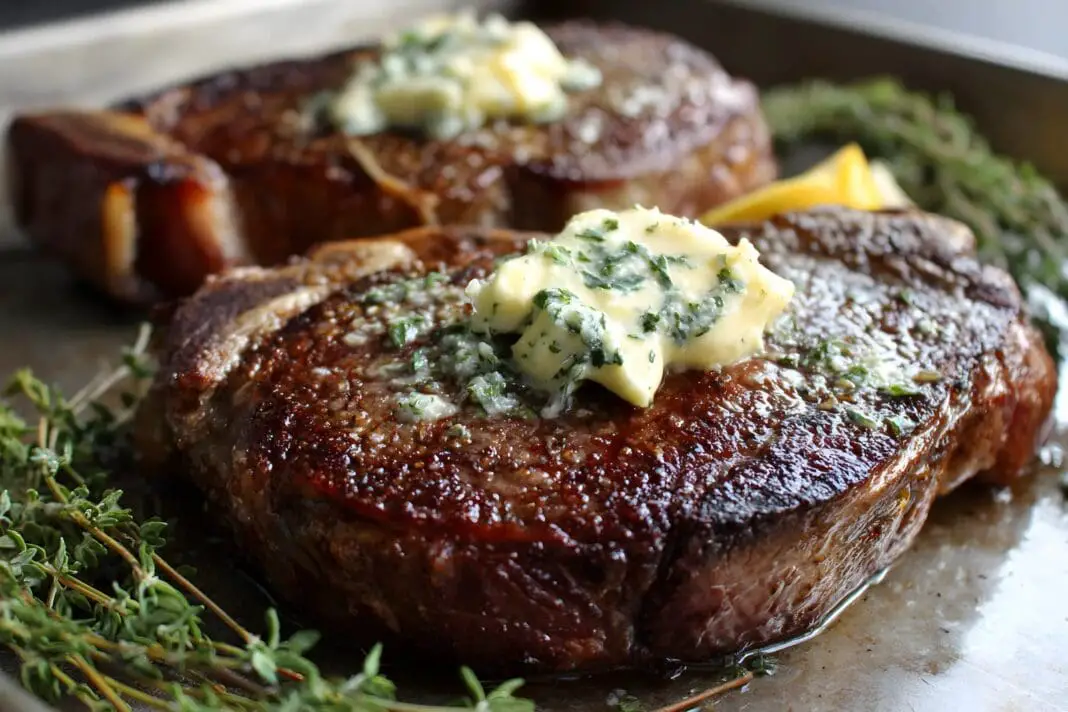
The ribeye looked right in the package. Thick, marbled, worth the extra few dollars you talked yourself into at the meat counter. Then it hit the skillet and made a dull hiss instead of a roar, and eight minutes later you were staring at something the color of a wet paper bag, with a sad gray band around the edge and a center that somehow tasted like nothing at all. The beef was fine. The pan was probably fine. The steak went in wet.
Surface moisture is the mistake hiding behind almost every disappointing steak cooked at home, and it is the one almost nobody thinks about, because it happens before the meat ever touches heat.
Water and Heat Cannot Share a Skillet
That brown, savory crust comes from the Maillard reaction, the process where proteins and sugars react at high temperatures. Moisture blocks it cold. Water on the surface has to boil off before browning can begin, and while it boils off, the steak is steaming instead of searing. Steamed steak turns out gray, soft and flat tasting, no matter how good the beef was.
Every other steak rule bends around this one. Hot pan, no crowding, high smoke point oil, generous salt ahead of time. They are all different ways of keeping the surface dry long enough for browning to happen.
Paper Towels, Twice
Pat the steak completely dry before you season it, and pat it dry again right before it hits the pan. Both times. Meat that has been sitting in the refrigerator picks up condensation on the surface, and that film of water lands in your skillet and drops the pan temperature the instant it arrives.
After seasoning, set the steak on a wire rack rather than flat on a plate. Air moving around all sides dries the surface instead of trapping a puddle underneath.
The Counter Rest Is Not Doing What You Think
Standard advice says pull the steak out 20 to 30 minutes ahead, or 30 to 45 minutes for something thick, so it cooks evenly. Testing has pushed back hard on that habit, since the center of a thick steak barely budges in half an hour on a kitchen counter.
My position: it is not the step standing between you and a good crust. Sitting on a plate does nothing to dry the outside of the meat, which is the part that actually determines how your steak looks and tastes. Spend that time on salt instead.
Salt It Early and Leave It Uncovered
Salt pulls moisture to the surface, where it dissolves and gets reabsorbed back into the meat carrying the seasoning with it. That is a dry brine, and it does two jobs at once: it seasons the inside of the steak and it leaves the outside dry. Salting at least 45 minutes ahead works, and the night before is better if you can plan that far out.
Use kosher salt, and use more than feels polite. Hit every surface, including the sides and the fat cap, which crisps up beautifully and gets forgotten almost every time. Then park the steak uncovered on a rack in the refrigerator. By the time you cook it, the surface should look dry and almost crystalline. Steakhouses have been doing exactly this for years.
Black pepper goes on separately, right before cooking. Unlike salt, it does not work its way into the meat, so an early start buys nothing. Keep it out of your salt timing.
If It Does Not Roar, the Pan Is Not Ready
A dry steak still goes gray in a lukewarm pan. Cast iron needs five to six minutes over medium-high, and the test is simple: flick a drop of water at it, and it should vanish almost on contact. Oil should shimmer. The steak should sizzle loudly the second it lands. Silence means no browning is happening. Cooks who do this for a living listen as much as they look, and a sizzle that suddenly quiets down means the pan temperature crashed.
Skip the non-stick skillet entirely. Those coatings are not built for sustained high heat and they do not give you the deep, even browning that heavy cast iron or stainless steel will. If you are grilling, close the lid and preheat for a full 10 to 15 minutes before any meat goes near the grates.
Crowding wrecks all of it. Two steaks jammed together drop the surface temperature and trap steam between them. Leave at least an inch of space around each one and cook in batches if you have to.
Oil the Steak, Not the Skillet
At searing temperatures, a pool of oil in the pan smokes and burns, and burnt oil leaves a bitter, acrid taste clinging to meat that was otherwise cooked perfectly. Rub a thin film directly onto the steak instead. Avocado, canola and vegetable oil all handle high heat without turning on you.
Butter comes in at the end, not the beginning. A steak cooked start to finish in butter burns before the crust ever forms. Drop it in during the last minute with smashed garlic and a few sprigs of thyme, tilt the pan toward you, and spoon the foam over the meat.
Flip More Than Once
The one-flip rule is folklore. Food scientist Harold McGee and two co-authors challenged it back in 1999 with a paper in Physics Today called “The Virtual Cook: Modeling Heat Transfer in the Kitchen,” and found that frequent flipping produces a more evenly cooked steak in less time. Later cooking tests backed it up, with frequently flipped steaks developing just as good a crust as steaks turned only once.
Give it the first couple of minutes undisturbed to set the crust, then flip every 30 to 60 seconds. The side facing up cools slightly each time, which keeps the surface from overcooking while heat keeps moving toward the center.
Rest It for the Temperature, Not the Juice
Food scientist and chef Chris Young tested a series of steaks in a 2024 video and showed that rested meat is not juicier than unrested meat. “When you slice into the meat, rested or not, you’re creating new escape routes for the juices near the cut surface to be forced out,” Young said. “Your only choice is whether you want the juices to end up on the cutting board or on the plate.”
Resting still matters, for a different reason. A steak keeps cooking after it leaves the heat, climbing roughly 5 to 15 degrees Fahrenheit, which is enough to take a medium-rare steak into medium-well while it sits there looking innocent. Pull it about five degrees before your target, then watch the number climb. Medium rare lands at 130 to 135 degrees Fahrenheit, medium at 140.
Five minutes is plenty for a one-inch steak, 10 to 15 for a thick ribeye or porterhouse. Tent it loosely with foil if you want, never tightly, because wrapping it traps steam and softens the crust you just worked for. And that red liquid on the cutting board is not blood. It is water and myoglobin.
Slice against the grain. Then finish with flaky salt, and a squeeze of lemon if you want something bright cutting through all that fat.
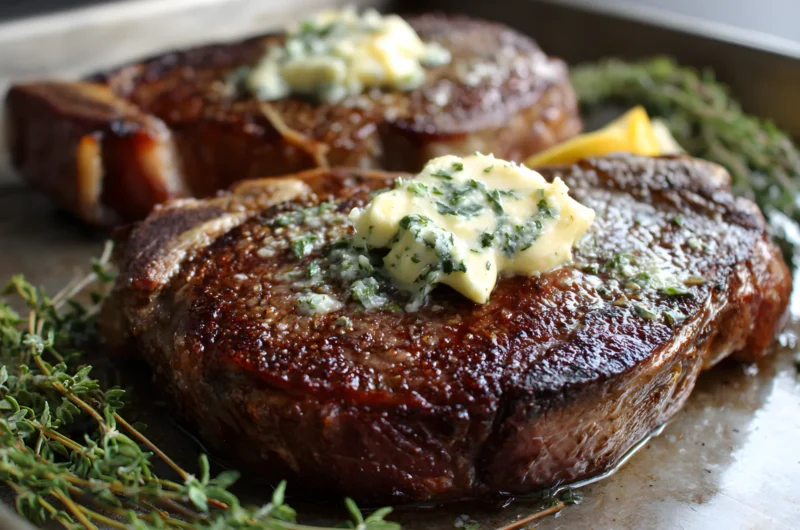
Dry-Brined Cast Iron Ribeye With Garlic Thyme Butter
The dry-surface trick that finally gives home steaks a real steakhouse crust.
2
servings50
minutes12
minutes900
kcalIngredients
2 ribeye steaks, 1 to 1 1/2 inches thick (about 12 oz each), bone-in or boneless
2 teaspoons Diamond Crystal kosher salt (or 1 1/4 teaspoons Morton)
1 teaspoon coarsely ground black pepper
2 teaspoons avocado, canola or vegetable oil
3 tablespoons unsalted butter
4 garlic cloves, lightly smashed, skins left on
4 sprigs fresh thyme (or 2 sprigs rosemary)
Flaky sea salt, for finishing
1 lemon wedge, optional
Directions
- Pat the steaks completely dry with paper towels on every surface, including the sides and the fat cap. Season all over with the kosher salt, using more than feels comfortable, and press it in gently. Set the steaks on a wire rack over a sheet pan.
- Refrigerate the steaks uncovered for at least 45 minutes, or overnight if you have the time. The surface should look dry and almost crystalline when you pull them out. That dry exterior is what gives you a crust instead of a gray steamed edge.
- Pat the steaks dry one more time with paper towels, even though they were salted hours ago. Grind the black pepper over both sides now rather than earlier. Rub the oil directly onto the meat in a thin film instead of pouring it into the pan.
- Set a heavy cast iron or stainless skillet over medium-high heat for five to six minutes. Test it by flicking a drop of water at the surface; it should evaporate almost instantly. Turn on your vent hood and open a window, because this will smoke.
- Lay the steaks in the pan away from you, leaving at least an inch of space between them. They should sizzle loudly the second they land; if they do not, the pan is not ready. Cook in two batches rather than crowding them together.
- Leave the steaks untouched for the first two minutes so the crust can set, then flip every 30 to 60 seconds. Frequent flipping cooks the steak more evenly and keeps the surface from overcooking. Use tongs to stand each steak on its fat edge for about 30 seconds to render and crisp it.
- In the last minute of cooking, add the butter, smashed garlic and thyme to the pan. Tilt the skillet toward you and spoon the foaming butter over the steaks again and again. Check the temperature in the thickest part with an instant-read thermometer, avoiding bone and fat.
- Pull the steaks about five degrees below your target, since medium rare finishes at 130 to 135 degrees Fahrenheit and medium at 140. Rest them on a warm plate for five minutes for a one-inch steak, 10 to 15 minutes for a thicker cut, watching the temperature climb. Slice against the grain, spoon over the pan butter, and finish with flaky salt and a squeeze of lemon.
Notes
- Do not use a non-stick pan for this. The coating is not built for sustained high heat, and it will not brown the meat the way cast iron or stainless steel does.
- Steaks thicker than 1 1/2 inches are easier to control if you sear them first and then move the whole skillet to the oven to finish, rather than fighting them on the stovetop the entire time.
- Thin steaks burn outside before the center cooks. Buy thickness over width; 1 to 1 1/2 inches gives you room to build a crust while the middle stays juicy.
Frequently Asked Questions
Q: Why does my steak come out gray instead of brown?
A: Two causes, and they often show up together. The surface was wet when it hit the pan, or the pan was not hot enough to brown before the moisture boiled off. Dry the meat thoroughly and preheat the skillet longer.
Q: Do I have to take steak out of the fridge before cooking?
A: Common advice says 20 to 30 minutes, or 30 to 45 for a thick cut, but testing suggests the center of a thick steak barely warms in that window. It will not dry the surface either, which is the part that actually matters for crust.
Q: Should I cook my steak in butter or oil?
A: Both, at different moments. Use a high smoke point oil such as avocado, canola or vegetable for the sear, then add butter in the last minute with garlic and herbs. Butter alone burns before the crust forms.
Q: How long should a steak rest before slicing?
A: Five minutes for a standard steak, 10 to 15 for a thick ribeye or porterhouse. Rest it to control carryover cooking, which can raise the internal temperature by roughly 5 to 15 degrees Fahrenheit, not because resting keeps the meat juicier.

